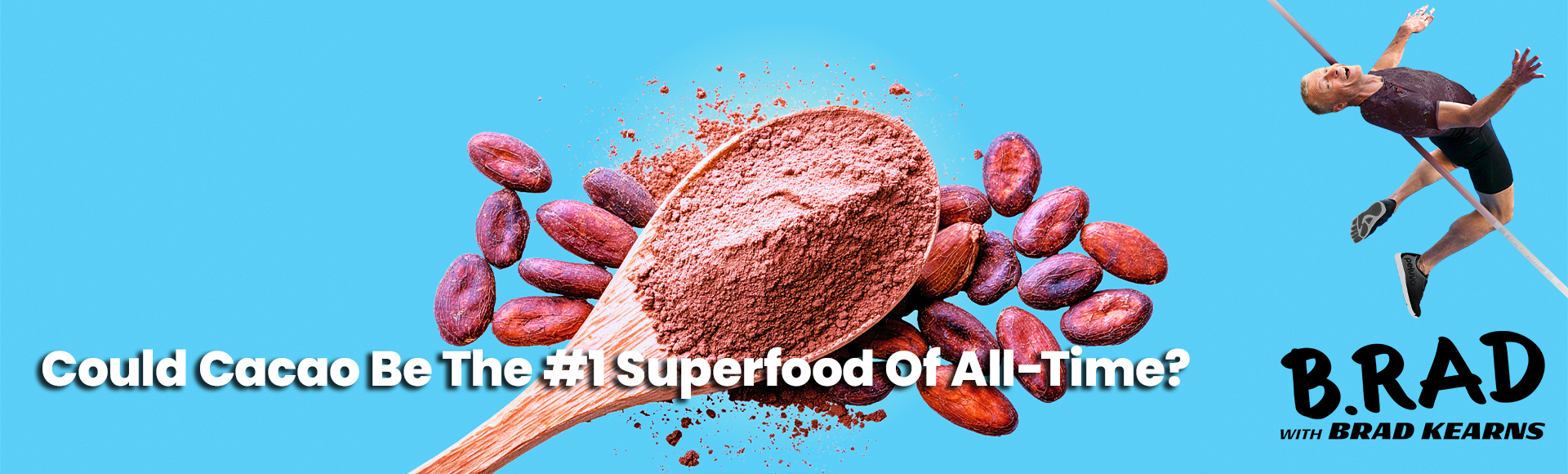
Welcome to a most informative and inspiring show about the amazing ancient superfood of cacao!
This episode will give you everything you need to know about its remarkable health benefits, healing properties, and how to choose the most sustainable, eco-friendly, fair-trade bean-to-bar products. You will learn about the fascinating history of cacao as a sacred food, currency, and medicine, why it remains one of the most highly regarded superfoods on the planet, and how the food industry took this extraordinary raw material, stripped out everything useful, and transformed it into little more than a heavily sugared version of the original.
Along the way, I explain the science in plain English—from the powerful polyphenols that support your heart, brain, blood pressure, gut microbiome, metabolism, and mood, to why cacao may be the single most antioxidant-rich food you can eat.
I also reveal the disturbing reality behind much of today’s commercial chocolate industry, including how mainstream processing destroys many of cacao’s most valuable compounds and why ethical sourcing matters. You’ll learn the difference between raw cacao powder, cacao nibs, and high-percentage dark chocolate, how to identify truly high-quality bean-to-bar chocolate, why I became a dark chocolate connoisseur, and the artisan brands I recommend.
When this episode is over, you’re never going to look at a chocolate bar the same way again, and you’ll be fully armed to make the best product purchasing decisions and obtain the maximum benefits from consuming foods high in nutritious cacao.
TIMESTAMPS:
Cacao is one of the most highly regarded superfoods on the planet. [00:56]
When you are finished listening to this episode, you will never look at a chocolate bar the same way again. [02:28]
The best way to enjoy chocolate is to put it on your tongue and allow the flavor to dissolve in your mouth. [06:38]
The history of cacao is fascinating. It is one of the most nutrient dense, biologically active foods in all of human history. [08:10]
Early civilationa learned to ferment, roast, and grind cacao beans into a drink. It was more than a flavoring agent, it was very much a spriitual centerpiece as well as used for medicinal purposes. [10:11]
After the Europeans added sugar to cacao, it lost some of its medicinal purpose, although it still is a good source of antioxidants. [12:29]
There are many cardiovascular benefits from cacao. It improves platelet function. [18:17]
Cacao has been shown in studies to produce meaningful reductions in both systolic and diastolic blood pressure. It is also known to help boost levels of HDL (high density lipoproteins.) [20:55]
Cacao consumption improves your overall lipid profiles, including helping with healthy triglyceride levels. [27:24]
Does cacao help with weight loss goals? [28:27]
Cacao has an impact on brain function and mood. [31:37]
In contrast to the powerful, hard and fast effects of caffeine, theobromine in cacao works more slowly. It has a gentler mechanism and a longer half life. [35:08]
Studies show wonderful benefits from cacao on the gut. It has been identified as a potent prebiotic which is what feed probiotics to flourish in the intestinal tract. [38:59]
Reasearch shows cacao has properties protecting you from UV damage from sunburn. [46:35]
Just how damaging to health is mainstream modern chocolate processing? One of the terrible aspects of the low-priced chocolate is because of the support of child slave labor harvesting these beans. [50:02]
Look for the designation of “bean to bar” on the product. It should also have cacao beans as the first ingredient. [55:05]
In mainstream processing of the beans, they have to use super high temperatures which degrades the polyphenol. [57:17]
There are three categories of products which can deliver these wonderful health benefits. [01:00:07]
When the bar is above 80%, this is where most of the research showing cardiovascular cognitive benefits was conducted. The words “cacao beans” should be the first ingredient on the label. [01:05:53]
Brad lists his recommendations for good chocolate bars. [01:19:44]
How much chocolate should one consume? [[01:29:06]
Do not refrigerate high quality dark chocolate. [01:32:50]
LINKS:
- Brad Kearns.com
- BradNutrition.com
- B.rad Whey Protein Superfuel – The Best Protein on The Planet!
- Brad’s Shopping Page
- BornToWalkBook.com
- B.rad Podcast – All Episodes
- Peluva Five-Toe Minimalist Shoes
- B.rad Podcast – All Episodes
- Peluva Five-Toe Minimalist Shoes
- Burn
- The Primal Blueprint
- Podcast with Shawn Askinosie (Chocolate)
- Podcast with Todd White (Dry Farm Wine)
- Dry Farm Wines
- Askinosie Chocolate
- Chocovivo
- Cocoa Runners
- Nomosu
- Pump Street Chocolate
- Puna Chocolate
- Ranger Chocolate
- Rausch
- Spring and Mulberry
 LISTEN:
We appreciate all feedback, and questions for Q&A shows, emailed to podcast@bradventures.com. If you have a moment, please share an episode you like with a quick text message, or leave a review on your podcast app. Thank you!
Check out each of these companies because they are absolutely awesome or they wouldn’t occupy this revered space. Seriously, I won’t promote anything that I don’t absolutely love and use in daily life:
B.rad Nutrition: Premium quality, all-natural supplements for peak performance, recovery, and longevity; including the world’s highest quality whey protein! Get 20% OFF your first order!
Peluva: Comfortable, functional, stylish five-toe minimalist shoe to reawaken optimal foot function. Use code BRADPODCAST for 15% off!
Jaspr Air Scrubber: Ultra high-performance air purifier – blows other air filters away! Save $200 on your unit with code BRAD.
Get Stride: Advanced DNA, methylation profile, microbiome & blood at-home testing. Hit your stride the right way, with cutting-edge technology and customized programming. Save 10% with the code BRAD.
Online educational courses: Numerous great offerings for an immersive home-study educational experience
Primal Fitness Expert Certification: The most comprehensive online course on all aspects of traditional fitness programming and a total immersion fitness lifestyle. Save 25% on tuition with code BRAD!
I have a newly organized shopping experience at BradKearns.com/Shop. Visit here and you can navigate to my B.rad Nutrition products (for direct order or Amazon order), my library of online multimedia educational courses, great discounts from my affiliate favorites, and my recommended health&fitness products on Amazon.
#bradpodcast
TRANSCRIPT:
Brad (00:00:00):
Welcome to the B.rad Podcast where we explore ways to pursue peak performance with passion throughout life. I’m Brad Kearns, New York Times bestselling author, world number one ranked Masters age 60 high jumper and former number three, world ranked professional triathlete. You’ll learn how to stay fit, strong and powerful as you age. Transform your diet to lose body fat and increase energy sort through hype and misinformation to make simple sustainable lifestyle changes and broaden your perspective beyond a fit body to experience healthy relationships, nonstop personal growth, and ultimately a happy, healthy long life. Let’s explore beyond shortcuts, hacks and crushing the competition to laugh. Have fun, appreciate the journey, and not take ourselves too seriously. It’s time to B.rad.
Brad (00:00:51):
The benefits of cacao for weight loss one study found that the antioxidant effects of the polyphenols present in cacao directly influence
Brad (00:01:01):
Welcome to a most informative and inspiring show about the amazing ancient superfood of cacao. The lead ingredient in high quality bean to bar dark chocolate, as well as raw cacao powder and nibs. This show is going to give you everything you need to know about the health benefits, the healing properties, and how to choose the most sustainable eco-friendly, fair trade bean to bar products. Cacao is one of the most highly regarded superfoods on the planet. Something with extensively documented benefits for your heart, your brain, your blood pressure, your intestinal microbiome, and your mood. It’s been around for centuries, but in recent centuries, the food industry essentially has taken this raw material, stripped out everything useful and replaced it with junk food, a heavily sugared version of the original wonderful raw material. So what we’re gonna do in this show is discuss the history of cacao, some biochemistry in plain English, the specific compounds and what they do to your body and how cacao gets destroyed in processing to deliver the end product.
Brad (00:02:28):
Most familiar would be the high sugar chocolate bars or the beverages like hot chocolate that are spiked with sugar and milk products that ruin much of the nutritional benefits that’s contained naturally in cacao. So I’m gonna teach you how to shop for the right products and help you obtain the maximum benefits from consuming foods high in nutritious cacao. When this episode’s over, you’re never going to look at a chocolate bar the same way again and you’ll be fully armed with the best product purchasing and use decisions. So here we go. Let’s get into it. And if you listen to the podcast, watch the podcast, often you will know that dark chocolate is one of my favorite foods, my favorite indulgence and has become my go-to all day everyday snack. And I think it’s because my overall dietary standards have become so strict. I don’t have a bunch of indulgences that I can reach for and this has been going on now for probably 17 years since I switched to the Primal Diet with the Primal Blueprint, Mark Sisson back in 2008, we started working on that project.
Brad (00:03:48):
I eliminated all the grains and the processed sugars and the stuff that was still leaking into my diet and learned that dark chocolate was a very approved, sensible indulgence. So I brought that into the centerpiece and there it stands today. So I’ve become quite the connoisseur and I definitely consume a large amount of dark chocolate every day. We’ll talk about that more in a bit. But it’s nice to have something that is truly enjoyable and I would consider my favorite treat and be healthful and have the opportunity to consume it as much as I want every day in place of perhaps the many, many options of less nutritious snack foods and processed foods that are out there that we might otherwise reach for when we need a little boost and we don’t have the best choices around. So you can be sure if you come visit me in my home environment,
Brad (00:04:45):
There’s plenty of options of dark chocolate bars at my disposal at all times. Overall, as I’ve mentioned on other shows detailing my daily dietary habits, things are pretty simple and streamlined. Now the centerpiece of my diet is red meat. It’s a protein centric, nutrient dense animal-based diet. So you have the pastured eggs in there and then when it comes to carbohydrates, a sensible consumption, especially correlating with my exercise energy output. So I’m choosing things like fresh fruit, sweet potatoes, raw honey, and of course boosting my protein intake beyond the centerpiece of the meat and the eggs with grass fed whey protein isolate from the B.rad Super fuel, the B.rad Whey protein isolate products that are really become super popular. And I’m so grateful to see bringing this product to life as a dream, as the very, very best protein in the world and the rest of you consumers out there who are fans buying into my ideas that I wanted to produce something that was free from nasty processed ingredients, which we find in most protein supplements, even high quality ones sweetened with artificial agents so that they can answer the consumer demand for cookies and cream, carmel swirl, and birthday cake flavors.
Brad (00:06:13):
So you’re not gonna see those flavors in the B.rad Product line, but what you’re gonna see is the very, very best grass fed whe protein isolate sourced directly from small family farms in Wisconsin. So that’s another dietary centerpiece, but this show is gonna focus on the dark chocolate and the whole wonderful world of cacao. So with my standards locked in accordingly, I allow myself the indulgence of a square or two of dark chocolate and that’s pretty much leaking in throughout the day, especially if I happen to not sit down for a large meal in the morning or at midday, I will enjoy those squares of chocolate and consumed like a true connoisseur, which I will inform you now does not involve biting into the chocolate. So the best way to enjoy a wonderful square of dark chocolate is to put it on your tongue and allow the flavor to dissolve in your mouth.
Brad (00:07:14):
You can press it up against your palate, but you don’t wanna bite into it and consume it quickly because it’s a nuanced product. It has that terroir like they say with wine where you can pick up flavor notes and to maximum appreciate and have that flavor that last in your mouth for a while. No biting allowed of dark chocolate bars. So there you go. I told you this would change your life and that’s your first hot tip. I also have a wonderful content with a free PDF download that you can find@bradkearns.com. It’s called a Connosuiers Comprehensive Guide to Dark Chocolate. So I’d love for you to grab that PDF at bradkearns.com that signs you up for our wonderful newsletter and I think you’re gonna love the content in the PDF. There’s four other PDFs that you get with that vitamin D and sun exposure long cuts to a longer life, the ultimate guide to Barefoot and Minimalist Shoe Lifestyle promoting the Peluva shoes.
Brad (00:08:10):
And that’s just one click of the button when you sign up with your email. So grab that dark chocolate PDF as a written compliment to this show. And I think we should start with the history, the fascinating history of cacao. It is one of the most nutrient dense, biologically active foods in all of human history and also somehow a food we’ve managed to turn in to one of the worst things you can put in your body with the classic mass produced chocolate bar. So that’s where we’re gonna talk about the tension and how to take the correct fork in the road and source consumption of nutritious cacao products rather than the junk. The scientific name for the cacao tree is Theobroma cacao. If you break that down, you get Theo, which means God and broma food. So literally food of the gods. And this is how humans treated cacao for thousands of years.
Brad (00:09:08):
The earliest evidence of cacao dates back to around 1900 BC nearly 4,000 years ago now in what is now Mexico. That’s right. Cacao was invented, chocolate was invented in Mexico, not in Holland or Belgium. That’s where we first discovered how to ruin it with things like the Dutch processing methods where the sugar is added to create this seemingly more palatable end product where we want the sweetness and have difficulty with the original raw bitterness of cacao products. High percentage cacao bar, you’re familiar with how that tastes quite a bit different than a sugary chocolate bar anyway in Mexico? Yeah, the birthplace of cacao archeologists have found that ancient ceramic vessels had traces of cacao and its active compounds inside. People were consuming the plant in ways sophisticated enough to leave chemical residue that we can detect thousands of years later. So around 1500 BC that’s 400 years after the first discovery.
Brad (00:10:11):
The Olmec, one of the earliest major civilizations in Mesoamerica were fermenting, roasting and grinding cacao beans into a drink. The basic process that they developed in 1500 BC is still used by high-end chocolate makers today. Fermentation, roasting and grinding thousands of years old but still going strong. It was the Mayans who have elevated cacao into something truly extraordinary. They called it cah-cao and they revered the beans as literally a gift from the gods. Cacao wasn’t something that you casually consumed, it was woven into the most significant moments of life, celebrations, marriage negotiations and burial offerings. Mayan artwork depicts Gods physically sprouting from cacao pods in their cosmology. The cacao tree sometimes represented the world tree, the central axis connecting the underworld, the physical world and the heavens above. So cacao wasn’t just a flavoring agent, it wasn’t just a treat, it was a spiritual centerpiece.
Brad (00:11:19):
A sacred substance placed at the center of the understanding of the Mayans existence then came the Aztecs and they took it in a different but equally serious direction. Cacao beans came the currency, actual money, that’s right. You could buy food goods or labor, essentially anything you wanted with cacao beans. The drink they made from it called Chocoloto, which translates into bitter water, was restricted to royalty warriors and traders. It was consumed cold, frothed and completely unsweetened and often mixed with other spices. The Aztecs also used cacao medicinally. It was bitter raw, unsweetened cacao that was used for digestive conditions and other ailments. There was an underlying logic to this. The more bitter something tasted, the more potent and medicinal it was believed to be. And as we know today, it still holds true. The strong tasting medicinal things from the plant community are still found to have tremendous use in holistic healing as well as mainstream medicinal healing.
Brad (00:12:29):
The bitterness, what that signals is the presence of bioactive compounds like polyphenols, alkaloids and flavonoids. The exact things we now know today from scientific research are responsible for cacaos health benefits. Imagine that the ancient wisdom. Ah, this is pretty bitter, must be healthy for me. <laugh> proven scientifically true thousands of years later. By the time the European colonial researchers began documenting the practices of the ancient cacao makers in the 1500s and 1600, they had cataloged over 100 distinct medicinal uses for cacao and chocolate across Mesoamerica and early European traditions. And then something happened that changed everything. Yep, that’s right. The conquerors of the globe came in and ruined some of that traditional use of cacao. What the Spanish did was they brought the cacao back to Europe and the bitter drink didn’t quite catch on right away. It was too foreign, too harsh. So someone, some wonderful person going down in history, added sugar to the cacao and the drink became popular almost overnight.
Brad (00:13:43):
So that single decision sweetening something that had been consumed as medicine for thousands of years is essentially that fork in the road that I talked about. Before the fork, it was cacao as a health food, a sacred substance currency in the economy and as medicine and everything after that, as far as the mainstream, was the slow transformation of cacao into candy. And candy is certainly not medicine. So now we are going to learn about the amazing health properties of cacao such that I will convince you to transition away from that fork that you might take now and then to have your chocolate cake or chocolate bar or sweetened chocolate drink and instead try to focus on the products that are truly nutritious and high in cacao without being watered down and adultered. Cacao is indeed one of the most antioxidant rich foods on the planet.
Brad (00:14:48):
Perhaps the single most super powerful antioxidant food you can get. Now the herbs and spices are way up there on the list too. If you look at like an ORAC chart, the Oxygen Radical Absorbance Capacity score for the various foods. But we’re not banging large quantities of turmeric down our mouths every day whereby we can get significant doses of cacao such that that can be our go-to source for the highest antioxidant food we can dream of in our diet. Inside the cacao bean you’ll find an extraordinary concentration of polyphenols. These are a large family of plant-based compounds with potent antioxidant and anti-inflammatory properties. Cacao beans contain roughly 6 to 8% polyphenols by dry weight. This is a remarkably high concentration for any whole food. Within the broader category, cacao is especially rich in a subclass of polyphenols called flavonols. These are specifically catechens, epicatechin and Procyanidins.
Brad (00:15:56):
You’ll recognize these names if you read anything about green tea, red wine or berries. Those foods are beverages are all celebrated for their flavonol content. But cacao delivers them in far greater quantities than any of those high antioxidant superstars. One study directly compared dark chocolate’s, polyphenol content to some of the foods most celebrated such as acai, blueberries, cranberry juice, pomegranate juice. Dark chocolate came out significantly ahead across the board. That’s why it’s gonna be considered as the single most polyphenol dense food on the planet. I mentioned the ORAC score chart. You can Google one, we’ll put one in the show notes and you can also see if they go down the scoreboard. Various herbs and spices with extremely high scores. Zeaxanthin, cloves, cinnamon, turmeric, oregano, parsley, sage, ginger, raw caco, powder, raw cacao nibs. Those are all exponentially higher than many of the common foods that we hear about as high antioxidant like the berries, the pecans, walnuts, and various fruits.
Brad (00:17:05):
But cacao’s gonna come out the winter because we’re consuming higher quantity of that than our daily dose of cinnamon, ginger, turmeric and so forth. That’s raw cacao, like the cacao nibs, raw cacao powder that you might put into a warm beverage or a chocolate bar that has been prepared raw, which there are numerous brands that do that when you process it. And the more you process it, it can really take a hit to the antioxidant content. And that’s true for virtually anything mentioned on the list. The more you process it, cook it, it’s gonna lower the antioxidant value. So raw cacao powder for example, drops from 95,000 on the scoreboard to 26,000. And a typical chocolate bar that’s been processed is down in the 13,000 compared to that 95,000 score for the raw cacao powder. So your standard mainstream brand chocolate bar like a Hershey, even if it says dark chocolate on the Hershey bar, is basically devoid of most of the antioxidant polyphenol benefits of cacao.
Brad (00:18:17):
Now let’s learn about what the polyphenols actually do. And I’m gonna cover quite a bit of the benefits ’cause it’s pretty serious stuff. And again, if this is the number one food on the planet, I really want you to learn all the amazing, wonderful things it does in the body in various different categories. So first we’re gonna talk about cardiovascular benefits and cacaos benefits to platelet function. Platelets are responsible for blood clotting. So you cut yourself, you want that blood to clot quickly instead of bleeding out. But there’s a problem when platelets become overly active inside your arteries and they start clumping inappropriately, that’s when you get dangerous clot formation and the process of heart attacks and strokes. So the polyphenols in in cacao help regulate platelet activity, keeping them from overreacting in the cardiovascular system. Second benefit inflammation, as you probably know from consuming health information like the B.rad Podcast, chronic low grade inflammation is now understood to be one of the root root causes, maybe the main root cause in many experts estimation of most modern diseases including heart disease, metabolic disease, and cognitive decline, they all have inflammation as the centerpiece common thread.
Brad (00:19:45):
Now this background low grade chronic inflammation caused by an assortment of adverse lifestyle practices, especially adverse dietary practices, lack of exercise or too much exercise as I’ve talked about on other shows, chronic inflammation can slowly damage tissues over years and decades in your organs and systems of the body. Polyphenols appear to interfere with some of the cellular signaling pathways that drive this persistent chronic background inflammation. One study suggests that cacao is a natural therapeutic for those suffering from chronic pain as they found that chocolate can even block inflammation molecules from being formed at all. One study tested how cacao consumption influenced muscle soreness after workouts. So they had three groups of cyclists, some who had nothing, some who had snacks without cacao, and some who had chocolate type snacks. They found that the first two groups had higher levels of inflammatory molecules than the group that consumed some cacao products after their cycling workout.
Brad (00:20:55):
So it has a good role in managing especially the undesirable chronic long-term inflammation. Next we go to blood pressure. Cacao has been shown in studies to produce meaningful reductions in both systolic and diastolic blood pressure. The flavonols in cacao stimulate the endothelium. That’s the thin cellular lining of your blood vessels to produce more nitric oxide. This is a wonderful substance that helps make our cardiovascular system more fluid and supple rather than rigid and prone to disease. Nitric oxide is a potent signaling molecule that tells the blood vessels to relax and dilate, giving them less resistance and a lower blood pressure score. Next is the oxidation of LDL cholesterol molecules. You’ve heard LDL cholesterol incorrectly and inappropriately called the bad cholesterol, but it’s not inherently bad. In fact, LDL is important for many critical health and metabolic functions including the manufacturing of sex hormones like testosterone.
Brad (00:22:08):
So we need a healthy level of LDL circulating in the bloodstream to help our sex hormone status. So artificially suppressing LDL with statin drugs has numerous adverse side effects. It’s sort of a side way of attacking the problem rather than the root cause of the problem. I’ve talked about the flawed notions of the long standing lipid hypothesis of heart disease that is many decades old and is now being shattered by a bigger understanding that the root causes of heart disease are oxidation and inflammation. So when the LDL molecules become oxidized, yes indeed, that’s when they can cause trouble and lodge onto the walls of your arteries and form plaque. So to prevent LDL oxidation and keep the LDL in its desirable, healthy, normal state, that is where you can sort out the difference between something that’s bad, bad, bad, bad no matter what versus the kid who acts up once in a while in class because he is bored and doesn’t know what to do.
Brad (00:23:17):
Oh boy, that one really hits home for me. Thanks, Brad for that wonderful metaphor. So cacao has polyphenols that act like a protective shield around LDL particles, making them less vulnerable to oxidation in the first place. Of course, many other lifestyle practices and foods make you less vulnerable to LDL oxidation in the first place, getting enough sleep, appropriate exercise, stress management, and so forth. In this case, what you’re doing is having a direct impact by helping the LDL carry the protective shield from polyphenols in the diet. So that was number four, the LDL preventing LDL oxidation. And now we go to the benefit of cacao consumption on overall lipid profiles. It is also known to help boost levels of HDL high density lipoproteins, which are widely regarded as good cholesterol and correctly defined that way because HDLs main job they call it nature’s garbage trucks, it goes through the bloodstream and scavenges damaged cellular material and eliminates it from your bloodstream.
Brad (00:24:30):
So a high HDL level is protective against heart disease because if the potentially problematic small dense LDL particles are getting oxidized and have a tendency to lodge on the artery walls, a high HDL level is going to help counteract that. So you want a high HDL level. I’ve talked about this on my show about blood tests and blood markers. The threshold to have good strong status with HDL is over 40. And when it comes to LDL, you want a healthy status, which means a proliferation of non oxidized LDL. You can test LDL particle size and get deep down those rabbit holes with other blood tests to give you a sort of status report on how the LDL that’s in your body, whatever level that is, even if it’s over 200 and it turns red on the blood test instead of green, you can get a status report to realize that that LDL is circulating around there doing important biological processes and is not problematic.
Brad (00:25:38):
But a quick way to get a little bit more low tech on that is to look at your triglycerides to HDL ratio. And if you have a healthy one-to-one ideal ratio of triglycerides to HDL, that’s an indication that you have low cardiovascular disease risk. And that’s an idea fronted, uh, by some of the leaders in our progressive health world like Dr. Cate Shanahan, Dr. Ron Sinha, Dr. Paul Saladino. So it’s not Brad’s opinion here, I’m just reporting that triglycerides to HDL ratio. By forward-thinking physicians and health experts is now believed to be a superior way to track heart disease risk than looking at that total LDL number and having a doctor recommend statins to lower it. If in fact you have sat for your annual blood test, physical consultation and your doctor says your LDL total is over 200, I wanna start you on a statin.
Brad (00:26:40):
This is a huge red flag that I would recommend you go looking for another family practice physician or cardiologist to manage this. That has a heightened awareness of the new parameters that we’re realizing are the driving factors of heart disease, not just blindly looking at LDL number and making thought assumptions. Triglycerides to HDL ratio right there. Let’s take a look. If it’s super healthy, maybe no further testing is warranted. And if you have any concerns such as a family history that’s weighing on you and you’re worried, then you go into more advanced testing and there are plenty of content out there to help you navigate some of those waters. Okay? Cacao consumption improves your overall lipid profiles, including helping with healthy triglyceride levels. So when we take these five benefits together for the cardiovascular system, platelet regulation, reduced inflammation, lower blood pressure protection against oxidation of LDL particles and better overall lipid profiles, we have a healthy cardiovascular system overall.
Brad (00:27:51):
The primary mechanism actually for getting all this, making all this happen is that nitric oxide pathway that I told you was important. Cacao’s flavonols tell your blood vessel lining to produce more nitric oxide. Your blood vessels relax, circulation improves blood pressure drops, and your heart has to work less hard. Researchers have identified this as one of the central mechanisms behind cacao’s cardioprotective benefits and the effects have been replicated many times in research to make them considered well-established. Now let’s move on to some tidbits about the benefits of cacao for weight loss. One study found that the antioxidant effects of the polyphenols present in cacao directly influence insulin resistance, which in turn can reduce diabetes risk. It’s also been found that cacao may increase pancreatic B cell regeneration and stimulate insulin secretion to have a hypoglycemic, a blood glucose lowering effect and also help improve glucose tolerance.
Brad (00:28:58):
Another study on people with type two diabetes found that daily consumption of an 84% dark chocolate bar for eight weeks significantly decreased in inflammatory biomarkers that are elevated with people and diabetes. Another six month long study examined the relationship between frequent dark chocolate consumption and blood glucose levels among Hispanic people going back to their heritage where chocolate was invented. Of course, cacao is gonna be healthy for people of Hispanic origin. They found in the study that the participants have lower fasting glucose levels and reduced insulin resistance at the end of the six month test. NPR and Scientific American have also talked about the link between regular chocolate consumption. And when we say that word chocolate, we want to talk about quality high cacao percentage products minimally processed, not giving a free pass to consume chocolate milkshake and chocolate bars, but regular quality chocolate consumption, a direct correlation to lower body weight.
Brad (00:30:04):
Another study suggested that eating 70% dark chocolate daily would lower fasting glucose levels and reduce insulin resistance. Another study done at Queen Margaret University showed quite promising results on the way dark chocolate affects fat and carbohydrate metabolism, highlighting the positive impact that it has on how the body synthesizes fatty acids, which reduces the digestion and absorption of fats and carbohydrates. In other words, the storage potential for fats and carbohydrates. And isn’t that interesting because we compare and contrast to the research on the consumption of refined industrial seed oils interfering with fatty acid metabolism, thereby making you worse at burning stored body fat for energy and more reliant on things like quick energy ingested carbohydrates for energy, which you often consume too many and don’t do enough exercise, thereby putting you into this fat storage pattern that we see now with the growing global obesity epidemic blamed strongly on the most offensive processed foods in the diet like the refined industrial seed oils.
Brad (00:31:26):
So contrast to a chocolate consumption habit, making you good at burning body fat and good at metabolizing carbohydrates. Now we go to the wonderful category of the amazing benefits of cacao for brain function and mood. Cacao stimulates the production of anandamide. This is a neurotransmitter. Its name comes from Sanskrit word ananda, which means bliss. It’s been given the nickname the bliss molecule. And what anandamide is, is an endocannabinoid. It’s part of the same neurochemical signaling system that cannabis interacts with. And when anandamide binds to its receptors in the brain, it promotes feelings of happiness, relaxation, and wellbeing. It contributes to that warm glow that people describe after eating real chocolate. Now this is not the same mechanism as eating a bowl of sugar and getting a mood elevating spike of dopamine. That is a short, sharp reward signal definitely followed by a crash or a lowering of dopamine below baseline.
Brad (00:32:39):
That is why sugar is blamed for being highly addictive, maybe an oversimplification, but something that gives you a quick high followed by a crash prompts or drives addiction. With the addiction actually being after a while, it’s not an addiction to the high provided by the substance, but the addiction is to enable a return to baseline dopamine levels. That’s the same for the addiction to hard drugs and other things that we learn about where we think it’s the addict is running around trying to get high, but it’s more literally described as an addict running around trying to get back to baseline. That’s kind of a more humane look at addiction if you think about it. So compare and contrast to the sustained response of a mood elevating neurotransmitter like anandamide versus the addictive properties of other substances. Dark chocolate is also a rich source of phenethylamine, a hormone like substance that occurs naturally in your brain and body and is nickname the love drug for its mood.
Brad (00:33:50):
Elevating properties, phenethylamine functions as an amplifier for various mood elevating neurotransmitters such as dopamine, serotonin, and norepinephrine. The powerful opioid peptide aids in improving mood focused concentration and motivation while decreasing anxiety and stress. Those benefits are directly correlated with the feeling you get when you are falling in love, and that’s why they call chocolate the love substance or ethylamine the love drug. The potency of the compounds found in cacao can really regulate these delicate neural circuits from getting overexcited or alternatively emotionally spent and feeling flat and burnt out. Then we go to another agent that has wonderful brain benefits called theobromine. And this is one of the primary active compounds in cacao. So dominant that that’s where the name comes from, the scientific name theobroma. Chemically it’s an alkaloid that’s in the same family as caffeine and it does act as a mild stimulant, but the key word is mild because the profile and the effects are meaningfully different from caffeine.
Brad (00:35:08):
Caffeine works fast and hard, as you probably know, especially if you’re a devoted coffee drinker. Caffeine blocks the adenosine receptors quickly and aggressively. That’s why it brings an instant boost in alertness. It blocks the adenosine receptors in the brain, which has a calming effect on the body. Adenosine builds and builds and builds over the course of the day to strongly drive sleep in the evening. And if you have some leftover adenosine in the morning because you aren’t optimizing your sleep habits and getting an excellent night of sleep every single night, you’re accumulating what’s called sleep death. And so that foggy feeling, that inability to pop up, feeling alert and energized every morning is the adenosine hanging around in the brain and then caffeine comes in. You take a sip and boom, the receptors are blocked and you get a boost. However, like any stimulant, you’re gonna pay the price later, right?
Brad (00:36:06):
It has side effects and everyone’s familiar with the side effects of a caffeine crash, feeling jittery, anxious, or having a crash at some point in the afternoon when your state of restfulness is exposed and revealed behind the curtain that coffee was masking in the morning. So in contrast to the powerful, hard and fast effects of caffeine, theo bromine works more slowly. It has a more gentle mechanism and a longer half life. The result is improved mood, enhanced cognition, better memory recall, and increased focus, but without that anxiety spike that jitter and without any hard crash. So if you want to consider caffeine a shot of espresso, theobromine is like a slow burning fire. They both provide warmth, but one’s a lot harder to control. So the combination of anandamide for emotional wellbeing and theobromine for cognitive enhancement and phenylethylamine for the boost in mood.
Brad (00:37:14):
This makes cacao one of the very few foods that substantially support both how you feel and how you think through different but complimentary pathways. And there’s another piece that’s often overlooked, and that is that cacao is one of the richest dietary sources of magnesium. And magnesium is a wonderful supplement getting so much attention these days, partly because it has such a propensity for deficiency, especially with our nutrient depleted soil these days. We’re not getting enough dietary magnesium naturally, but magnesium participates in over 300 enzymatic reactions in the human body, especially muscle function, nerve signaling, sleep regulation, blood sugar control, protein synthesis and energy metabolism. It’s a foundational nutrient that we have widespread deficiency in modern times. And I’ve mentioned soil depletion, the consumption of processed foods, which can deplete you of magnesium and also high stress levels. So when you’re tapping into fight or flight processes, frequently this has a nutrient depleting effect in the body.
Brad (00:38:23):
You’re getting alert and energized and stimulated from all the fight or fight prompting in daily life, including the commute, the argument, the stressful job, and the high intensity workout that you do to unwind from all that stress. These are nutrient depleting effects on the body. That’s why we need rest, restoration and the stimulation of parasympathetic function to recover. And that includes digesting natural, healthy, nutritious foods, rich in magnesium. Adding raw cacao to your diet is one of the most efficient ways to boost magnesium intake. Now we’re gonna go to the benefits of cacao on the gut. Microbiome gets minimal attention, but emerging research is showing wonderful benefits, especially with cacao identified as a potent prebiotic. So you’ve heard of probiotics. Prebiotics are what feed probiotics to flourish in the intestinal tract. So yes, it’s important to consume probiotic rich foods and perhaps supplements if you want to waste the money on that stuff.
Brad (00:39:29):
But it’s also important to have prebiotic. They also call it indigestible fiber as another term for prebiotic indigestible starch in the diet and your gut microbiome, which as you probably know is the ecosystem for trillions of microorganisms, bacteria, fungi, archaea that are living there. They need to have a healthy balance at all times. The healthy gut bacteria needs to win out over the potentially healthy gut bacteria that kicks into gear when you get a digestive illness, right? We’ve known for a while how important a healthy digestive microbiome is. But this research is really emerging only in recent years and is exploding to become really one of the centerpieces of today’s progressive thinking medicine and definitely leaking in very quickly to mainstream medicine. What’s become increasingly clear is how deeply intestinal health metals for matters for digestion, but also for immune function, inflammation, regulation, mental health and cognitive performance.
Brad (00:40:32):
The polyphenols and fiber in cacao act as potent prebiotics. So you’re feeding your beneficial bacteria that’s already present in your gut what they need to thrive. These compounds promote the growth of beneficial bacterial strains while inhibiting the growth of less desirable bacterial strains. When these beneficial bacteria ferment the prebiotic fiber from cacao, they produce compounds called short chain fatty acids. These are metabolites that do a lot of important work in the intestinal tract. They regulate the inflammatory environment, they strengthen the intestinal barrier. This prevents that horrible condition of leaky gut syndrome from kicking in where the inflammation in the gut causes permeability and leakage into the bloodstream of undesirable agents from the intestinal tract. Literally, shit gets into your bloodstream that shouldn’t be there. You know what I mean by literally we use that word too much these days, don’t we? But when I say literally before a sentence, I mean literally.
Brad (00:41:39):
So when you have leaky gut, the unwanted compounds get into your bloodstream and when shit’s in your bloodstream, that shouldn’t be there. It prompts inflammatory and autoimmune responses. So conditions that end with itis like colitis, gastritis, arthritis are driven by an autoimmune response that likely begins with poor gut health, especially intestinal permeability or leaky gut syndrome. What should go into your bloodstream are the nutrients, right? The carbohydrates, fats, proteins, vitamins, minerals, things like that. And the other stuff should be left out when you have healthy gut lining. And you can Google and look at pictures of healthy intestinal lining. It has these things called microvilli. These are little brush like growth on your intestine that keep the bad stuff out and allow the good stuff in. And so these brush borders of the intestine must be healthy and not inflamed from healthy lifestyle practices, including consuming nutritious foods that fuel the healthy probiotics that keep the gut healthy, including cacao.
Brad (00:42:55):
So I mentioned how it prevents leaky gut and they also communicate signals up through the gut brain axis. The gut brain axis is a direct communication channel between your digestive system and your central nervous system. Have you ever seen those graphics of the growth of the fetus where the gut and the brain are together and then they separate and one becomes your gut and one becomes your brain? Fascinating stuff. So anyway, this gut brain access is super, super important. You’ve probably heard some of these sound bites, like 80% of serotonin, the extremely important brain neurotransmitter to help you achieve happiness, fulfillment, and contentment in life in general. You know, serota serotonin balance, that’s what the antidepressant drugs are targeting. They’re called SSRIs, selective serotonin re-uptake inhibitor. So they support having more serotonin flowing in the brain, and that’s great for a drug-like effect.
Brad (00:43:55):
But where’s the serotonin come from in the first place? That’s right, from a healthy gut that’s supplying that serotonin for your brain to balance mood. So this gut brain access is extremely critical to overall general health and wellbeing. This direct communication channel needs to be in good shape with the batteries charged and the connection. No scratchiness, right? The gut brain axis runs through the vagus nerve and involves hormonal and neurochemical signaling in both directions. Your gut is constantly sending information to your brain and your brain responds. When the gut environment is healthy and the bacterial composition is balanced, the signals going up that axis tend to support better mood, lower anxiety, and sharper cognition. When the gut environment is disrupted, they call it gut dysbiosis or gut inflammation or poor microbial diversity in the gut. The signals going up the gut brain axis can contribute to brain fog, which is such a common complaint for people going hand in hand with complaints about digestive problems, gas, bloating, inflammation, pain, irregular elimination patterns, things like that going right there hand in hand with brain fog.
Brad (00:45:16):
And I mean, just scroll through any Instagram health content and you’ll see so many people talking about brain fog being related to diet and poor gut health. So we gotta get our gut health under control also contributes to mood instability and increased stress reactivity. Remembering that tagline from my interviews with Dr. Herman Pontzer, the author of the book Burn, where these unhealthy modern lifestyle practices, including prolonged periods of stillness, promote overactive inflammatory processes and stress reactivity. And that is a recipe for chronic long-term health problems and disease. That baseline of chronic low-grade inflammation and stress reactivity. Cacao supports microbial diversity through its prebiotic fiber. Remember I called it prebiotic fiber, feeding the probiotics in the gut. This helps maintain a healthier gut environment. And through that gut-brain connection contributes to better mental and cognitive outcomes. It’s not a direct path, it’s systemic, but it’s real. And it adds another dimension to why cacao has such a broad effect on wellbeing.
Brad (00:46:35):
Another interesting tidbit that I discovered in the research for this show that really resonated with me is that cacao is believed to have properties protecting you from UV damage from sunburn. One study found that long-term consumption of high flavonol cacao, right? So that’s our qualifier. So that your chocolate milkshake and your mainstream chocolate bar doesn’t count consumption of high flavanol. And all cacao provided photo protection against UV induced erythema that is sunburn as well as improved skin conditions in women. Another study following regular chocolate consumption found that eating chocolate has the ability to quote significantly protect the skin from ultraviolet light, from the damage from caused by ultraviolet light. And I’m reading this and my eyes bugged out because top secret, I don’t have any scientific proof here, but for around the past 17, 18 years since switching to Primal Blueprint style diet, I have not been prone to sunburn.
Brad (00:47:42):
I am like, uh, sunburn proof, even laying out for long periods of time and getting a lot of sun exposure routinely every single day. I make a point to lay out in the sun during the hot summer months and maintain a decent tan, but not a super deep tan and nothing close to a burn. It’s been years and throughout my life before that, unfortunately, being in Southern California and spending a lot of time in the sun on my bicycle, whatever, I got sunburned routinely, not terrible, but it would be part of the game. And the need for sunscreen and, and being careful. And now I haven’t used sunscreen in years except for on very, very rare occasions like being out for hours down in the equatorial latitudes running around and and hiking around in Hawaii. But generally speaking, for some reason, my body just doesn’t burn anymore and I don’t need sunscreen.
Brad (00:48:39):
And I attribute that to the dietary switch, which I just thought was eliminating some of the offensive foods that are not on the primal, the primal list range, sugars, things like that. But also my switch over to this ancestral style, primal style diet also correlated with a huge increase in dark chocolate consumption. Because when we’re preparing the primal blueprint and going over the list of foods that we wanna dump and the ones that are okay and allowed and are called sensible indulgences, dark chocolate was right there. I hadn’t really consumed any dark chocolate to speak of my whole life ’cause I’ve always gone for the, uh, the medium sized bars that you’re, you know, commercially available. And I went and sourced the 80% and higher bars and made myself habituate to them such that of course at first tasting an 80% bar when you’ve been hammering snicker bars, your whole life is gonna be a little bit of an adjustment period.
Brad (00:49:37):
But I made myself become a connoisseur and enjoy that wonderful taste. And now if you give me a mainstream chocolate bar, I will spit it out. It’s disgusting to my taste buds, no joke. So maybe that increased cacao consumption has really had a noticeable effect on my propensity for UV protection. Okay, so those are a ton of benefits. I think we can move on to the disturbing commentary here about just how damaging mainstream modern chocolate processing is to the health benefits. And when I say modern, we’re going back to a couple, few hundred years ago in Europe when they figured out how to add that sugar to the raw material and create, uh, delicious sweet beverages and eventually bars and solid foods. So most of what’s sold today in the world of chocolate is not meaningful high flavonol cacao, essentially chocolate has become a delivery system for sugar and fat that contains just a residual echo of cacao and the many health benefits.
Brad (00:50:50):
So in industrial chocolate production, I’ll tell you how they screw it up and what you’re buying when you consume mainstream chocolate bars. But I wanna start with the growing of the cacao beans, right? Everything comes from the cacao bean and then things start to get bad as you take that fork in the road to a more processed product. And this commentary comes from my wonderful interview with Shawn Askinosie. So if you’re enjoying this episode about cacao, I direct you to go listen to my previous episodes dedicated to the subject of dark chocolate with Shawn Askinosiei, the founder of Askinosie Chocolate. I also had another great show with Torea Rodriguez, who’s a chocolate connoisseur as well. But when Shawn talked about how cacao is harvested today, it was a really disturbing and memorable presentation where he explained that the majority of global cacao product is sourced from very objectionable farming and labor methods in Africa.
Brad (00:51:54):
And his quip was, if you are buying chocolate at the familiar affordable price that you see in the store, so let’s say around a buck an ounce, usually a chocolate bar is gonna be around three bucks for a three ounce bar versus a gourmet chocolate bar that I’m gonna teach you all about later in the show. That is typically priced from three, four or $5 per ounce. He says, if you buy that mainstream chocolate bar quote, you can be assured that you are supporting child slave labor in Africa. If that one doesn’t hit home and have an impact on your consumption methods, even if you’re a budget shopper ,and you feel a little bit alarmed that you’re asked to pay 11 or $12 for a nice little bar of artisan bean to bar dark chocolate, I don’t know what’s gonna land if that doesn’t land.
Brad (00:52:45):
Here’s the scale of the problem. The majority of the world’s cacao, around 70% of the world’s cacao comes from West Africa, primarily the countries of Côte d’Ivoire, Ivory Coast and Ghana. Both of these countries have chronic child labor problems embedded in their cacao supply chains. Estimates put the number of children working in hazardous conditions on cacao farms in these two countries, Côte d’Ivoire and Ghana, at around 1.5 million. That’s the size of a medium city, isn’t it? It’s way bigger than Sacramento, where I live here, I think and San Francisco itself. And the borders is around 1.5 million. So 1.5 million kids working hard to supply you with your Hershey Bar, snicker bars, Nestle’s Crunch name your favorite product. It’s coming from child slave labor in Ivory Coast and Ghana. These children, many of ’em are actually trafficked from neighboring countries like Mali and Burkina Faso work with machetes, carry heavy loads, apply pesticides without protection, and often don’t even attend school.
Brad (00:53:56):
The worst cases involve outright trafficking and debt where children are essentially sold to farm operators. The reason it persists is because cacao farming is poverty level labor. Small hold farmers earn so little per kilogram that family labor, including children, is an economic survival mechanism. It’s not just exploitation. The commodity supply chain has so many middlemen between the farm and the chocolate bar. That traceability is nearly impossible at scale. Now, of course, this has become a global awareness for quite some time. And back in 2001, the major chocolate companies of the planet, the giants like Nestle, Mars, Hershey, and Mondelez pledged in 2001 through this Harken Eagle protocol to eliminate child labor by 2005. Then that deadline passed, then came 2010, that deadline passed 2020 each time the goalposts have been moved with minimal accountability. Do you have some stock in any of those companies?
Brad (00:55:05):
How’s it doing? Is it up 10% this year along with the S and P? Oh, isn’t that great? Not too great because we have paths to ethical sourcing these days. And there are certification programs like Fair Trade, which you see on a lot of products, including the quality chocolate bars. We have Rainforest Alliance who see that stamp on a lot of food products. They help, they cover only a fraction of the global supply and they’ve also faced criticism themselves for not fully eliminating child labor even on the farms that they certify. So if you’re eating mass market chocolate, the statistical likelihood that child labor has touched that supply chain is virtually certain. And that compels us to go looking for products that are from verified single origin. They call it bean to bar designation. That means that the chocolate maker, the brands that I like, like AskInosie and many others that I’m gonna mention, purchase these beans directly from the farmer.
Brad (00:56:10):
They know the source, they know the labor practices, and they verify that it’s a quality product. So that’s the sourcing of the beans, right? And then it comes to how the beans are harvested and processed. When we have this scale production in the big producing countries, they’re not harvesting this product with the care and delicacy that it deserves, especially when it comes to cacao. So we have this indiscriminate processing of as many beans as possible, just like with any mass market commodity product. So what you get are the rotten beans that are heaped into the inventory into the big pile, and you’re never gonna know the difference. Why? Because the flavor of these rotten beans will be masked during the heavy processing to that end product that is coated or or diluted with sugar and flavoring. So we don’t, and over roasted to burn off any adverse past or problems with the initial raw material.
Brad (00:57:17):
So now you have the beans when you’re coming into mass market major production, they are indiscriminately processed. So you’re getting a gunny sack full of beans that are coming in with rotten old whatever, and then they’re gonna have to be really, uh, harvested at super high temperatures to kill off all that objection. And this comes from the roasting alkalization and conching of the chocolate. That’s not bad stuff, that’s how chocolate is going from cacao bean to a chocolate bar. But when this happens, each step will degrade the polyphenol. So you don’t want to over roast and over process these chocolates, these cacao beans, but you have to, if the original cacao beans are crappy. So I’m drawing a comparison to a small farmer who produces a beautiful bean that’s been very carefully dried and fermented and brought to the end chocolate maker who’s gonna do a good job and produce a a high quality product.
Brad (00:58:19):
But when we talk about mainstream processing, the very compound’s responsible for everything we discussed in the episode, all the health benefits, the polyphenols are very heat sensitive. And so by the time you get to a standard milk chocolate bar, it’s been burnt to the crisp, it’s been dumped in with dairy products and sugar. So you can’t taste those rotten beans or whatever the original thing was and you lose the majority of the flavonol content. Okay? So that milk chocolate bar is generally around 20 to 30% cacao solids instead of the familiar 80% or 85% we talk about with the quality bars instead, what’s the rest of it? Sugar, the various flavors, the, the nuts, the, the fruities, whatever that’s going in there. And a faint flavor, leftover flavor of chocolate after all the processing, there are no meaningful cardiovascular benefits, no cognitive benefits worth noting.
Brad (00:59:14):
No significant antioxidant activity. The medicinal properties are gone. Furthermore, when you have dairy, such as what’s a major ingredient in milk chocolate, the dairy appears to bind with some of the remaining polyphenols, reducing their bioavailability. So even if you have a milk chocolate bar that’s 30% dark chocolate, right? 30% cacao, and you say, well, at least I’m eating 30%, it’s not as good as 60, but at least I got that 30. But with the rest of it, with the dairy product, you’re losing whatever is leftover. So now I’m going to discuss how to navigate to the most healthful, nutritious products and stay away from the low percentage, heavily processed slave labor chocolate products. Big difference, right? There’s three categories of products which can deliver these wonderful health benefits. You’re probably gonna be most interested in number three, which would be the high percentage dark chocolate bars.
Brad (01:00:21):
But first we wanna talk about the real superstars, which would be raw cacao powder as well as cacao nibs. And maybe you’ve never tried these before, but the cacao powder has a lot of different potential beneficial uses. I’ve been putting it into my smoothies. Yes, even if I’m using the B.rad Super fuel cocoa bean flavor chocolate flavor, I’m gonna throw in some additional cacao powder because it’s perhaps the most antioxidant rich food on the planet. You can also stir it into any hot beverage. So I make hot tea with ground raw cacao. So you would actually maybe call this hot chocolate without the sugar, but they sell. You can find bags on Amazon of 100% raw cacao powder and you put it into a French press, right? You’re not gonna drink all the granules, but you’re gonna press it out and it turns into a wonderful hot beverage.
Brad (01:01:23):
And then I spike it with more raw cacao powder to give me that wonderful morning beverage blowing coffee away because I’m not getting that unwanted artificial stimulant effect, but I’m getting tremendous antioxidant boost and boost in mood and alertness. So it’s the raw ground cacao powder in the French press and then raw ground cacao beans, excuse me. And then the raw cacao powder where it’s already been powdered. You can put that into your smoothie. You can stir it into I suppose a hot cereal or a yogurt. But raw cacao powder is cacao in its least processed form. These are the ground cacao beans that have not been subjected to heat, that comes with conventional processing. So you retain the full complete spectrum of antioxidants. Remember I gave you the report of the score of 96,000. You also get the high magnesium levels, the high, the bromine levels, the flavonols, everything we’ve talked about.
Brad (01:02:20):
It’s a deeply chocolatey flavor, but more intense and it’s certainly bitter. So again, that is the sign that is bioactive and medicinal and you’re gonna figure out a way to put it into your smoothie or oatmeal or yogurt or what have you. You can use it in baking. Also, when the recipe calls for cocoa, which if you go look at the label on a baking cocoa product, usually you’re not gonna be happy, especially if it’s one of the name brands. But you can get raw cacao powder on the shelf. Mix it with warm coconut milk and a small amount of honey for a genuinely satisfying hot drink. I got that from some of the research, but I’ve never tried it. So I’m gonna go for that coconut milk, a small amount of honey, hold on, let me get my notepad. And genuinely satisfying hot drink, right?
Brad (01:03:06):
So cacao powder, coconut milk and honey. And then of course my ground cacao beans. I will put that in there too. But I’m gonna try the add the coconut milk and the honey recommended dose, one to two tablespoons, five to 10 grams per day. It’s gonna give you a powerful antioxidant boost to your diet. Number two, cacao nibs. I’m sure you’re familiar with these. They put them sometimes on the chocolate bars and it’s in the final state, so you get kind of the crunchiness of the nibs, but they’re simply crushed cacao beans with no processing beyond that. They’re very bitter, but they certainly add some spice and some enjoyment to things like yogurt. They have the whole profile of fiber, fat, flavonols, theo bromine everything without sweeteners or additives. Raw cacao nibs. Neither of these two products are prohibitively expensive and you can get highest quality ones at any good natural foods honored supermarket or of course ordering online the recommendation Add it to trail mix.
Brad (01:04:07):
Sprinkle ’em on yogurt. Say bowl oatmeal, whatever you like, you can consume them straight, which I’ve tried and they’re quite bitter, but you know, it’s medicine too, so it doesn’t have to be, uh, this perfectly indulgent thing. But definitely when you mix it in with other things, you can even throw it into a smoothie and they’ll blend up a little bit, but you’ll retain a little bit of that crunchiness. Okay, so then we come to the category of high percentage cacao dark chocolate bars. And that percentage that you see on the bar just conveys the how much sugar is in the bar to go from a starting point, let’s say of a hundred percent cacao bar. I dunno if you’ve ever tried one of those, but they’re quite strong. Real chocolate enthusiasts can appreciate it, but most people are gonna have more enjoyment when they get into the 80, 85% range.
Brad (01:05:00):
Maybe you need to go down 70, 75% at first, but try to habituate to something in the 80% range or higher. So it’s 80% cacao. And then the rest of the calories are gonna come from sugar or perhaps a small amount of calories from whatever other ingredients. For example, one of my favorites, as you know, a a a date flavoring or other things in there that might contribute to the calorie content. But basically what you’re looking at is cacao and sugar to give you that percentage. And my two favorite bars right now are 88% and 90%. So you can definitely habituate to the high percentage, antioxidant cacao bars. It just might take a little bit of patience at first if you’ve been a lifelong chomper of Snickers, Nestle’s Crunch, Hershey Bar and so forth. When they go above 80%, this is where most of the research showing cardiovascular and cognitive benefits was conducted.
Brad (01:06:01):
At 85%, you retain a significantly higher flavonol content than anything below it, and you’re consuming less added sugar. So you know it’s gonna take some trial and error and experimentation. But many people find within just a few weeks of enjoying these higher percentage dark chocolate bars, they’ve habituated to it and they enjoy it. So when we’re going shopping online or in a premium store where they have some good bean to bar dark chocolate, let’s get into it. And these stores are few and far between. So I’m greatly disappointed. I’ve criticized Whole Foods many times on the show, and I’m disappointed to see their lineup of dark chocolate bars are indeed high percentage, but a lot of them are most likely sourced from mainstream processing and that child slave labor in West Africa. And the giveaway is on the ingredient list on the bar.
Brad (01:07:04):
So the most important thing when you’re grabbing a bar at the store is to go straight to the ingredient list. Go ahead, look at the percentage dark chocolate. Yes, indeed we want to get over 80%. But beyond that, on the ingredient list, the first ingredient should say cacao beans. Or you might see a designation on the bar that says Bean to bar, not often there printed on the bar. So you go right to the ingredients and you look and it must say cacao beans as the first ingredients. This means that the maker of the bar, the brand on the bar, Askinosie or Ranger or Roush, or the ones I’m gonna show you later on the show, bought the beans, got ’em ship from that equatorial region where they were grown. ‘Cause cacao only groans grows in equatorial latitudes in the gunny sack. Pulled them out right from the farmer, they sourced to origin and they making a bean to bar products.
Brad (01:08:01):
So they started with the beans, then they roasted, then they con and did all the, the processing of how you make chocolate. If it does not say cacao beans as the first ingredient, then we know that this chocolate maker purchased chocolate, for example, in a liquid form from the commodity market, where it’s very difficult, if not impossible, to trace the origin of where they got those beans from. That means they came from 70% of the chocolate on earth coming from the very objectionable farming processing and harvesting methods happening in West Africa. So cacao beans as the first ingredient, number one most important thing. But when you see that on the label, this means that the farmers were meticulous in their growing and harvesting processes they used in low tech labor, intensive fermentation and air drying techniques, and they’re able to create a truly exceptional final product.
Brad (01:09:05):
We went on a wonderful chocolate making tour on the big island of Hawaii, went to the farm, saw how the people lived and worked, tasted actual raw cacao bean right outta the pod. It was a very interesting and delicious, wonderful experience to taste that. But we saw the areas where the beans are being dried and then over here is the first step and over here, and it was super low tech where, you know, the people went to Home Depot and screwed some corrugated plastic onto wood and made a frame. Uh, and this is how the best, best chocolate comes into your mouth rather than looking at the industrialized farming that we have so many objections to in so many other food categories. But the low tech intensive labor intensive process is where you get the cacao beans full of phytonutrients and antioxidants.
Brad (01:09:59):
They are also infused with subtle notes of its origins, the soil, the climate, and whatever fruits or flowers were growing nearby. If you’re a wine connoisseur, you know what I’m talking about. They call it terroir, where the fly, the wine has notes of oak and cherry. And since I don’t drink alcohol and certainly can’t taste anything, <laugh>, if I’m asked to sip some wine, I gotta go to the dark chocolate category to realize the amazing disparity and intensity of the different flavors of my favorite bars. Only being able to do that because I let the bar sink into my tongue and press against my palette and take a 15 minute break in between having a square or two to allow that flavor to sink in. It’s become a wonderful experience to be a true connoisseur of dark chocolate rather than just a chomper, probably a wine enthusiast would agree.
Brad (01:10:56):
Do you like to just slam wine <laugh> out of the bottle or do you like the glass swirling around and doing all the things that the wine community does? I almost said wine snobs, but my wife is a deep appreciative person of the wine community and I’ve had the good opportunity to follow her and watch her and go to wine tastings and see just the tremendous passion and care that a real devoted wine maker will put into their end product, and especially a highlighting and touting that terroir. So definitely happening in the dark chocolate scene. Some of the most popular ones that you might pick up from the best bars, fruity, herbal, floral, spicy, nutty or caramel notes. So the brand, the maker of the chocolate, the brand that you’re buying, got these beans, dumped ’em outta the gunny sack, roasted them, they roast, crack, winnow, grind, conch, and finally temper the chocolate.
Brad (01:11:59):
That’s how chocolate is made. I’m not gonna go into it on this show, but you can probably pull up a video where they talk about and show the process of roasting, cracking winnowing, grinding conching and tempering. But here, the important thing to note is that chocolate maker that put their name proudly on the bar, did all that from the raw material. I went on a wonderful tour also of the Theo Chocolate maker in Seattle. It’s a major brand. They’re out in a lot of good distribution and they showed us you go into the first room of the warehouse and there’s all the gunny sack piled up in piles that came on the ship from Costa Rica or Africa. Not all chocolate coming from Africa is objectionable, but in those particular countries, yes, but there’s other places like Askinosie travels to Tanzania. I think he goes every year to talk to one of his favorite farmers.
Brad (01:12:49):
So there’s good things happening, just like if you say America grows shitty coffee. Well, or terrible wine with chemicals and all these things. Yes, indeed, most of the wine in America, as I learned from my show with Todd White, founder of Dry Farm Wines, most of the wine is heavily processed with irrigation and chemicals as opposed to a true old world wine, which is higher antioxidant level, less intervention, no chemical intervention. If you want to get the approval status to be on DryFarmWines.com, and I believe I have a discount code if you go to bradkearns.com and click the shop button and you want to get into actual minimal health objection wine rather than heavy health objection wine, which is most wine that we see out there in the store, check out what Dry Farm Wines is doing, even listen to the show.
Brad (01:13:36):
As a non-wine drinker, I was fascinated by the show and the difference and the disparity of wine processing methods and end product. Okay, so at the Theo Tour, they started with the, the gunny sacks, and then you get to the, the last window and you see them putting the, the chocolate bars that came out of the, the mold and wrapping them up into the bar that’s gonna go on the shelf. It was pretty awesome and I highly recommend a tour of a cacao farm if you can manage that and a tour of a proper artisan chocolate maker factory like the Theo Factory in Seattle. So we talk about the ingredient list and having cacao beans first, what are you gonna find also on the ingredient list? Not much, right? Because as I said, a dark chocolate bar is cacao beans, sugar, and then maybe you’ll see cocoa mass, which is for mouthfeel and texture, but it’s coming again from those original beans.
Brad (01:14:40):
So you might see that which is perfectly fine on the bar. And then maybe you’ll see whatever the flavor that’s going into the bar. So I like this peppermint bar from Askenosie. So it’ll have peppermint on there. You might see vanilla or something that results in the final offering. Great many varieties from ranger chocolate will have spices in there. And hot pepper bar from my, one of my old favorites Lily Bell, which went outta business now, but they made some great bars that were super spicy. So that’s what you’re looking for on the ingredient list and you’re not looking for a lot of chemicals emulsifiers and things like that. If the bar says, instead of cacao beans, if it says something like, as it’s first ingredient chocolate or dark chocolate cocoa mass or chocolate liqueur, this is your warning sign that they obtained the ingredients from mass commodity market of unknown origin and then jumped into that process that I described earlier where we go roasting, cracking, winnowing, grinding conching.
Brad (01:15:46):
Maybe they didn’t have to roast, crack, winnow or grind and they got the liquid form and then just poured it into the mold, put their Nestle’s crunch stamp on it, added the Rice Krispies, whatever, and ended with the bar. Okay, so there’s the difference that’s revealed right there on the label for you. And back to Whole Foods market, almost every bar on the shelf does not have cocoa beans as the first ingredient. They do have some mass distribution of companies like Hu Hu Chocolate in Whole Foods that has that bean to bar designation, but most of them do not. One of them that I particularly object to has some marketing about saving the rainforest. And so on their bar it says, we give 10% of our profits to save the rainforest. But you look on the back and it starts with, uh, chocolate, a cure or one of those other ones, meaning that they bought their product from child slave labor in Africa and then give 10% back to save the rainforest.
Brad (01:16:41):
I’d rather save the children and the rainforest, but I also don’t like deceptive marketing to make you feel good about being woke with your purchase decisions when it’s not really okay. So cocoa beans, sugar. And then as we get out of the dark chocolate category and into the milk chocolate category, you’re gonna see things like sugar milk, powder and so forth. So stick to the high percentage dark chocolate. You’re gonna get an unmistakably rich and intense flavor. It will take time to acclimate, but look in that 80 to 90% range, finishing up with the label. I’ll give you a nice example of my, maybe my favorite bar of all, but there’s some ties happening and they keep changing places as I like to keep variety going. But on Shawn Askinosie’s 88% bar, the ingredient list says Del Tamoo, Ecuador cocoa beans. So he’s talking about the farm in Ecuador, or he bought those cocoa beans and traveled personally in his case.
Brad (01:17:43):
What a great show and a great dedication to a new career. He came from being a criminal defense attorney to a chocolate maker. How about that for a, a pivot? So it says Del Tambo, Ecuador, cocoa beans, organic cane sugar, cocoa butter made in our factory with the mababu beans from Tanzania, which is also on the label. And organic vanilla organic is nice to see on the label. We know what organic means, right? It means greater oversight of growing, harvesting and processing without dangerous and synthetic pesticides, fertilizers, herbicides and GMO agents. However, it’s important to note that the small farmers where we want to put as the best and highest source of obtaining the beans for your product and growing their product naturally, a lot of times they have not applied or don’t have the resources to apply for formal traditional, organic certification from the large governing bodies.
Brad (01:18:38):
So if you don’t see that USDA organic stamp on the product, it’s okay because again, as with those other categories of fruits and vegetables that have a large protective inedible skin, the concerns about consuming organic are not as strong as the concerns when you are looking at a conventional product where you’re consuming the skin that was directly sprayed with pesticides like blueberries, strawberries. Definitely want to try to get organic when it comes to ingestible, delicate skins that are difficult to wash too. But the cacao pod is pretty strong, man. You can knock yourself in the head with that thing and the beans are protected inside from whatever agents they needed to to use to protect it against pess. Okay? So reading those labels carefully, looking for cacao beans listed as the lead ingredient, of course, ’cause I’m a deep connoisseur. I will take the opportunity to buy a bar at the store, go home, look up the website and write an email and ask them questions about the ingredients if I have any uncertainty about the origin or whatnot.
Brad (01:19:44):
But usually the best bars do make a concerted effort to put all the, you know, highly touted information on the label so you can feel comfortable. You’re buying a really thoughtful artisan product. So let’s do my world rankings in alphabetical order. And my suggestion, if you want, go try some bars. Askinosie, as I’ve mentioned many times on the show, A-S-K-I-N-O-S-I e.com, my favorite offering from them is the super dark 88%. There’s a company called Chaco Vivo, C-H-O-C-O-V-I-V-O. They have a fantastic 90% bar. They’re made in Los Angeles, California being to bar. And that’s great to know that, you know, the, the chocolate makers can be setting up shop anywhere with the factory where they have the roasting machines that spin around and all that. But as long as they purchase the bars directly from the farmer. So I love the Chaco vivo 90% and they have an 80% to help get you habituated.
Brad (01:20:42):
So maybe go on their website and try both. There’s a new bar on the market where I met the owner from Eco at a trade show called No Mo Su, N-O-M-O-S-U, no Mo Su, what does that stand for? No more sugar. So this is particularly directed at people that are watching their intake of sugar because again, when I talk about it, even an 80% bar, it’s still got a significant contribution of sugar. I personally would rather convince you that a little sugar in your life is not gonna kill you. Sugar is burned in the cell for energy. So it is not toxic like you see from a lot of sound bites and Instagram reels. It’s only toxic when consumed in excess or when consumed in forms that are heavily processed in chemical laden, right? So a sugary, heavily processed product will have toxic implications in the body, but sugar itself and most of these bar makers are putting in organic or you know, nice pure cane sugar.
Brad (01:21:43):
It’s not gonna kill you. In fact, it’s going to enhance the flavor to get you to 80% or 85 or 78 or 90 instead of insisting that you consume a 100% cacao bar. So don’t fear sugar back on that important note, I decided with my B.rad Super Fuel product to sweeten the product with a few grams of sugar per scoop rather than ringly on the intense flavoring provided by artificial sweeteners like Acesulfame potassium (Ace-K) or NutraSweet or any of that crap that’s been on the market for a long time and has really serious objections about long-term health consequences. Not to mention the controversy around diet sodas prompting increased intake of regular sugar because it stimulates the appetite pathways in the brain. So a few grams of sugar, again, in a nice robust scoop of protein is not going to be a health objection.
Brad (01:22:44):
And if you’re writing me an email about this and objecting to the three or four grams of sugar that you’re gonna find in a scoop of B.rad Super Fuel, I’m gonna write back with a spicy answer like, where do you live? ’cause I’m coming over to your house and we’re gonna go through your cupboards. If you’re worried about three or four grams of sugar, we got some issues and I bet that there are some other things that you might want to take care of before you sweat a few grams of sugar here or there, especially when it’s contained in the highest antioxidant food on the planet, like dark chocolate or when it’s part of getting your daily protein requirement with the very best and purest and most potent whey protein on the planet. All right, so chill out about the sugar on that note, but don’t be misunderstanding me that I’m saying, Hey, everything in moderation, sugar’s fine here and there and you go and get a soda at the store ’cause sugar’s fine here and there.
Brad (01:23:37):
Nah, and you know what? You might find me at certain taquerias when they do a great job making their fresh juices that they’re known for frescas, like watermelon juice is my favorite at the farmer’s market in Calabasas. So I’ll buy a big, what is it, maybe a 32 ounce container of their incredible Sandia, jugo de Sandia with all the pulp in there. So it’s very pulpy and they also have melon and they also have all these different choices. But I will cut that with like three quarters water. Sometimes I even use bubbly water to get a interesting kind of cocktail going there and one quarter watermelon juice. So that watermelon juice will last me three or four days rather than the next person that buys it and sucks it down while they’re walking, burning up calories, walking for 10 minutes at the farmer’s market and then getting back in their car.
Brad (01:24:29):
No, no, no. So that’s my little side commercial here about sugar and not worrying about it, especially in your dark chocolate. But No Mo Su, which got me on this rant is lower sugar. For those people that are really concerned about it is maybe in the diabetic category. For whatever reason, the bar is nicely sweetened with Stevia on down the list ’cause we’re going in alphabetical order. So I had Askinosie, Chacho Vivo, No Mo Su, Pump Street Chocolate. The 85% bar is my favorite and that’s made in the United Kingdom, but the chocolate comes from Ecuador and where did I find this? On this really cool website called Cocoa Runners, C-O-C-O-A runners.com. And they represent a ton of different gourmet artisan bean de bar chocolates. So you’ll have so many options, it’ll be dizzying. Go on there and order one of you know, 10 different chocolate makers and see which one you like the best.
Brad (01:25:27):
The Cocoa Runners is also based in the UK the website, but they will ship it to United States for an affordable price. And I imagine they serve Europe probably better than some of these American chocolate makers that I’m mentioning. So a great go-to resource for very, very good high quality bean to bar dark chocolate from around the world. Cocoa runners.com. Now, back on the list, Pump Street is my favorite from cocoa runners.com. So that’s the brand as I stick to my favorite brands. Puna Chocolate from Hawaii, PUNA based on the big island of Hawaii. They have a delicious 90% bar and they have a variety of other bars that are around. I think they’re around 70% and that’s a little sweet for me. But if you’re new to this game and you wanna get a really delicious bean to bar chocolate made in America at around the 70% mark, they have a variety of different 70% types of bars with different flavorings.
Brad (01:26:23):
And I go for the 90% of just outstanding bar. They have a shop right there in Kalalua Kona, a retail shop where you can stock up and look at all their offerings. Next we go to Ranger Chocolate in Oregon based in Portland, Oregon. Oh my goodness, delicious. I only discovered these about two years ago. Going to a fine grocery store in Eugene, Oregon, going up there for the world track and field championships and extra bonus finding this new brand called Ranger Chocolate. They have a really nice dark sea salt chocolate at around the $12 price point. And then they have some really exotic bars that are up to $18. So I told you, man, the gourmet artisan chocolate bars are gonna be pricey for I think it’s only a two or three ounce bar, but they are unbelievable, especially one of my favorites is the Pinot Noir Ranger Dark Chocolate Bar.
Brad (01:27:21):
I told you I don’t drink wine, but this has the most incredible blend of the wine taste and the chocolate taste. So if you are a wine drinker and you enjoy some dark chocolate with your wine, which is a wonderful pairing, I know the wine people like pairings, I’m all about that. Try the Pinot Noir bar. And they also have a new bar called Mint Chocolate, which has that nice minty taste. Askinosie has a peppermint bar, which is really awesome. My friend Dr. Stevie, who I’d mentioned on the show now and then he brought back a bar from Germany called Raush, R-A-U-S-C-H, and indeed a highly qualified bean to bar product, unlike a lot of the chocolates you buy in Europe and you go on vacation and you bring the chocolates back to your friends and they’re just like Hershey’s, Nestle’s Crunch and all the stuff that we bombard here with, you know, poor quality.
Brad (01:28:14):
So when you’re in Europe and wanna buy some European chocolate like Toblerone or whatever, those examples that’s right up there with the major American chocolate makers that are going down and, uh, getting their chocolate from the children in Africa. I really want to impress that point to get you fully bought in going big time with your chocolate purchases. Another nice bar that I found recently is called Spring and Mulberry and they actually sell on Amazon, which is rare, so it’s easy access for them. And that puts me at eight different bars. And guess what, if you’re watching on YouTube extra bonus, ’cause I want show you some of these wrappers and products that you can get. So take down those names if you’re just listening or check out these familiar bars on the screen and grab some, you will not be disappointed.
Brad (01:29:06):
Now, as we finish up the show, some random questions might come up, like, how much chocolate should I be consuming Brad? And I’m reminding of an email that an astute listener viewer wrote to me piecing together information from different shows and he said, Brad, you said on your dark chocolate show that you should really go for the best products that are bean to bar and plan on paying a lot of money, like 10, 11 or $12 for these bars. So you could see these bars here, this one’s 1.8 ounces and I believe it’s around eight or 10 bucks. I know Askinosie at three ounces is generally around $12 for this wonderful sensational bar. Of the Ranger bars. This is two and a quarter ounces or 45 grams, and this is around, uh, $12 for the Oregon Sea salt. And again, the same size bar is gonna be up for $18.
Brad (01:30:05):
So that’s like eight something an ounce. That’s a record, but it’s, it’s worth it, man. And MSU at 2.1 ounces again is probably in that 10 or $12 range. Okay? So the person writing in said, Brad, you want us to get the expensive bars? And then you also said in another show that you consume an average of around one bar per day. Isn’t that a lot of money every month? And I’m like, holy crap The guy, the guy totally got me, man. I never thought about it in those terms. I make the initial purchase, I suck it up and spend, you know, whatever, I’m spending a hundred dollars to have, uh, this many bars shipped to me or go to the store, especially when I’m at the Erewhon Grocery chain in Los Angeles. If you’re visiting and touring Los Angeles, I know a small percentage of listeners are around the LA area, but this is a chain of around six stores and I’m gonna give it the prize for having the best selection of truly artisan bean to bar dark chocolates that made it through their filter.
Brad (01:31:06):
Unlike Whole Foods market, which apparently is just grabbing chocolate from the major food distributors where they buy everything else from, and they have no care or concern whatsoever about the sustainability or the things that I talked about in this show. So thumbs up to Erewhon. I know they often get teased on Instagram because of their high prices and bougie reputation. My favorite teaser would be Amanda McCann. So I want to give a shout out to her and go follow her on Instagram. So she goes around generally Southern California making fun of the little affluent communities and how the housewives behave in Beverly Hills or the Pepperdine moms or the USC moms. And she gets on the, you know, fake phone call or goes shopping in Erewhon and talks about how Erewhon shoppers mention their $23 Haley Bieber smoothie and all that stuff, which is true, and they have some very, very expensive premium products and fresh foods.
Brad (01:31:59):
But if you’re gonna splurge on something, you know, what better vote could you make than on your dietary choices, especially when it comes to, uh, discriminating choices and sustainability and things that are good for the planet rather than absolutely horrible for the planet and society. Okay, so if I am consuming around a bar a day, yes, that is a big budget item and the guy got in my head pretty bad, but I still maintain my habit because I’m saving a lot of money, not reaching for other crappy snacks. I’m just going to my dark chocolate and never getting sick of it. The dosage that’s referenced often in the studies is around 20 to 30 grams per day. So that’s about one ounce. So that would be like half of a small bar is gonna give you these fantastic antioxidant and brain boosting benefits, cardiovascular benefits.
Brad (01:32:50):
Another hot tip is we don’t wanna refrigerate high quality dark chocolate because it can destabilize the fats and sugars present in the bar. Some of the chocolate makers I’ve talked to say it’s okay, go ahead and refrigerate it, especially if it melts a little yes, then you have my permission and the maker’s permission to refrigerate it. But generally speaking, the best storage place for high quality, dark chocolate bar is a cool dry place like a cupboard. So in summary, we have covered a lot of ground. Thanks for hanging with me and learning all about this wonderful subject. We started out with chocolate being discovered the cacao bean and harvested first in Mesoamerica almost 4,000 years ago. It was sacred currency in medicine, and then we found that fork in the road where the decision to add sugar, the European settlers that came back and, and tweaked it and discovered the ducking process of chocolate set us on a pass that transformed one of nature’s most bioactive foods into candy.
Brad (01:33:51):
Then we went deep into the science, the polyphenols, the cardiovascular benefits, especially with that nitric oxide production of platelet benefits, inflammation, LDL oxidation. Then we talked about the brain benefits with compounds like anandamide, theobromine and phenethylene and why cacao affects your brain in ways that are both real and meaningfully different from a typical sugar rush. We covered the magnesium benefits of chocolate. We talked about how the gut microbiome and the prebiotic fibers in cacao feeds that beneficial bacteria and communicates up that gut brain axis to support mood and cognition. And then we looked at how the industrial processing is so offensive with the child slave labor of 70% of the chocolate on the market and how the high temperature offensive processing to roast the crap out of the rotten beans and then add the offensive agents, the dairy products and the heavy sugar content makes it essential to go navigating to the superfood three categories, which are to recap the raw cacao powder, the cacao nibs or the high quality bean to bar dark chocolate.
Brad (01:35:02):
Maybe you’ll have some questions I’d love to hear from you and how how about your chocolate habits, how they’re going, and maybe we could do some follow up on Q and A, but I know that’s a lot of info to absorb and hopefully change your purchasing habits forever when it comes to the super food, the ultimate antioxidant food of the planet. That’s cacao. Thanks for listening, watching, please share the show with a friend and it also helps tremendously if you’re watching on YouTube to smash, smash that subscribe button, smash that like button, and that’ll help expose this information to more people, especially when it comes to making good consumer decisions.
Brad (01:35:43):
Thank you so much for listening to the B.rad Podcast. We appreciate all feedback and suggestions. Email podcast@bradventures.com and visit brad kearns.com to download five free eBooks and learn some great long cuts to a longer life. How to optimize testosterone naturally, become a dark chocolate connoisseur and transition to a barefoot and minimalist shoe lifestyle.