Welcome back Dr. Paul for show #2! Our first discussion messed with my head forever, as the case Paul presents for a nose-to-tail carnivore diet is extremely compelling.
Paul peppers his rapid-fire commentary with scientific terms that may escape you, but he does a beautiful job framing the discussion around two big picture insights that may change your life:
#1: Plants are not necessary for human health and may be detrimental or extremely detrimental to many folks. The highly touted “antioxidant” and “super-nutrient” benefits are misrepresented and misinterpreted.
#2: Animal foods have vastly superior nutrient density to plant foods, so emphasizing them in the diet delivers better performance, recovery, disease protection and satiety.
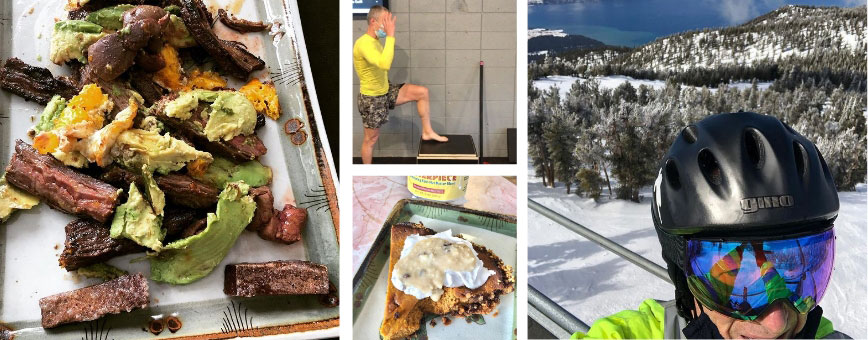
Dr. Paul’s new book, The Carnivore Code, is a detailed look at all the scientific rationale and benefits of eating nose-to-tail animal foods. But he also offers some valuable first-hand knowledge by sharing the results he’s gotten from personal experiments he’s done – like his attempts to incorporate some plant food in the form of carbohydrates (kabocha squash, to be exact) into his diet. Dr. Paul was curious if adding some squash into his diet would help with his post-workout recovery, and how he would feel after a few days of eating small amounts of it. So, Dr. Paul added kabocha squash into his life, three separate times, for a few days at a time each time. And how did he feel after having it, even when it was just for a few days? Not any better – in fact, kind of worse: less focused, emotionally “jittery,” and hungry.
Yes, it turns out that adding carbs made Dr. Paul’s satiety go way down and he found himself way hungrier, much more often. So, back to the regimen of bone broth, bone marrow, and steak he went! And, unsurprisingly, he found that he felt amazing when he went back off of plants – he had improved mental clarity and focus, as well as tons of energy. And the hunger? Gone. Clearly, if you want proof of what works best for you, you’ve got to 1) examine how you feel and 2) pay attention to, and respect the science and history behind the human diet. Unfortunately, we seem to have an “epidemic of autoimmune disease” in the US, as Dr. Paul points out, and what is even at the root of all of it? Think about people you know – your friends, your co-workers, your family….we all know at least one person who’s been suffering from an autoimmune illness or a psychiatric disease for a long time, and if they’re not getting better, then it’s time to realize that it very well could be the plants – because of the toxins they contain. For a lot of people, plants are a huge trigger, and the main problem is that they don’t even realize it! And even if they do, the idea that plants are toxic and harmful to your health is extremely difficult to handle if you’ve spent your whole life believing that you’ve got to eat your greens to stay healthy. But, as Dr. Paul explains: “It is micronutrient density that determines our quality of life – and how do we get the most of that? In animal foods.”
TIMESTAMPS:
Dr. Saladino’s opinion is that we don’t need to eat fruits and vegetables. [03:11]
After eating only meat, He actually felt worse when he reintroduced vegetables into his diet. [06:05]
Paul eats about one gram of protein per pound of body weight. [08:20]
The quality of the calories we use affect the way our body responds. [10:45]
Losing weight is not about eating less food, it is about eating different food. [14:55]
Food affects illness and disease in a huge way. [18:55]
There is much controversy between carnivore diets and plant-based foods. What is wrong with veganism? [22:34]
There is genetic variation in how well we tolerate plant toxins. [25:43]
If you are insulin resistant, you either need to go high carb/low fat, high fat/low carb, or mixed macronutrients with caloric deficit. [27:44]
You can correlate the size of the brain with the amount of B12 in the body. [31:58]
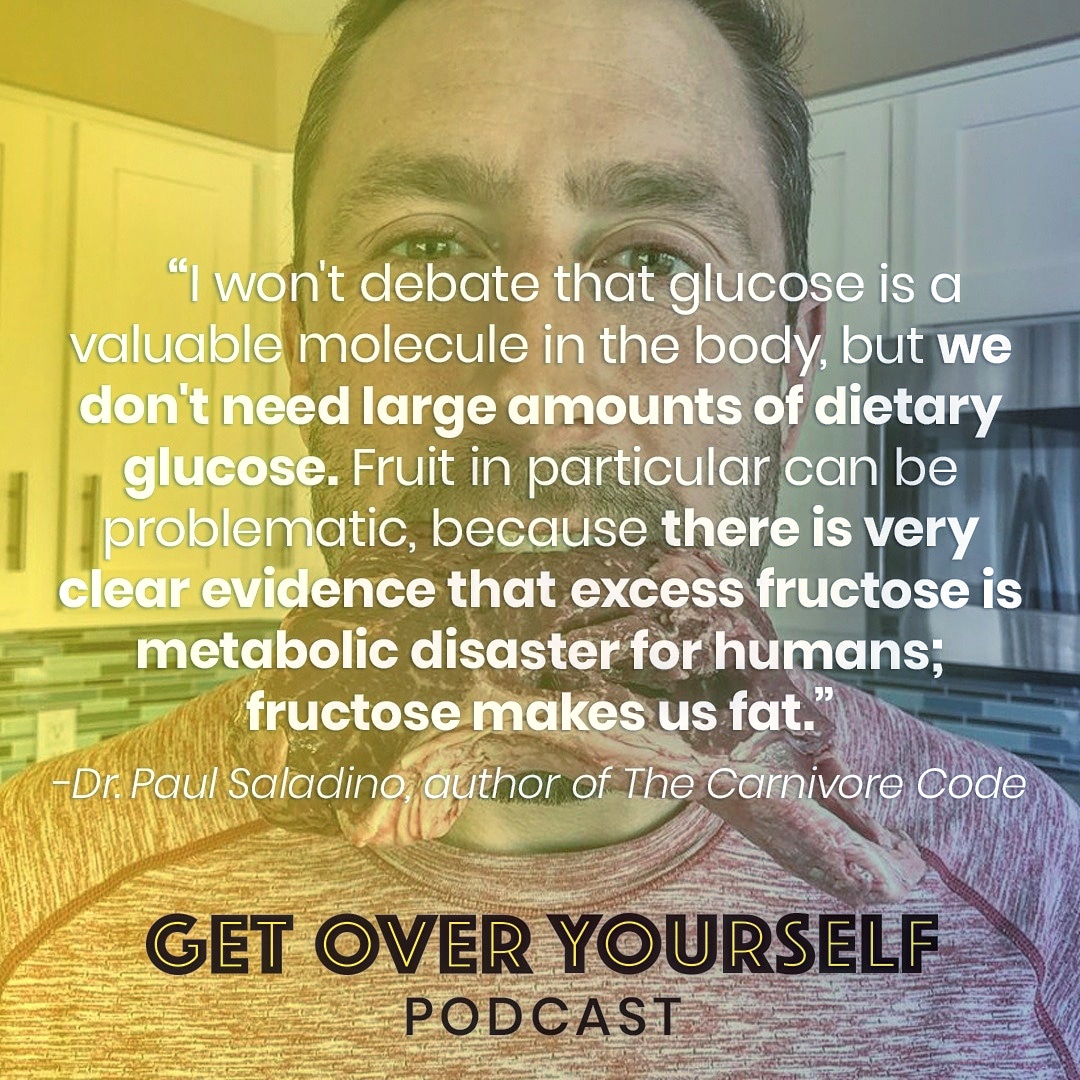
Fruit is a special case that we can consider with plant toxins. [35:18]
Vegetables like broccoli, kale, collard, cauliflowers when chewed, it’s kind of like super glue. [37:34]
Paul debunks the Blue Zone. [46:55]
Curcumin has been shown to affect many things negatively in the human body. [49:21]
Plant foods are survival foods. [52:28]
We can feed everyone beef in the US entirely by using grass feeding. [55:22]
LINKS:
 LISTEN:
Get Over Yourself Podcast