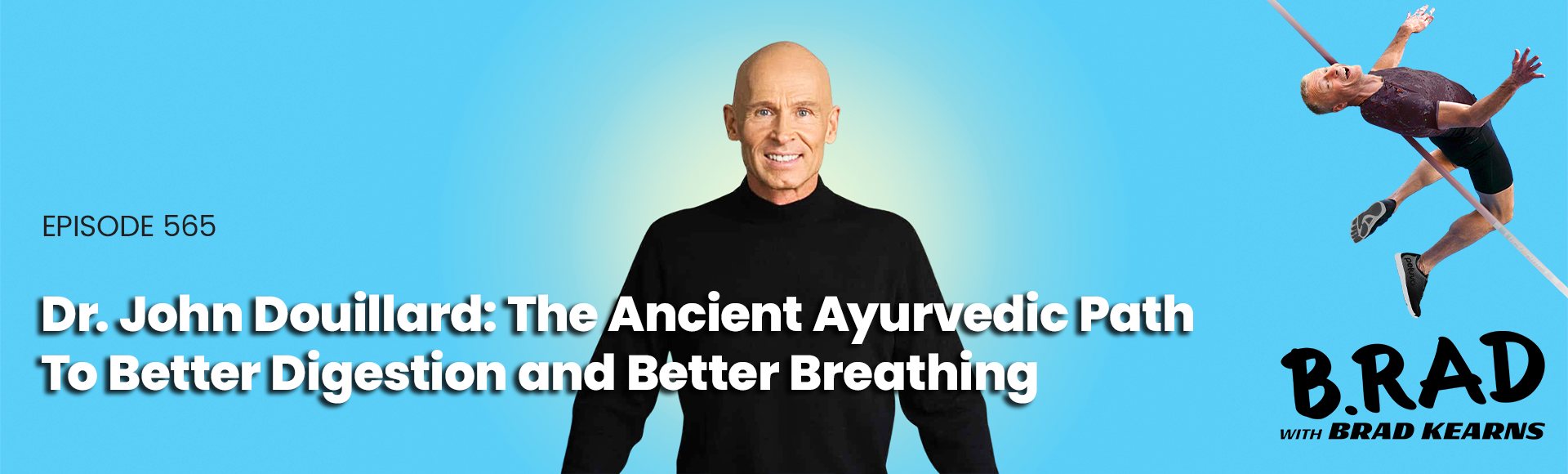
In this episode, I’m joined by Dr. John Douillard, a leading expert in Ayurvedic medicine and founder of LifeSpa.com.
I read his book Body, Mind, and Sport about 20 years ago, and it was one of the first books I found that combined breath work and movement. With over 40 years of experience, Dr. John blends ancient Ayurvedic wisdom with modern science to help people achieve lasting health, vitality, and longevity.
We talk about how aligning your diet and lifestyle with your dosha and the seasons can optimize gut health and detoxification. You’ll learn why today’s extreme wellness trends might work short-term but often miss the root causes of poor health. I discuss how nasal and diaphragmatic breathing techniques—practiced by elite athletes and used by Dr. John in his own triathlon training—can improve oxygen delivery, reduce stress, and open up the diaphragm.
Dr. John explains that 91% of athletes don’t have a fully contracting and relaxing diaphragm because of excessive sitting, which keeps the diaphragm in a pre-contracted, rigid state. He walks us through a basic Ayurvedic breathing technique called DPR—breathing through the belly, chest, and upper chest while raising your arms—to fully engage and loosen the diaphragm. This breath work pumps the lymphatic system, clears toxins, and helps with brain health.
We also cover the “bellows breathing” exercise, or “The One Minute Meditation,” a powerful technique to open the rib cage, increase energy, and enter a deep state of calm. This conversation cuts through the noise of trendy health advice, so if you want to reconnect with time-tested strategies rooted in Ayurveda that support long-term well-being, you don’t want to miss this show.
Dr. John Douillard is a globally recognized expert in Ayurveda and the founder of LifeSpa.com—one of the world’s most trusted sources for evidence-based Ayurvedic healthcare. He’s authored seven books and over 1,500 articles, helping millions reverse aging and heal naturally. Dr. John began his Ayurvedic studies in India in 1986 and later partnered with Deepak Chopra to train Western doctors in Ayurvedic medicine. He also served as Director of Player Development for the NBA’s Brooklyn Nets and has applied Ayurvedic techniques to improve athletic performance, working with top athletes including Billie Jean King. Check out his website, www.lifespa.com, and explore his books—especially Body, Mind, and Sport, which explores how nasal breathing can enhance performance and reduce the stress of exercise.
TIMESTAMPS:
Ayurveda is an alternative medicine system with historical roots in the Indian subcontinent. It is heavily practised throughout India and Nepal. We will learn much of this science as related to our diet and training. [00:58]
It’s not really the food that is causing the problem, it is your body’s flawed internal detoxification processes. [04:07]
It’s easy for people now to disregard this ancient medicine, and think only modern science has credibility. [09:40]
You can bring wheat and dairy back into your diet. Wheat is not the culprit. [11:42]
The most common elective abdominal surgery in America today is having the gallbladder taken out because of the sludge that we eat. [17:14]
We have done away with the seasonal pattern of eating. [21:10]
The Ayurvedic philosophy looks at body types to see what really works for us. [24:09]
More than diet, lifestyle preferences differ with these three different body types. [30:16]
After taking a quiz on LifeSpa.com a person can get a better understanding of what their body needs. [38:02]
We dump 70 million tons of toxic chemicals in our atmosphere every year in America according to the EPA, that filter down on everything we eat and breathe and drink. [41:50]
Breathing correctly adds so much to your well-being. [45:49]
How does one get started learning nasal breathing? [55:18]
LINKS:
- Brad Kearns.com
- BradNutrition.com
- B.rad Whey Protein Superfuel – The Best Protein on The Planet!
- Brad’s Shopping Page
- BornToWalkBook.com
- B.rad Podcast – All Episodes
- Peluva Five-Toe Minimalist Shoes
- lifespa.com
- Dr. Douillard’s LinkedIn
- Dr. Douillard’s Facebook
- Instagram @lifespa
- Body, Mind and Sport
- Body, Mind, and Sport
- Eat Wheat
- The Three Season Diet
- The three body types
 LISTEN:We appreciate all feedback, and questions for Q&A shows, emailed to podcast@bradventures.com. If you have a moment, please share an episode you like with a quick text message, or leave a review on your podcast app. Thank you!
Check out each of these companies because they are absolutely awesome or they wouldn’t occupy this revered space. Seriously, I won’t promote anything that I don’t absolutely love and use in daily life:
- B.rad Nutrition: Premium quality, all-natural supplements for peak performance, recovery, and longevity; including the world’s highest quality whey protein!
- Peluva: Comfortable, functional, stylish five-toe minimalist shoe to reawaken optimal foot function. Use code BRADPODCAST for 15% off!
- Ketone-IQ Save 30% off your first subscription order & receive a free six-pack of Ketone-IQ!
- Get Stride: Advanced DNA, methylation profile, microbiome & blood at-home testing. Hit your stride the right way, with cutting-edge technology and customized programming. Save 10% with the code BRAD
- Mito Red Light: Photobiomodulation light panels to enhance cellular energy production, improve recovery, and optimize circadian rhythm. Use code BRAD for 5% discount!
- Online educational courses: Numerous great offerings for an immersive home-study educational experience
- Primal Fitness Expert Certification: The most comprehensive online course on all aspects of traditional fitness programming and a total immersion fitness lifestyle. Save 25% on tuition with code BRAD
I have a newly organized shopping experience at BradKearns.com/Shop. Visit here and you can navigate to my B.rad Nutrition products (for direct order or Amazon order), my library of online multimedia educational courses, great discounts from my affiliate favorites, and my recommended health&fitness products on Amazon.
TRANSCRIPT:
Brad (00:00:00):
Welcome to the B.rad podcast – where we explore ways to pursue peak performance with passion throughout life. I’m Brad Kearns, NY Times bestselling author, world #1 ranked masters age 60-plus high jumper, and former #3 world-ranked professional triathlete. You’ll learn how to stay fit, strong and powerful as you age; transform your diet to lose body fat and increase energy; sort through hype and misinformation to make simple, sustainable lifestyle changes; and broaden your perspective beyond a fit body to experience healthy relationships, nonstop personal growth, and ultimately a happy, healthy, long life. Let’s explore beyond shortcuts, hacks, and crushing competition to laugh, have fun, appreciate the journey, and not take ourselves too seriously. It’s time to B.rad! .
John (00:00:51):
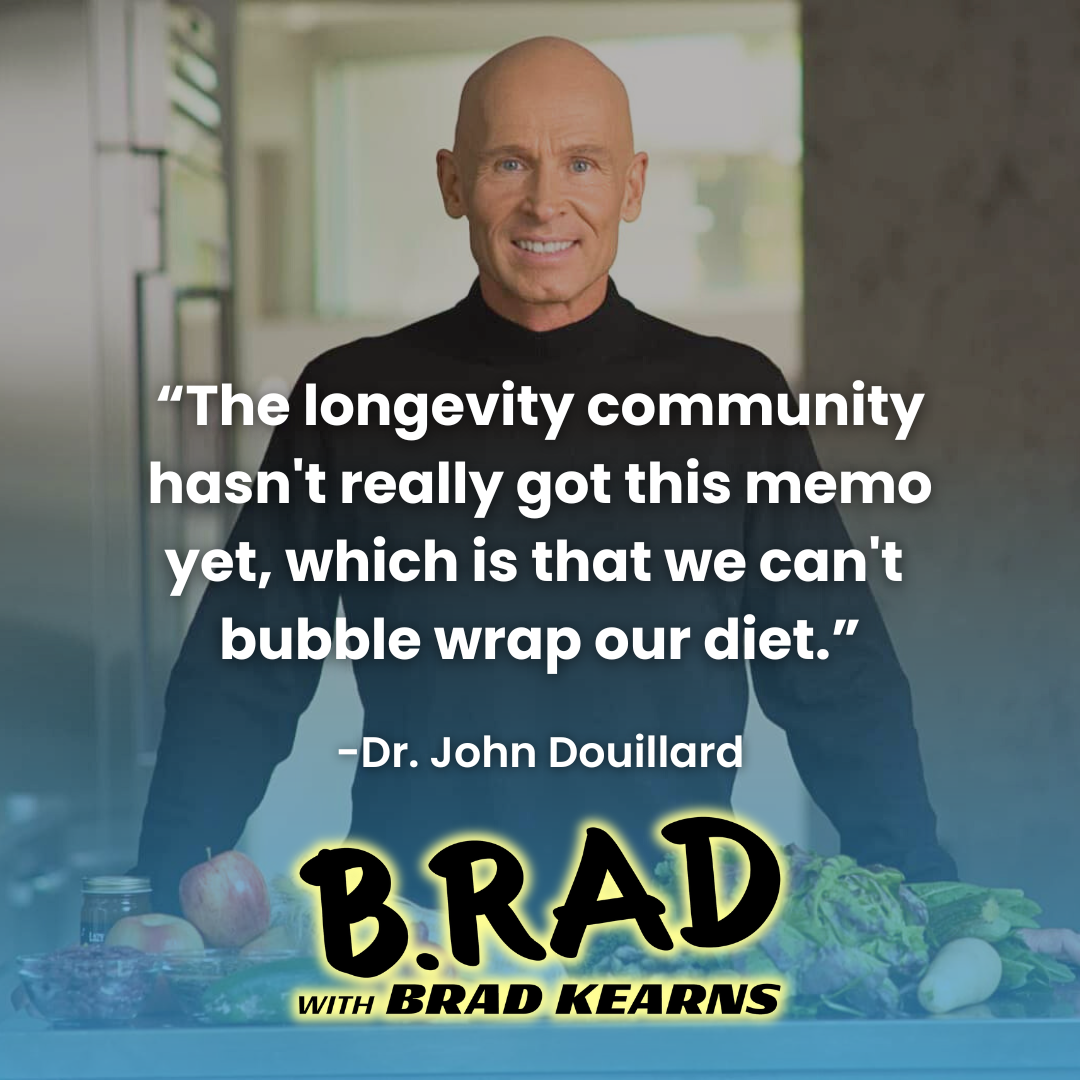
The longevity community hasn’t really got this memo yet, which is that we can’t bubble wrap our diet.
Brad (00:00:58):
It is my pleasure to welcome to the B.rad Podcast, Dr. John Dard and I have been waiting for this interview for over 20 years because a long time ago, I read his wonderful book called Body, ind and Sport and got exposed to these new concepts that I applied to my training and have been enjoying since then. He is a global leader in Ayurvedic medicine, the ancient tradition that emanates from India. He studied there with Dr. Deepak Chopra, another Ayurvedic leader, mind body medicine leader. And today, as Dr. John will tell you at the start of the show, it’s been great to see emerging scientific research, validating and supporting the benefits of these ancient practices, especially as it relates to all the confusion and controversy that we see today with various experts arguing different things about the healthiest eating patterns, and of course, pointing to scientific research to make their point and making the rest of us super confused.
Brad (00:02:09):
Uh, I was also really taken by Dr. John’s commentary about nasal diaphragmatic breathing, and this is over 20 years ago. I think the first book came out in 1998. The paperback came out in 2001. It looks like you can still get it on Amazon, Body, Mind and Sport. He’s written numerous other books about Ayurvedic principles as they relate to diet and athletic performance. He has a nice background training elite champion athletes in various sports. He’s gonna talk a little bit about that, but I think you’re gonna have a wonderful initial exposure to the principles of Ayurveda and how they can relate to particularly your dietary choices, especially if you have food sensitivities as well as your training, behavior, lifestyle patterns, what suits you, how to to change your diet over the seasons, topics like that that are very important to Ayurveda, but of course, widely ignored in the mainstream health services.
Brad (00:03:10):
So it’s great to see leaders like Dr. John and his associate Deepak Chopra blending ancient eastern medicine wisdom with modern medical science. That’s kind of his stick, as he says. And, uh, the, some of the insights are gonna move pretty quickly. I try to make sure you’re following along with the science, especially as we get into breathing. I have a whole nother show about the nasal diaphragmatic breathing insights that have emerged to be a really popular topic in modern times. But I think you’re also gonna be taken by some of Dr. John’s compelling arguments, for example, that restrictive diets and their extreme popularity these days to cure your ills, the carnivore diet movement and all the great healing that’s happened there. People who are in favor of vegan, plant-based and say that has become their health awakening. He argues that indeed it works to go on a restrictive diet and eliminate foods that may be offensive.
Brad (00:04:07):
But he says it’s not really the food that’s causing the problem, but it’s your body’s flawed internal detoxification processes such that the diet restriction is only treating the symptom rather than the deep cause. And that’s when we have to learn more about Ayurveda. So it’s a pretty, uh, interesting, spicy, controversial take, and it makes a great case that we need to go deeper and learn more about ourselves. Definitely go to his website, life spa.com and take the free Ayurvedic quiz and determine your dosha type. You might’ve heard of Vata, Pitta and Kapha. He gives a brief overview of those. I think you’re gonna enjoy learning a bit about Ayurveda from one of the world’s leading experts. He co-operated Deepak Chopra’s Ayurvedic Center where they trained Western medical doctors and chiropractors in order to bring Ayurveda principles into their clinic, really cutting edge stuff. They’ve been going strong with over 40 years experience.
Brad (00:05:10):
So here we go with the OG, Dr. John Douilliard, author of Body, mind and Sport, many other great books. Dr. John Douilliard. I am so happy to join you. As I said, just before we hit record, I read your wonderful book, Body, Mind and Sport. I think it was over 25 years ago or something and I couldn’t put it down. It was recommended to me by a friend. And I started nose breathing during my triathlon training, and here we are in 2025. So I’d love for the audience to just get introduction about the work that you’ve been doing for so long, and then we’ll get into the, the hot topics, which interestingly have become hot today, like the topic of breathing and nasal diaphragmatic breathing. But, uh, you’re the OG on this, so I thought it would be great to have you on the show.
John (00:06:00):
Oh thanks Brad. Thanks for having me. You know, I, um, went to India in 1986 for somewhat of an extended vacation, couple weeks, six weeks or something. And, I wanted to study this system of medicine called Ayurveda, which comes from India. It’s thousands of years old. And I kind of heard about it, and I was super fascinated by the runner’s high the zone, which is why I wrote the book Body Mind and Sport, the one that you read. And we did research kind of proving that by breathing through your nose and doing some interesting techniques while you’re exercising, you can actually slip into the runner’s high. Literally, we publish studies in International Journal of Neuroscience that you can actually create a meditative alpha brainwave state of coherence during vigorous exercise. It is like, imagine running as fast as you can, but your mind responding to that as if you’re in a deep meditation.
John (00:07:00):
I call that the, the eye of the hurricane effect. The bigger the calm you create on the inside, the more powerful the winds on the outside. And that’s sort of what the runner’s high experience was. So I went to India to try to figure that out and, um, ended up, you know, went there for a vacation, ended up closing my practice by a scratchy phone that neither one of us could hear my partner. And I never went back to that practice. I spent a year and a half in India, met Deepak Chopra there, came back and co-directed his center for eight years, and was thrown into the arena of training medical doctors into this kind of system of medicine called Ayurveda. And, um, you know, here I am, I’m a chiropractor trained in Ayurvedic medicine, teaching medical doctors, and they kind of really needed me to teach them from a scientific perspective.
John (00:07:51):
So that’s when I started digging into the Ayurvedic research and connecting the ancient wisdom with modern science. And that’s what I do to this day and been doing for years, is taking something that’s been medical practices, that have been time tested, been around for thousands of years, right? Something stopped working. They would stop doing it after 10 or a hundred years, but thousands of years of practice means it must work. And now we have science to back it up. And when you have science alone, right? I mean coffee, I can give you studies for pretty much anything on both sides of that aisle. Coffee can be good. Coffee’s bad. Wheat’s good, wheat’s bad dairy’s good, dairy’s bad. Nuts are good. Lectins are good. Lectins are bad. I mean, it’s not reliable to just look at the science, but if you have something that’s been around for thousands of years and you have modern science to back it up, I feel like that’s a great place to start. So safe place to start in this crazy world where nobody knows what to believe anymore.
Brad (00:08:50):
Well, that’s really well said. And I think it seems like there’s still resistance to anything that’s not super linear, mainstream backed up by science, especially people who are in the medical and the wellness care fields. They, they will dismiss it no matter how many thousands of years old. It’s like that’s what I’ve experienced in my journey through both mainstream medicine and alternative medicine. And I wonder if you’ve kind of faced that roadblock. You’re smiling. So I, I think you have. And, um, I, I don’t, I don’t think you could say it any better than you just did the, the blending of both. But it’s important to point out how science is not the end all, especially today on social media. People are referencing that and thinking that they’re experts because they can reference science even though there’s no practical experience.
John (00:09:40):
You know, the funny thing is about, I mean, you’re so right, is just people think, oh, it’s old, can’t be good. But really the new stuff is the stuff that’s been shown to be dangerous. Drugs come on the market, and then they come off the market. People are having many side effects from many of the medications that people are on. And when you look at something that’s been around for thousands of years, and you have the science, it’s something to I think at least begin to look at. And when you look at the, you know, the longevity sort of biohacking world today, so much of what they’re talking about was literally steeped in ancient wisdom. I mean, you talk about circadian rhythms. I mean, Ayurvedic medicine went into great detail on circadian rhythms, breathing practices, and nose breathing practice. Something that I wrote about 20 years ago, 25 years ago, my book, Body Mind Sport, and published studies on it, pran on breathing techniques, or, I mean, the research on that is off the charts and is part of the, you know, the biohacking world meditation, even that’s something as simple as that part of the, now the biohacking world, you know, understanding, and this is a big deal ;'[ in our world.
John (00:10:49):
I think the, the, the longevity community hasn’t really got this memo yet, which is that we can’t bubble wrap our diet. We are being told, don’t eat, don’t eat, don’t eat, don’t eat, don’t eat, don’t eat grains, don’t eat nuts. Don’t eat beans, don’t eat lectins, phytic acids, goss, oxalates. Don’t eat all this stuff because they’re hard to digest and therefore, you know you’re not gonna feel good and you’re gonna get bloated and therefore don’t eat it. Now, you know, many are saying, well, you just eat like a lot of protein and vegetables, maybe some white rice. Keep it really simple. I mean, it’s just become so extreme. And the research shows that when you bubble wrap your diet, which means take foods out of your diet and you feel better, of course, I mean, it makes sense. Those hardest to digest foods are more canaries in the coal mine.
John (00:11:42):
They’re actually telling you that there’s a broken down aspect of your digestion, and it’s not really the food that’s the problem. It’s something wrong with your digestion. So in Ayurvedic medicine, they said that 85% of all disease comes from some breakdown in your digestion, including your microbiome, which they talked about thousands of years ago, even though they couldn’t see these bugs. So it’s sort of really interesting that our current world is, if you don’t feel good eating it, take it out. I agree with, take it out for a spell, why you go fix the underlying problem I got on my website at lifespa.com. You have a digestive health quiz and you find out what part of your digestive system is broken and then fix it with herbs and lifestyle and foods and things like that. There is a study shown that when people, just, for example, I did write a about a book called Eaat Wheat
John (00:12:31):
And it was not about like that. I want everybody to eat wheat, but wheat is not the culprit, it’s not public enemy number one. If you have trouble digesting it, and I understand the glyphosate thing, but in general, good clean wheat, then if you have trouble digesting it, something’s been wrong with your digestive system. And, and there was a study done that with people who eat wheat versus people who are gluten-free, but don’t have to be, they don’t have celiac. And they found that the people who were eating the wheat on a regular basis had four times less mercury in their blood than people who were gluten-free, but didn’t have to be significantly more good bugs, less bad bugs and more killer T cells than the people who were gluten-free, but didn’t have to be. And there were two Harvard studies showed one over a hundred thousand folks in both of those observational studies.
John (00:13:20):
But they found that the people ate the most wheat had significantly less heart disease and significantly less diabetes than the people who are gluten-free, but didn’t have to be. And the reason for that is that the harder to digest foods, the lectins, the antinutrients on the beans and the nuts and the seeds and the oxalates, they create a little bit of irritation. And that’s a ESIS effect. Mm-hmm. You know, what doesn’t kill you makes you stronger. And that’s why we have gut immunity. And if you bubble wrap your diet, make it all baby food, really easy to digest, you’re gonna feel better, but you’re not gonna have a reason for gut immunity. And the studies just go on and on. I mean, one of the original studies that blew my mind was a study with Amish kids, and Amish kids have the lowest rates of asthma on the planet.
John (00:14:08):
And their genetic cousins came from the same valley in Switzerland. The Hutterites came to America and they had the highest rates of asthma on the planet, their kids. And they became sterile farmers, everything, stainless steel, sterile. But the Amish kids are running barefoot in the barns. They have cows as pets, and they have the lowest rates of asthma on the planet. And they measured the dust in the barns that these kids were breathing and the dust was creating a little bit of hormetic irritation in the respiratory tract that triggered an immune response against asthma. And they have the lowest rates of asthma on the planet, right? So that’s why we don’t want to just live in a bubble. We have to, if we don’t feel good interacting with the environment in a natural way the best we can, then we have a hypersensitivity, which means our digestive pathways and our detox pathways, which are the same, are broken down. And that’s where we need to do the work instead of just taking stuff out of the diet on a regular basis. Because that’s not, I mean, the science is in on that. And even though we feel better, and I get that we can’t, that’s not the final solution.
Brad (00:15:18):
Yeah, I guess, I don’t think too many people would be disturbed by that argument. Um, you know, the people that need to truly detox from a horribly toxic lifestyle overall, they’re gonna clean up their diet, they’re gonna maybe do a restrictive diet like carnivore is so popular and 30 days later their arthritis is diminished. And I, I guess that’s a sign that they’re taking away something that’s overwhelming the detoxification process. Uh, but that’s interesting when you say that, you know, the, the, the wheat is not the culprit. I wonder if you would extend that to, uh, refined industrial seed oils, which are so criticized. Um, you know, there, there’s two different things here. Like I get the beautiful sourdough bread from the farmer’s market, it goes stale in three days. And that’s my, that’s my qualification rule for me. Be able to eat something that’s that fresh and I love it, enjoy it. But I’m not buying ever a loaf on the shelf in the store because I don’t feel it has any nutritional value or, and all that. But how far can we take this argument, is what I’m saying? Really?
John (00:16:19):
No, you’re, you’re, you’re a hundred percent right. And, and what they do to make the bread in the grocery store lasts and stays squishy forever, pretty much is they put seed oils in it, um, to act as preservatives. ’cause they bleach, boil ize these oils to such an extent. ’cause they’re really so volatile coming oils out of a seed. And when they see the light of air, any photons of light will actually make them go rancid. So, so they boil ’em and bleach them and sterilize them until then they found out they, they actually work wonderful as a preservative. Why? Because when you put in a loaf of bread bugs on your counter, that would normally make the bread go bad in three days, like you said, they don’t want anything to do with those seed oils. Even though your microbes actually consume fatty acids as part of their fuel supply, they don’t want anything to do with those oils, so they won’t go near your bread.
John (00:17:14):
So the bread will stay squishy forever and say, and the inside of your grocery store will have all these preserved foods for you. And the problem with that is that when you eat that bread, the oils in that bread also, which normally are ingested by your microbiome, they want nothing to do with it. So where does all the oil that none of your bugs will eat go. They go to your liver, which is the oil capital detoxification center, and they create something called bile sludge. And today, the number one elective abdominal surgery in America today is getting your gallbladder taken out because of the sludge that we eat. And, the idea that we have not only consumed a lot of these highly processed seed oils, we’ve also stopped eating fat in general. You know, your gallbladder is a sack of bile that’s 25% concentrated.
John (00:18:09):
So how five times concentrated than the regular everyday bile. So it’s a sack of bile that is so willing to digest a ridiculous amount of fat in one sitting. Like our ancestors would, if they had killed the buffalo or whatever, they’re gonna eat all the fats in the organs really quickly ’cause they go bad very, very quickly. And they would dry the meat that could last for weeks. But the fat had to be done right then and there, which meant we had the capacity to eat a huge amount of fat in one sitting. And now we’ve been on a no fat plan, high seed oil high-processed fat plan for many, many decades. And that really made, the gallbladder was designed to contract fully when we eat a mass amount of fat in one sitting, and it might be weeks before we get another version of that.
John (00:18:56):
But we had that full blown exercise of the gallbladder. And today between the seed oils and the, just the lack of fat in the diet creates a real problem. And that’s why seasonal eating becomes such a critical piece of the puzzle. If you think about how we were, or originally I wrote a book, my second book was called The Three Season Diet, which was about eating with a three harvests in nature, a spring harvest, summer harvest, fall harvest for winter eating. And we look at a spring harvest. There’s no carbohydrates, there’s no pasta or pizza coming outta the ground in the spring. It’s a completely no carb time of the year. In the winter it is gonna be a hunt and, and a high protein, higher fat time of the year. So that’s, and and every traditional culture new that if they hunted during the summer when they couldn’t eat the food out of their garden fast enough, they would over-hunt and have nothing to hunt in the winter and they would starve.
John (00:19:49):
And this happened in many cultures, but many of the cultures figured this out that they had to be careful about when they can consume different foods. They couldn’t just willy-nilly whatever they wanted, whenever they wanted. And that’s where seasonal eating became, you know, a big part of our, our human survival. n many, many cultures. Easter Island, a perfect example, if you go to Tahiti and you know, you’ll find that, that the king actually decreed that there were certain periods of decreed scarcity and calorie restriction and foods you weren’t allowed to eat. Because if you had anything you wanted, whenever you wanted, you would actually run into, you know, famine and real problems with ensue. So the idea that we are designed to eat in a seasonal way, it gave us this seasons where we’d eat a lot, a lot of fat, like in the winter and in the early spring, the bugs of the hunter gathers changed in the spring to be what are called actinobacteria to deliver fat as fuel. And in the end of the summer, the hunter gather bugs change to something called bacteria deets, which deliver carbohydrates or starches as their fuel supply. So our fuel supply historically changed from one season to the next. Now we eat the same stuff every day, every day all day long. There’s no microbial diversity, which is another issue. In fact,
Brad (00:21:10):
Do you think we’ve done away with the seasons and the connection to circadian rhythm by blasting ourselves with light all winter and therefore really we don’t have a winter? And how do we, you know, compare and contrast that with like an edict from Dr. Perlmutter to not eat any fruit in the winter? And I, I remember making fun of this. I I put that on a sticky note on my door ’cause he made the passionate argument about it. And then I’m thinking, wait a second, I just got on a plane and flew to Hawaii for vacation. So I’m not in the winter either. And the fruit’s available all year and how we make sense of the ancient, you know, insights applied to modern 24 7 artificial life.
John (00:21:52):
Well, one of the things that I did was I actually put together grocery lists for folks to make it super easy for them. And, you know, you can download these on my website for free and there’s a grocery list for winter, a fall harvest for winter, eating, a spring harvest and a summer harvest. And all you gotta do really where, wherever you are, Hawaii doesn’t even matter. Like in the summer, you would just circle the foods on the summer grocery list that you like and then give yourself permission to get more of those foods in your diet. There’s ones with asterisk, which are the superfood for that season, and it makes it sort of easy. It’s sort of the kind of the, the, the, the highlights of my book the Three Season Diet. But that makes it a super easy way to get seasonal eating, get medicinal dosage of the foods that you need for each season.
Brad (00:22:43):
So you do the best you can with respect to how we’re nullifying some of the effects of seasons. Like winter was cold and dark and had no carbohydrates and now there’s nothing of the sort. But we can still do ourselves well by honoring what, what should be winter? Is that what you’re saying?
John (00:23:04):
Right. You can, you know, you just pick foods that were naturally harvested in the fall for winter eating and eat more of those foods. Doesn’t mean you have to only live in this bubble of only eating foods in season, but you can surely, you can surely get medicinal dosages of, of those foods very easily in your diet. And you know, squirrels eat nuts in the fall for the winter and seeds because they’re naturally insulating. So nature’s harvest had, was like an antidote for the extreme of each season, right? So at the, during the winter time, we have a cold dry season, but nature’s providing nuts and seeds and more hunt, more hunting and more meats and more fat to insulate you. In the spring, in a rainy, muddy allergy season, you get leafy greens and sprouts and no carbohydrates and no piece and no congesting foods. In the summer when it’s hot, you get cooling fruits and vegetables. Nature had a plan to give us the harvest that was the antidote to the extreme of each season to keep us in balance.
Brad (00:24:09):
This has been a really exciting sort of teaser to get in and engage people, but I really should back up and say, Hey, why don’t you set us up with a little basic explanation of Ayurvedic philosophy, especially with regard to the body types, which you’ve touched on a little bit. But that was really an awakening for me when I read the book so long ago to realize that we have the, the doshas and uh, this is obviously influenced by genetics and then we can learn more of what works for us in particular in our own body types.
John (00:24:45):
Yeah. So just like I said in the winter, it’s a cold and dry season and nature’s got the antidote in nuts and seeds and meats and things and fats to help antidote that. Well, there are, you know, these are cycles or principles in nature and must and we are part of that. So our body type reflects those different qualities in nature. We all know people who are cold all the time, right? We all know people who are constantly putting, wearing sweaters and constantly bundling up and putting on more covers on. And then there’s people who have more summer properties in their constitution and they’re constantly hot and they’re throwing off the covers and they never wear a jacket or a hat, right? So, so those are called, we call them picked-up body types and they’re hot, fiery, competitive driven types. Mm-hmm. And they overheat, they inflame, they get heartburn, they get in, they get skin rashes more easily than the winter.
John (00:25:43):
Vata, we call it air body type, who are tend to be more cold and more dry. They get more nervous, they don’t sleep as well. They get their skin gets dry, their joints get dry, and nature’s gotta plan to help give them foods to really insulate them and and lubricate them during the winter months when they’re at most risk. ’cause a cold body type and a cold seeding eating, eating frozen blueberries in a frozen smoothie in Vermont, they couldn’t even ever do that in Vermont in January in the 18 hundreds ’cause it didn’t even exist. So we’ve created a diet that’s so outside of what nature could actually provide for us, it creates an imbalance. So if you’re a hot body type and a hot season eating spicy food, beer, wine, cheese, fermented foods, all this hot, very acidic foods, coffee, things like that in excess, you’re a hot body type and hot season eating hot things, maybe exercising in hot weather, eating spicy foods, you can overheat. And same with a spring body type. It’s a, if you’re a heavier congested, easygoing tend to hold onto or more water body type and you’re eating pasta and pizza all day long, you’re gonna gain more weight, become more congested. So nature didn’t, the plan was, hey, we’re gonna give you, you know, spring greens and root vegetables and no carbohydrates to speak of in the spring to naturally antidote the tendency of your constitution.
Brad (00:27:10):
So we have the, the Vata, the Pitta, and then the third one is the Kapha. And can you describe some more characteristics of each one? And I know we can take a quiz and figure that out, but probably people can light up when they hear the distinctions and, and guess which one they are perhaps.
John (00:27:28):
Yeah, so you know, the Vata types are governed by air, so they’re also governed by movements. So air moves your nervous system is the thing, but it’s moving really fast. So people who are more Vata tend to be more thin, highly sensitive, very aware. They were the scouts in the traditional cultures ’cause they could feel and sense danger. They had high rate, they could feel everything. They were the artists, the creative ones, the ones writing the beautiful, you know, rock art on the cave walls. They would do, they were, uh, very creative and very spiritual ’cause they were, and very, very aware the Pitta body type, you know, hot, fiery, competitive driven. They were the ones changing things. They wanted to, you know, they wanted to, you know, build an extra room or put a deck out on their cave.
John (00:28:25):
In the old days, they were, they were never satisfied with the status quo where the Vatas were the creative ones looking at the stars, where the Pitta ones were driving change and the ka a easygoing, calm, you know, earth and water types were more connecting and communicative and they bonded and they’re the ones who wanted to sit by the fire, tell stories, sing songs, chant, do all this kind of stuff. And they were the ones that glued the community together as a community. The fiery Pitta driver type say you just want to go change and they’re more independent and individual and go out there and, and do it on their own. And the winter Vata types were, you know, the really highly sensitive with lots of radar. And that’s, you know, we see today a lot of, some people are just super sensitive to their environment.
John (00:29:13):
Some people are just really driven and kind of really aggressive and competitive. And some people are really easygoing and chill. And we all have those qualities when are, some are spring in our constitution, but when you take a questionnaire like it’s free on my website at lifespot.com, you can just find out how much of each of those properties you have. And that could determine why you’re, you know, more inclined towards not sleeping so well or having heartburn and digestion or skin issues or maybe why get more congestion or gain weight more easily. These are all issues that relate to, uh, or predispose us based on how much of these cycle or principles in nature that we actually have. So it’s really logical, you know what I mean? And if you have a lot of fire in your body type, well take the summer gross through this, we start thinking about eating foods that cool you down, particularly in the summer when it’s hot and you’re a hot body type and nature’s giving you foods to cool you down. That’s not, you know, hard for us to wrap our head around.
Brad (00:30:16):
Does it also extend to sort of other lifestyle circumstances besides diet? Like your training patterns, maybe the type of career or work environment or the friends that you want to hang out with? Uh, you like to go to wild loud nightclubs or you like to stay home and read a book kind of thing?
John (00:30:35):
Yeah, absolutely. You know, people who are more Pitta, you know, they’re gonna be, you know, even in the sports that they choose, they’re going to be, um, more independent, you know, individual sports like tennis or ski racing or
Brad (00:30:51):
Triathlon,
John (00:30:54):
What’s that? I
Brad (00:30:55):
Said triathlon.
John (00:30:58):
Triathlon. Exactly. Swimming, you know, but that body type would be really good on a team where they have to pass the ball because they love to do it. They can do it, they feel they can do it all themselves. But on a team you gotta pass the ball. Where the winter body types who are thinner don’t have all the muscle mass naturally. They’re more, they really need to do things that will build them up. Like a lot of people who are have that winter thin, uh, very elastic and flexibility, flexible body type, they do yoga, which oftentimes is, they’re really good at it, but what they don’t have is more muscle mass. So the ones that probably, you know, doing yoga and staying flexible is great and they’re really great at it. But oftentimes we have to do what we’re not good at.
John (00:31:44):
Like the big heavy Kapha spring types that hold onto more earth and water, you know, they probably don’t need as much bodybuilding ’cause they have more mass than the other body types. They probably do need the yoga and the flexibility, you know what I mean? So, you know, so we all have to look at what we’re good at. But that doesn’t always necessarily mean that, that if you only do that, you’re gonna be balanced. So you have to kind of look at where I’m at, like the winter body type, if they’re, you know, playing racquetball in the, what ball’s moving 90, you know, 90 miles an hour and you’re just going fast all day and you’re 90 miles an hour in your brain thinking incessantly go, go, go, can’t sleep at night. You know, yoga would be really great to calm them down, but they also have to add the piece that they don’t have constitutionally, which is the muscle mass piece. Yeah. So it’s kind of a really great insight to get a sense of who you are and what your constitution is and where your strengths and weaknesses are and what you can do to keep yourself in balance down the road.
Brad (00:32:46):
Yeah. And at earlier in the show you said the wonderful blending of ancient wisdom and modern science. And now, I’m talking about the cutting edge genetic testing that’s available. My experience with Get Stride was amazing because I got my report and all my tendencies and one of ’em was that my muscle fiber composition was around even with strength and power to endurance. And it was such a mind blowing, uh, you know, insight because I trained as an extreme endurance athlete in my youth competing on triathlon circuit. And I was kind of going against my genetics and also some of those things that you described with the Doshas where if I had, you know, learned more and honored that more, I probably could have created a better personalized training experience that might’ve been different from my peers who were extreme genetically endurance endowed and had that similar dosha makeup where you could really identify them as someone in a distinct category where I wasn’t quite fitting that category well and, and struggled accordingly with over training patterns and sort of crash and burn patterns rather than consistency ’cause I was fighting against some of these basic natures.
John (00:34:04):
Yeah, no, it’s very, very true. I worked with Scott Molina, I don’t know if you remember him before.
Brad (00:34:09):
Sure, yeah.
John (00:34:09):
Back when. But he was one of the best triathletes short course. And he always had trouble with a long course races like the, I think the camp championships were in nice back then, very hot before they went to Hawaii. And, um, and he never really did well. So he came to me and we body typed him and he was very Pitta, very competitive. He was the world champion on short course ’cause he did really well. There was a race in, I think it was up in Canada, a a full iron man. And he won by like an hour and a half. Like he didn’t under, and it snowed during the bike ride. I meaning he didn’t understand where everybody was, you know, but his hot body type did incredibly well in this cold, cold race and he just killed it.
John (00:34:50):
And uh, so, but, so he, but he never did well in those long hot races, the full Ironman in the hot race. And so he came to me, we body type, and he was full Pitta, his favorite pre-race meal was hot, spicy Mexican food, which is a hot meal and a hot body type doing a hot race which can overheat you more easily. He loved coffee, he loved, you know, beer and, you know, you know, fermented things that were actually more acidic in nature. So I gave him a list, the grocery list that was all summer and said, Hey, eat more of these foods and you know, get off of some of those hot, very acidic foods because that’ll help your body type. We gave ’em some coriander tea recipes where you’d make some coriander tea and we drink that in your water bottle, which is a super cooling agent, just puts some seeds in a, in some water and you drink that actually tastes pretty good. And he put that in his water bottle and did more of those things. And he actually won the Ironman and, uh, <laugh> and, um,
Brad (00:35:47):
1988. Yeah.
John (00:35:48):
But, there were some, some people were saying that he did steroids, uh, and that’s why he won the Ironman, but we’re pretty sure it was the coriander tea that made him win the Ironman. So, uh, we’ll stick with that. But the point is that the logic was there that a hot person at a hot season of doing a hot thing, eating hot, spicy, spicy, spicy food, you’re gonna stack all that, those heat properties in your body and, and that can blow you up. And, and that’s why we all wanna take a look at who we are and how we can kind of bring our system into balance.
Brad (00:36:20):
Yeah, I guess educating yourself and learning about the Doshas and identifying your, uh, your pattern from your, from your quiz. There’s also a balanced, uh, dosha try dosha, right? Where you don’t distinctly fit strongly into that category of hot, spicy, competitive, but you show attributes of each.
John (00:36:43):
Yeah. When you take the body type question, if you go to light spot.com, you’re gonna get a, you ask you a whole bunch of questions, it’ll give you a profile of how much you, a winter, summer, spring Vatas, Pitta coffee you have. And, um, depending on what the answer is, some of you could have, you know, you know, 15 15 15 equal across the board, which means you have a little bit of everything, which is really cool. You have the really good properties of everything, but it really means you do have to make adjustments with every season because you have enough winter to really make sure you’re getting those oily insulating foods in the winter, the cooling foods in the summer and the decongesting foods in the spring. That’s really important. And when you take that questionnaire at lightspa.com, you also get profiles. It tells you, okay, my overall body type, like I’m what called Pitta-Kapha, which is summer and, and spring. But you get an emotional profile, it can tell you, well, what’s your body type emotionally, what’s your body type, mentally, what’s your body type, behaviorally and your fitness profile, and then your overall profile, which gives you a little bit more insight into like, you know, the details of who you really are. It’s kind of cool.
Brad (00:37:55):
So lifestyle.com, you take the quiz LifeSpa l oh, LifeSpa.com, Sorry,
John (00:38:01):
LifeSpa
Brad (00:38:02):
Life spa.com. Let me say that over so we can edit that out. So you go to life spa.com, L-I-F-E-S-P-A, you take this free quiz, have a little more understanding of your Ayurvedic tendencies, and then the grocery shopping list can help you navigate your shopping during the various seasons. What other resources might someone investigate if they, when they armed with this knowledge now?
John (00:38:35):
Well, I think it’s, you know, first of all, understanding your strengths, weaknesses, likes, dislikes, you know, getting to, you know, getting a sense of some of the big activities, behaviors, sports you could choose that would be more inclined with bringing your body into balance for the long haul. You’re looking for a longevity. We want to bring balance back, just like nature says, okay, it’s a hot season. I’m gonna give you cooling foods. It’s all about keeping balance as opposed to letting you know, let’s say you’re a competitive driven, Pitta fiery athletic triathlete. Okay, now that’s a hot body type doing a hot thing and a hot season year round. You know what I mean? And that can be, you can be great at it, but you gotta figure out a way to bring the balance back. Now that would be cooling your body with foods, you know, you know, trying to do more yoga, more breathing, you know, even just swimming, you know, cold baths, things that would cool, cool you down to help antidote the extreme of your behavior is always a really, really good idea.
John (00:39:40):
And that also gives you insights of what’s going on in your digestion. What part of your digestion might have broken down? Do you have more lymph concerns, which are more cough concerns, holding onto more water weight, having more congestion in that regard and more heartburn, you, you know, indigestion kind of thing. That would be more of a pit to concern. Constipation is winter drying you out of your intestinal tract. So it definitely gives you insight of where you might be predisposed to breaking down on a digestive level. Mm-hmm. Which really ultimately is one of the most important pieces of the puzzle that we ignore. Generally speaking, we just say, oh, this, don’t eat, don’t eat, don’t eat. But we never really go back and fix the underlying weak link in your digestion that might be causing most of your health concerns,
Brad (00:40:23):
Even if we’re not ignoring it. And we’re deep into healthful eating these days with the, the common tendency of orthorexia and also maybe misguided attempts to clean up and detoxify one’s diet to the extreme, like you mentioned, thinking that you now can hang your hat on a vegan plant-based eating pattern because you’ve had an improvement in digestion from going to fast food and shoveling down anything and making these, I guess you would call it a false conclusion, where now you’re obsessed with a certain dietary pattern that is essentially what you were describing is it’s really just addressing the symptoms but not the cause.
John (00:41:05):
Yeah, you’re right. I think that, that when you go down that road of just taking the food out of your diet, you kind of become, you know, you take wheat outta your diet, you feel good six months, and I had this happen in my practice years and years ago. We take people off of wheat, they’d feel better, they come back 3, 4, 5, 6 months later and now they couldn’t eat dairy. And then the next thing they have to take it off, they’d have to get off of grains or beans or nuts or seeds. And that’s what’s happened in our culture. We just kept, continued going down that road of just taking the food out of the diet, which in short order you end up with a lot, with hardly anything left to eat. And then some people become so obsessed, but I eat this, I feel bad, I eat this, I feel bad.
John (00:41:50):
They become more ortho thoracic. They, they become obsessed with, you know, micromanaging their diet as opposed to creating more diversity and the ability to digest a wide variety of foods. Because if you can’t digest certain foods, that means you can’t detoxify well. And we dump 70 millions of 70 million tons of toxic chemicals in our atmosphere every year in America according to the EPA, that filter down on everything we eat and breathe and drink. And that has to be digested and detoxified. And if you don’t digest easy to digest things like wheat and nuts and seeds and grains and lectins and gns and oxalates, well, you’re probably not detoxifying well either. And that is a big problem down the road.
Brad (00:42:35):
Wow. I’ve never heard it said that way, but that’s super interesting. So, if right now you have some issues with x, y, z food, we gotta talk. In other words, people are kind of walking around with these calling cards in their pocket like, yeah, I can’t do peanuts, or I can’t do this, or I can’t do that. And they just think stay away from those foods. But it sort of could be like a leading indicator of a deeper issue. We should be able to eat most anything is maybe what you’re arguing.
John (00:43:07):
They are oftentimes canaries in the coal mine. It’s not like, you know, there aren’t, like some people have core allergies to certain foods, I get that. But for the most part, what we’re seeing is just kind of this gross, like donate, donate bubble, wrap your diet and eat this super, super clean, easy to digest diet. A carnivore diet has no antinutrients on it. There’s no plants have chemicals that they, that they produce to ward off predators, which are hard to digest for us. And they don’t. And the bugs, other bugs don’t eat those plants. So a vegetarian plant-based diet is a more challenging diet than the carnivore diet, which we think is like the macho man diet. Not really. It’s a very easy diet to digest. There’s no fiber in it. And that’s why people think, well, you know, this is a really, you know, I’m tough when I eat this meal. No, that’s a weak digestive meal. <laugh>.
Brad (00:44:00):
That’s that, that’s a wusssy diet man. Come on. Yeah, I love it. Yeah, I mean it’s, it’s also no, no carnivore enthusiast would argue with you either. It’s supposed to be the easiest digesting diet with, with getting rid of the antinutrients that challenge our digestive tract.
John (00:44:19):
Right now, what’s the one piece that we forget is that, you know, we all the biohackers and they all talk about hormesis, but not when it comes to their food, not when it comes to, well those foods have a hormetic effect, the harder to digest foods that we really need to, you know, have some radar on that. They’re not that and they don’t come like all day long, every day. They’re seasonal in nature, so they’re gonna be different, harder to digest foods in different cycles. So you don’t have, you’re not just eating all of ’em at the same time and that like the wheat isn’t available all year long, it’s only available for a couple of months of the year.
Brad (00:44:58):
Well, it’s available all year long now with the processed products. So I think we gotta start with choosing the most natural seasonal type foods. My example with the sourdough bread, that’s my, that’s my criteria, right? And I think we could probably do the same for shopping for berries in the middle of winter and seeing that they came from Chile and maybe thinking twice more so than inhaling those when they’re fresh grown in the summer at the farmer’s market and from, you know, the nearby farms.
John (00:45:31):
No, exactly. And that’s why these grocery lists make it so easy. You just basically take the winter grocery list, summer, spring grocery list, circle the foods you like, give some, you know, then you know what to shop for, shop for them, eat more of them. And you don’t have to overwhelm yourself with thinking about or restricting things.
Brad (00:45:49):
I’d love to talk about breathing too, Dr. John. ’cause that was my favorite takeaway, insight from Body Mind and Sport. And now I think a lot of listeners, viewers are familiar with the tremendous recent popularity of breathing strategies, techniques. And especially the one that grabbed me was this benefit of striving to breathe nasally even during exercise and thereby reducing the, the stress impact of the workout.
John (00:46:18):
You know, breathing is such an important piece of the puzzle. There was a recent study that showed that 91% of athletes that were tested did not have a diaphragm that was relaxing and contracting fully. So it’s sort of a critical piece of the puzzle to get your diaphragm stronger. And by breathing through your mouth, we and tend to breathe more shallow. And every time that we get stressed out, we change how we breathe a little more shallow. And that becomes normal in short order. And then another stress comes along and we breathe differently and that becomes normal. Next thing you know, you have no idea that you’re breathing in a more shallow sort of over, over-breathing fashion. And over-breathing means that you’re actually breathing in what the air that you’re breathing in, you’re breathing out unused. So one study showed that 75% of the oxygen that people were breathing in, they breathe out unused 75% of it.
John (00:47:22):
So that’s extremely inefficient. And as we were blowing off all this oxygen that we couldn’t use, they were blowing off loss of, of carbon dioxide as well. So the ratio between oxygen and CO2, oxygen in your blood is very high, 98% saturation in your blood. Your doctor’s all happy with that, but they don’t measure your CO2, which is probably very, very low. Mm-hmm. And that’s the perfect storm for anxiety. That’s why people have put a, when they have a pa a panic attack, they put a paper bag over their mouth and they rebreed their carbon dioxide, which comes back up and they feel more calm. So, so by learning how to slow your breath down, you allow more carbon dioxide, which is not only a calming agent, but also is the trigger to release the oxygen from your blood into your deep tissues. And as most people walk around, so stressed out shallow breathing without realizing it, their oxygen levels are high, CO2 levels are low, the bond between the oxygen and the hemoglobin stay tight and the body stays hypoxic.
John (00:48:20):
And that’s not healthy for us. You know, there’s mutagenic stem cells, it can cause cancers that take advantage of the hypoxic environment. So learning in pranayam the original breathing technique, prana and breath ya mean to meant to pause, hold, or extend the breath to literally slow your breath down or even hold your breath or do breath retention practices, which have been now studied to be called intermittent hypoxia. And studies show if you hold your breath or lengthen your breath and hold your breath for short periods of time that the oxygen in your blood will start to come down ’cause you’re not breathing, right? Hmm. And when it goes from 98% saturation on your oximeter to down to 90 and into the eighties, when you’re in the eighties, you’re in intermittent hypoxia. And studies show when you do that, you produce more stem cells, you increase what’s called nitric oxide, one of the panacea molecules that sort of cure everything.
John (00:49:20):
You increase endothelial growth factors to protect your arterial lining transcription factors to protect your genetic code from expressing, you know, genetic mutations and unnecessary aging factors. DNA damage, um, the list goes on and on. Lowers blood pressure, blood sugar changes, neuroplasticity. So you can literally have a level of radar of how our mind gets locked into doing the same dumb stuff again and again in your life. So it’s sort of, you know, the pranayama idea was to learn how to hold and slow your breath down. So CO2 can naturally be higher and have a level of CO2 tolerance where you don’t have to h and breathe all the time. And that creates game changing physiological responses.
Brad (00:50:08):
So hypoxia, meaning lack of oxygen. When we are over breathing the, you said really quickly that the mitochondrial holds on to the, to the oxygen. So when we have too much oxygen in the bloodstream, it’s not getting delivered to the organs and tissues. Thereby, if we can improve our tolerance with these breathing drills, then we have better, we don’t have that hypoxia. We have a, a more oxygenated system which is more healthy and less likely to drive anxiety in the things that we see people running around huffing and puffing. So they’re getting plenty of, they’re getting plenty of breathing. In fact they’re getting arguably too much and therefore the the molecules are holding onto the oxygen just to try to get, get it clear. Yeah,
John (00:50:55):
Yeah, yeah. No, it’s great. Thanks Brad. When we did our original research and we published those studies on it, we had a group of athletes do mouth breathing and came back and do next day do nose breathing and vice versa. And when they did mouth breathing, they were breathing, they were, they were on a exercise bike at 200 watts of resistance. And so sort of sub maximal but pretty intense. And they were breathing at 48 breaths per minutes with their mouth open. They came back the very next day, did the exact same workout, average breath rate, 14 breaths per minute. So that’s the difference between how slow and when you’re breathing slower, you have more time for the CO2 levels to build back up and create more oxygen, you know, delivery into your deep tissue. And when the mouths were closed through your nose, brain waves went into a meditative alpha state, the fight or flight nervous system went dial dramatically down low when they were, you know, their mouth open, their fight or flight nervous system in their brain, they were full beta activity, which is a stress state and their sympathetic system dramatically went up.
John (00:52:01):
So we have all, we have proved really that when you, you can actually perform at a very high level by being more efficient versus just being like, you know, running from a bear, which is great, gets you up a tree, but it’s not always sustainable for the long haul.
Brad (00:52:18):
Yeah. And we abuse the heck out of it ’cause we’re breathing like that in traffic, uh, in the conference room, in our workout, and even watching the exciting digital programming when we’re trying to relax at night. So it was, it was a eye-opening insight for me. And what it was really great to realize is that you can practice and get much, much better at this. So when I first started trying to close my mouth and run on my easy six mile training run at a comfortable pace, um, I couldn’t do it. It was frustrating. The snot would come out and, you know, it, it was just a challenge. Uh, but, and, and I needed more air because I wasn’t conditioned. Well, and then over time, if you stick to it, it also helps kind of regulate your training pace so that you’re in the proper heart rate zones and having a, a nurturing, energizing workout rather than a slightly overly stressful workout with stressful breathing patterns. And then the end result being a stressful 45 minute experience rather than one that could be more nurturing. I, I didn’t describe it as well as you did in the book, book, body, mind and Sport, but I’m reading these chapters like, I gotta try this, man, if I can make my workouts less stressful, but still put in the 200 watts, like you explained in the test, they, they put out the same energy, but with Vaseline less, I guess you’d call it, uh, auton nervous system, you know, engagement.
John (00:53:44):
When I was, when my book first came out, when you first read it, um, I used to teach a free class in North Boulder Park here in, in Boulder, Colorado. And people would come and I’d teach ’em this weird nose breathing thing and they’d come back a year later, whatever. And so I had this years and years of like watching people do it, have success with it, not have success work with them. And one day these fire trucks came driving up to the class and these guys put their hats on their helmets and their gas masks on. They came walking over to the class and I go like, can I help you guys? And they go, well, I’m here for the class. I go, oh, really? And they said, yeah, one of our young firemen came to your class about a month ago and he took your class.
John (00:54:27):
And um, we have these competitions where people run up, we run up hills with the tank on, see how long your tanking lasts? And the record was like 26 minutes and this kid did it in 36 minutes, blasted the record apart. And he said, I did it because I just came to your class and learned how to nose breathe. So we’re here to learn that. And, uh, <laugh>. And then he ended, ended up doing an in-service in the Denver Fire Department teaching them all how to nose breathe because they were like, one minute can save a life. And you’re talking about eight to 10 minutes difference. Game changing. Mm-hmm <affirmative>. So it’s about being efficient, right? And um, and the slower you breathe, the more CO2 you have, the more COC you have, the more hand you handle stress better and the more you deliver oxygen, your tissues and that basically the less vulnerable you are to, you know, hypoxic, neurogenic stem cells.
Brad (00:55:18):
Let me ask you a couple questions here. One of ’em is, uh, do you generally support the message that’s being conveyed now by the typical breathing experts and the stuff that’s recently come to popularity? I can imagine you sitting back saying, Hey, I talked about this 25 years ago and now these guys are on the bestseller list saying this is the, this is the deal. It seems like things are blending well. And then I guess the second question is, how does someone kind of get started with a simple takeaway to start drifting in this area of paying more awareness to nasal diaphragmatic breathing and the benefits of kind of de-stressing overall through your breathing patterns?
John (00:56:01):
I think there’s two sides to that. One, you know, really simple way to get started, you know, is go for a walk and while you’re walking, count your steps for your inhale and then count your steps for your exhale. See how many steps you can take for your inhale, how many steps you can take for exhale, and not like a colder breath term blue maximum kind of thing. Your goal is to comfortably do 10 steps on your inhale and 15 to 20 steps for your exhale. So wherever you’re on your walk, you know, and go, you know, a couple of times in your walk, you know, in the, on a level ground, just go ahead and measure that and keep trying to extend and lengthen the breath, and particularly lengthen the exhale. ’cause when you like lengthen the exhale, that’s where the CO2 levels rise. ’cause you’re breathing everything out, there’s no oxygen. Your CO2 levels are gonna rise more dramatically. And once you become more tolerant for that, you know, the better. So that’s a, a really simple, simple way to start. Um, this
Brad (00:57:01):
Is nose only. You’re doing this test breathing through your nose only, right?
John (00:57:05):
Yeah, right, exactly. Just a hundred percent through your nose the whole way. And you’ll, you know, you will, most folks, I always say be prepared to suffocate a little bit in the beginning ’cause you will. But that’s not, that’s usually after about two or three weeks you kind of go through this process of learning how to breathe through this breathing apparatus again, which is, you know, really, really huge. The other piece of the puzzle that I don’t, I don’t see a lot of people talk about is that the rib cage’s job is to squeeze the air out. That’s its job. It’s the only job and it’s always, it’s like a big rubber band is always trying to contract. And the only reason why your rib cage will ever open is when the diaphragm would contract and force it open, like sucking air into that rib cage into the lungs.
John (00:57:51):
The problem is with 91% of athletes not having a diaphragm relaxing and contracting fully, which means none of us do. ’cause we all sit way more than we do. And that sitting is a bad posture for diaphragmatic efficiency. ’cause the rib case sort of gets pushed down into your diaphragm and sort of pushes your diaphragm into a downward pre contracted position. Hmm. So it can’t fully contract or relax, it’s pre contracted. So the diaphragm, the replicate over time gets so tight and so rigid that we have to do some calisthenics for the diaphragm. And so I’m a real big believer of, it’s a basic 1 0 1 Ayurvedic breathing technique called dpr. Basically it’s just breathing through your belly as you inhale, continue into your chests and then continue into your upper chests. But then while you do that, take your arms up and then feel your belly only through your nose.
John (00:58:46):
Feel your chest only as you continue feel your upper chest. And now as you reach up to as high as you can reach, sip as much air as you can through your nose. You’ll feel a pull into your ribcage. And that’s basically your diaphragm going down, your ribcage going up. So you do 10 reach, reach, belly in chest, upper chest, and in, in, up, up, up come down. And you tend to the side, belly, belly, belly, first, chest, upper chest. And, and, and, and you just do this kind of maximal inspiratory breathing technique, which has been studies in western medicine for a long, long time to lower heartburn, you know, pump your diaphra, your, your contract, your diaphragm, which pumps your hole in entire lymphatic system and pumps the cerebrals spinal fluid up into your brain, can, cleans out your brain, lymph and glymphatic systems, which dump like three pounds of trash outta your head every year while you sleep.
John (00:59:43):
If you don’t have good diaphragmatic function, you’re not gonna pump the trash out of your head, which is a really big issue long haul. COVID was originally studied because the brain lymphatic system broke down and the pump for that is your diaphragm. And of course, if you get COVID, your diaphragm dramatically shuts down. And that’s one of the, me being one of the mechanisms for that. So your diaphragm is critical. Nobody talks about the value of it. And we do have to just do some maximal breathing before we get into slow breathing prion techniques. You have to get this thing opened up. If you don’t, it just stays rigid.
Brad (01:00:20):
Wow, that’s great. And so simple and I felt it right away if you’re listening and not watching, we were both raising our arms on the screen and you can feel that pull right at the bottom of the ribs. And, um, yeah, just doing, doing that just for a minute here, a minute there can really change your day. It’s, it’s, it’s great stuff.
John (01:00:40):
Yeah. It’s, it’s really super, it’s really simple. I have an article called The Best Diaphragmatic Breathing Exercises and one also called lateral breathing or horizontal breathing. I think those two articles would be great place for folks to go to get more in depth instructional videos of how to actually get this rib cage freed up. So it’s independent of your diaphragm and it’s not a cage holding you in. And that diaphragm is the pump of your entire lymphatic system, critical piece of the longevity puzzle on Veda. The lymph is called rasa. The study of called ana study of longevity for thousands of years was, was the study of the lymphatic system, the study of ana. So they were like, Hey, you gotta have your lymphatic system, which carries immunity, takes out the trash, delivers fat energy to every cell of your body, and if your lymph is congested, you’re gonna pay a price for that. And that’s exactly what nose breathing does. It activates your diaphragm, which is the major pump of your lymphatic system. That’s hard science.
Brad (01:01:43):
Well, and if you aren’t swayed by hard science and you want an immediate, practical experience, one of my favorite things out of the book was the bellow’s breathing exercise. And I would do that with groups of employees when I was doing employee wellness. And it was, it’s so awesome to realize that in a, in a span of a couple minutes, you can become instantly energized from feeling kind of drag at 2:00 PM on the afternoon blues sitting at work, you had a big lunch, it wasn’t right with your doshas and your dragon. And you can immediately see the power of physiology and breathing to, to wake you up. Uh, maybe just describe that little exercise and before I let you go, we’ll get some quick takeaways here. You got your walking drill where you’re counting your steps, and then the, the fun bellow’s breathing.
John (01:02:30):
Well, the, the one you’re talking about is an article I wrote called The One Minute Meditation, which is like one minute of bellow’s breathing and one minute of being still. Mm-hmm <affirmative>. A bell’s breathing is like a bell. You suck the air into your nose and you suck it out through your nose. It looks like this,
John (01:02:48):
You know, similar to kind of what we were doing to get the, it is, it is one of those techniques that gets that rib cage moving. And a lot of people go, oh, don’t breathe heavy. Don’t breathe fast. It, it’s, we do have to get this rib cage to open up. And, um, so you do 30 of those. If you get dizzy, slow down or stop or do 10 or 15, whatever’s comfortable. No need to get dizzy, but as soon as you stop, just close your eyes and be still, and you just drift off into this sort of non-thinking, deep, deep state of calm slash meditation, that is a powerful one minute reset to get you back into that eye of the storm
Brad (01:03:26):
John Douillard. Great show. So many good practical takeaways and things to think about. And I really urge the listener viewer to go and take that quiz and start learning about your Ayurvedic tendencies and then downloading the, the grocery list and at least get the, get the diet aligned and then think about, you know, extending further into some breathing exercises. So maybe you can just recap the favorite resources as we mentioned here and there during the show.
John (01:03:56):
Yeah, sure. My website is LifeSpa.com, L-I-F-E-S-P-A.com. And there there’s about 1500 articles, ancient medical Wisdom with modern science, evidence-based articles and videos there for deep dives into your health constraints. Just type in your health concern and you can just pull up a whole bunch of free information for you. So quite an incredible library we’ve put together over many, many years. And, um, well there also you have our newsletter, uh, where you can sign up and get, you know, the latest articles on ancient and modern science. I’m constantly writing new articles about this and, uh, we also have an Ayurvedic store where I’ve actually formulated many Ayurvedic herbal formulas and I have all my books and tapes and knowledge there as well. Uh, and of course I’m on all the social media channels, uh, you know, TikTok and Instagram and Facebook as well. If you wanna, um, take a look and tune in to follow us there as well. But, uh, around our family, it’s really cool to start understanding how much they knew thousand years ago and how well researched it is today. Hmm. And I kind of feel like it really demystifies this crazy world where we don’t really know who to believe
Brad (01:05:08):
<laugh>. That’s great. I think people are, are, are grabbing for that and, and wish there would, there would be a great resource. So very well explained. Thank you so much for spending the time today. Thanks for watching and listening everyone. Dr. John Douillard, thank you so much for listening to the B.rad Podcast. We appreciate all feedback and suggestions. Email podcast@bradventures.com and visit brad kearns.com to download five free eBooks and learn some great long cuts to a longer life. How to optimize testosterone naturally, become a dark chocolate connoisseur and transition to a barefoot and minimalist shoe lifestyle.