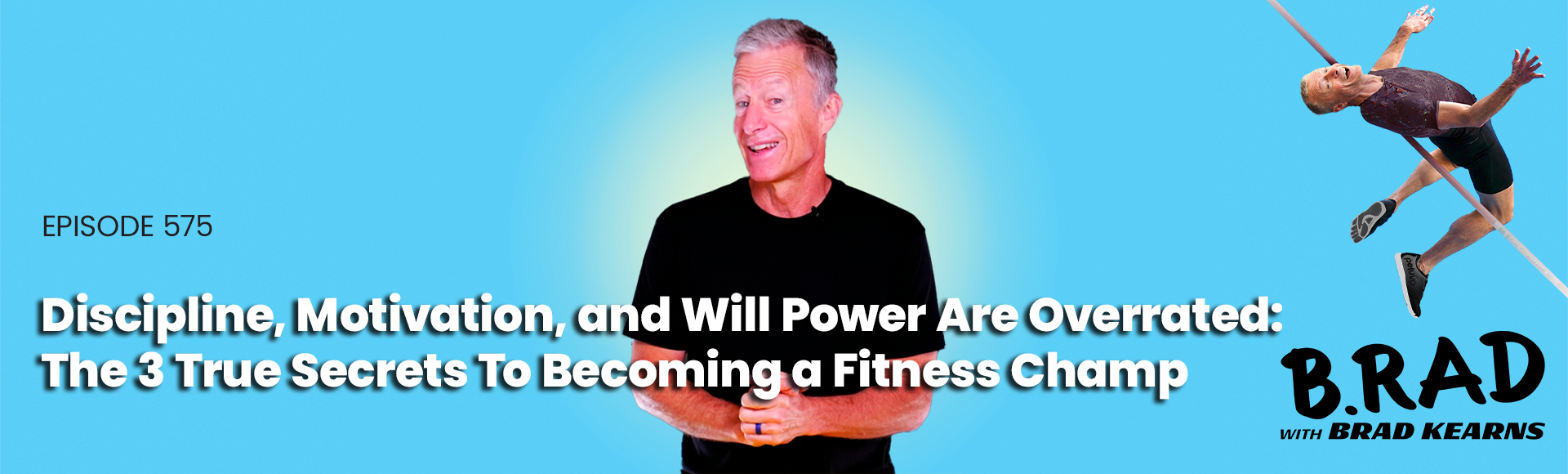
In this episode, I talk about why “inspiration is for amateurs,” and why discipline, motivation, and willpower are some of the most overrated concepts in the fitness world.
We’re surrounded by grind-culture blowhards bragging about 4 a.m. wake-ups and superhuman discipline, but the real secret to becoming the person you want to be—on the track, in the gym, or in any area of life—is much simpler and far more sustainable. I break down the three things that actually work if you want to avoid distractions, stop chasing motivation, and finally build momentum.
I share how flying under the radar, focusing on the entire process (not just the instant gratification), and wiring habits so deeply they feel automatic can change everything. You’ll hear how my own morning mobility routine—now as familiar as brushing my teeth—became a daily anchor, why elite athletes don’t rely on willpower, and how tiny, enjoyable, repeatable actions beat the no-pain-no-gain nonsense every time.
If you’ve ever felt like you’re “falling short,” this episode shows you how to reframe everything: stop trying to psych yourself up and start creating systems that make doing the right thing natural, rewarding, and something you’ll actually keep doing.
TIMESTAMPS:
Brad is going to give you three secrets to help you become the person you want to be. [01:03]
Winning habits and success patterns are formed when you get inherent enjoyment from the pursuit that we’re talking about. [04:17]
Willpower is a finite resource. Your habits become automatic behaviors. [09:21]
The first of the three secrets is to fly under the radar for the most part. Don’t even worry about that very, very fragile resource, which is your willpower, the discipline to get there and show up. [11:25]
Loving what you are doing is persevering through difficult challenges. [18:45]
The constant comfort that we now can experience in life, most of us makes us physically weaker, mentally less resilient and spiritually unfulfilled. [25:05]
Build your fitness endeavors into a habit. Start with something that makes it super easy. [29:00]
LINKS:
- Brad Kearns.com
- BradNutrition.com
- B.rad Superdrink – Hydrates 28% Faster than Water—Creatine-Charged Hydration for Next-Level Power, Focus, and Recovery
- B.rad Whey Protein Superfuel – The Best Protein on The Planet!
- Brad’s Shopping Page
- BornToWalkBook.com
- B.rad Podcast – All Episodes
- Peluva Five-Toe Minimalist Shoes
- Brad’s Morning Exercise Routine
- Podcast with Dr. Marc Bubbs
- Podcast with Dr. Robert Lustig
- The Hacking of the American Mind
 LISTEN:We appreciate all feedback, and questions for Q&A shows, emailed to podcast@bradventures.com. If you have a moment, please share an episode you like with a quick text message, or leave a review on your podcast app. Thank you!
Check out each of these companies because they are absolutely awesome or they wouldn’t occupy this revered space. Seriously, I won’t promote anything that I don’t absolutely love and use in daily life:
- B.rad Nutrition: Premium quality, all-natural supplements for peak performance, recovery, and longevity; including the world’s highest quality whey protein!
- Peluva: Comfortable, functional, stylish five-toe minimalist shoe to reawaken optimal foot function. Use code BRADPODCAST for 15% off!
- Ketone-IQ Save 30% off your first subscription order & receive a free six-pack of Ketone-IQ!
- Get Stride: Advanced DNA, methylation profile, microbiome & blood at-home testing. Hit your stride the right way, with cutting-edge technology and customized programming. Save 10% with the code BRAD
- Mito Red Light: Photobiomodulation light panels to enhance cellular energy production, improve recovery, and optimize circadian rhythm. Use code BRAD for 5% discount!
- Online educational courses: Numerous great offerings for an immersive home-study educational experience
- Primal Fitness Expert Certification: The most comprehensive online course on all aspects of traditional fitness programming and a total immersion fitness lifestyle. Save 25% on tuition with code BRAD
I have a newly organized shopping experience at BradKearns.com/Shop. Visit here and you can navigate to my B.rad Nutrition products (for direct order or Amazon order), my library of online multimedia educational courses, great discounts from my affiliate favorites, and my recommended health&fitness products on Amazon.
TRANSCRIPT:
Brad (00:00):
Welcome to the B.rad podcast – where we explore ways to pursue peak performance with passion throughout life. I’m Brad Kearns, NY Times bestselling author, world #1 ranked masters age 60-plus high jumper, and former #3 world-ranked professional triathlete. You’ll learn how to stay fit, strong and powerful as you age; transform your diet to lose body fat and increase energy; sort through hype and misinformation to make simple, sustainable lifestyle changes; and broaden your perspective beyond a fit body to experience healthy relationships, nonstop personal growth, and ultimately a happy, healthy, long life. Let’s explore beyond shortcuts, hacks, and crushing competition to laugh, have fun, appreciate the journey, and not take ourselves too seriously. It’s time to B.rad!
Brad (00:51):
Inspiration is for amateurs, <laugh>. I love that. Okay, so if you want to avoid distractions. If you want to avoid having to dig deep for the buried treasure of motivation and willpower, it comes down to
Brad (01:03):
Discipline, motivation, and willpower are overrated, and so are the blowhards making you feel inferior because you lack the extraordinary discipline that they brag about. So this show is about the true secrets to becoming the person you wanna be. We’re gonna focus on becoming a fitness champ, but the principles can apply to really any area of your life, anything that you want to get better at, improve your discipline, improve your productivity. I’m going to give you three secrets, and I do mean secrets because they are a wonderfully effective counter to the BS of the grind culture that’s really getting out of hand. We’re getting inundated with all this messaging today that is complete BS. It’s not about waking up at 4:00 AM and getting after it, that going to lead to chronic overproduction of stress, hormones and burnout.
Brad (02:13):
So we’re gonna discover what the real secrets are to becoming the best person that you can be and a better version of yourself today. If you do feel like you’re falling short in certain areas, let’s focus on the fitness one and guess what? That kinda has a mushroom or a snowball effect on other areas of your life when you get your physical fitness handled and your commitment and your habitual behavior in favor of taking the best care of your body that you actually can. So as we get into it, I think the first step is going to be taking a nice, gentle, deep diaphragmatic breath through our nose. Hmm. Relaxing and checking out, letting go of all the BS that’s been shoved into our brain as we scroll through internet content from leading experts and successful people driving their fancy cars. You know, those random interviews on the street?
Brad (03:18):
Excuse me sir, how did you make your millions of dollars? Ha ha ha. Okay, these are not the secrets to success. This is internet candy <laugh> that has nothing to do with being happy, not to mention successful. So when you think about the messaging to suck it up and grind and crush it and quit whining and quit complaining, mainly this content is designed to elicit FOMO, fear of missing out, right? You’re, you’re falling short. Maybe you should, uh, listen to this person and in many cases pop for a product or service that they’re offering, right? It also could be just someone blasting you with their compulsion to exercise their ego demands and express their superiority, right? Especially in in-person interactions with blowhards. How you feel after. Yeah, a little bit drained because you gave them all their energy. ’cause they’re pounding these messages into your brain.
Brad (04:17):
So I wanna relax, step aside from that and realize that winning habits and success patterns are formed when you get inherent enjoyment from the pursuit that we’re talking about. And I’m talking about both an instant gratification payoff. So feeling better as soon as you finish your workout, you glad you did it, and a long-term payoff with an improvement in your overall life. So if right now you’re sitting here and you tell me I hate exercise, but I do go to the gym three days a week at 6:00 AM ’cause I know I have to, I know it’s important, or I hate the taste of my super duper green smoothie that I’ve been told to consume by internet experts, but I drink it anyway because I know it’s good for my body, good for my health. These are essentially houses of cards that are gonna fall apart at some point.
Brad (05:14):
So if you’re following a diet, including <laugh> items that you dislike, good luck sticking with it for long term. And also secondly, why would you do that when there are so many delicious, nutritious foods that you can enjoy tremendously and get deeper into the world of culinary and enjoying mealtimes and all those kind of things. So you don’t have to drink the super green brown sludgy smoothie no matter what anyone says, how great the nutrients are in there. And you certainly don’t have to hate any activity that you are engaging in, in the name of health or fitness. I wanna cue up this B-roll video of me doing my hopefully now world famous morning flexibility, mobility and strengthening routine. And I started on this endeavor eight years ago, back in 2017, and what I decided was I wanted to start my day doing something that would raise the platform, the fitness platform, from which I launched all of my formal and structured workouts.
Brad (06:22):
Again, I’m lifelong dedicated to fitness, so I didn’t have any, motivation or, uh, time prioritizing scheduling issues around my training schedule, training for speed, golf and track and field and all that great stuff. But what I noticed was you can only train really hard in, in high-intense, high-impact exercise a couple times a week, right? I’m not out there sprinting every single day. But what happened was I didn’t really approximate the challenge of these really difficult workouts in my ordinary life. So I thought, what if I woke up in the morning and first thing hit the deck and performed an elaborate ritual of mobility, flexibility, core strengthening, leg strengthening things that would allow me to thrive when I did do those high degree of difficulty workouts? And it was a wonderful transforming event in my life because even with all this lifelong dedication to fitness, I didn’t realize the tremendous power and the impact of building this morning habit.
Brad (07:22):
It definitely improved my workouts and my injury resilience, but it also changed who I am as a person because now every single morning without fail, I have hardly missed any mornings in eight years now, I think I was laid up with global pandemic illness for six days in a row and didn’t do anything except for sleep. But every single day I do something, even if I have a hectic schedule, I might do a compressed version or find a time later in the morning to do it. But waking up and getting into this routine every single day has wired it into the highest level of habit such that I can’t even imagine not doing it. I don’t even think about it. I don’t judge it. I don’t pat myself on the back every single day for finishing it because it has been so elevated into the category of habit that it’s just natural and routine.
Brad (08:15):
It’s kind of in the same category as brushing my teeth or, uh, laying your head down on the pillow and going to sleep at night, right? We can skip that if we want, if someone, uh, tells us to, you can just skip a night of sleep and go out and walk around the neighborhood <laugh> for eight hours. But we don’t because it’s been ingrained into habit that this is a normal and customary part of our life. Same with the simple example of brushing your teeth. You don’t have to pat yourself on the back every night, but it is great and you feel good that you’re doing it. And that’s how I characterize my morning exercise routine. So overall with fitness and adhering to it a fitness regimen, I want you to realize that those in the top tier of fitness, lifestyle, dedication, the elite athletes of the world and the people that you know in your own, uh, community and your own, uh, social circle, the people at the very top, they don’t train with that level of dedication and commitment because they have magically higher willpower or discipline than you do.
Brad (09:21):
Let me quote Dr. Marc Bubbs’s former B.rad Podcast guest. He works with elite Canadian national team, basketball players and other athletes. He says willpower is a finite resource. The elite of the elite don’t get up at five 30 in the morning because they’re disciplined. They’ve done it so long that it turns into a habit. They do it because they just do it. And that was what I was trying to express when it comes to my morning exercise routine. Maybe someone would watch me but before I go have my warm beverage or reach for my phone and scroll through important announcements on social media or text messaging, I’m on the deck right away. It is almost always as soon as I wake up with nothing in between. So, boy, that’s an amazing level of focus, discipline, and willpower. Brad. No, it’s not.
Brad (10:14):
It started maybe with some of those requirements, but now it’s just automatic behavior. So I want you to think of your aspirational habits differently. The elite athletes of the world do not have to spend time mustering up getting psyched for the next workout. This is a popular quote you’ve heard, and it’s been attributed to the American painter, Chuck Close, where he said, quote, inspiration is for amateurs <laugh>. I love that. Okay, so if you want to avoid distractions, if you want to avoid having to dig deep for the buried treasure of motivation and willpower, it comes down to making your desired behaviors consistent and habitual. Perfect example. A simple example is the morning routine. So I want to get away from the grind culture and the messaging and give you these three true secrets to, in this example, becoming a fitness champ. And again, fill in the blanks.
Brad (11:25):
Maybe you’ve dreamed of writing a book or becoming a painter, <laugh>, whatever it is. These are the three secrets. Uh, so the first one, especially as it relates to fitness, is to, we’re gonna call this one flying under the radar. Of course, to get fit, you have to work your muscles hard, your heart and lungs. You have to feel that sense of discomfort that comes from trying to create an adaptation in the body. That also means there’s gonna be some discomfort for your mind, some struggle, some Oh Gee,I have to continue for another several blocks of my workout or whatever it is. But for the most part, you wanna fly under the radar such that you don’t exhaust your physical body nor your positive attitude, nor your desire, nor your willpower to complete these workouts that you’re embarking upon. And this is an area where a lot of fitness enthusiasts struggle and eventually fail.
Brad (12:27):
Let’s blame the quintessential over caffeinated personal trainer where someone comes in on January 1st, they buy the 12 pack of workouts, and the trainer says, yep, we’re gonna transform your body <laugh>. We’re gonna get that six-pack showing again and we’re gonna dig deep and go for it. And you go to a few workouts and the trainer, of course, they wanna get their money’s worth. So they really push you for 47 minutes of proceeding through various workouts. You wake up the next morning, you can barely lift your arms to put your shirt on, and the trainer says, congratulations, you’re really working hard. Are you ready to hit it again next Tuesday? And you get into that brainwash fitness culture where we still have this as a pervasive ideal of no pain, no gain, or that you have to struggle and suffer to get fit. And this is absolutely untrue.
Brad (13:17):
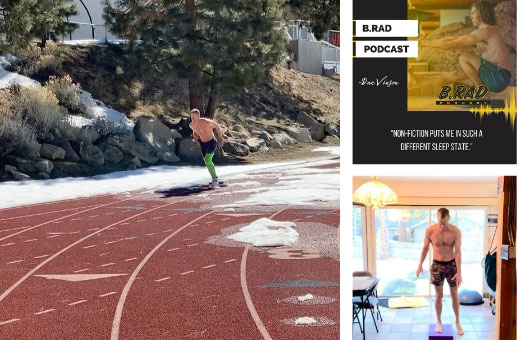
And we can look no further than the training patterns of the world’s elite athletes. The elite athletes train very, very hard. You gotta go watch them. If you have the privilege of, let’s say you live in Los Angeles, you can show up at the UCLA track and see many of the familiar faces from the Olympic games working out right there. You’re sitting in the stands watching Sidney McGaughlin do her six times, 200 meters, whatever they’re doing out there. I used to watch Alison Felix, one of the great Olympians of all time. And boy, these guys put in work, but it’s not in the realm that we might think. Same with a Tour de France athlete. They’re riding their bicycle, generally speaking for five to seven hours every single day as they prepare for these extremely grueling professional cycling tour races. But they’re not pushing their body to the extent that they’re bringing on depletion, exhaustion and fatigue day after day after day.
Brad (14:18):
Yes, they’re giving it their all when we watch them in the Olympics, but what’s so amazing to me as a recreational masters track and field, 400 meter runner, as you see these guys and gals sprinting around the track at full speed winning the gold medal, and then four seconds later they’re raising their arms and triumph and they’re starting off on their victory lap. And I’m like, wait, what about the one to two minutes of hands on knees under total pain and burning muscles that I feel every time I compete in the 400 meters? So the elite athletes have risen to such an amazing high platform of fitness that their workouts are performed almost always well within their capacity. So if went to Michael Phelps, the greatest swimming Olympian of all time with his 28 gold medals, and went to the poolside and watched him training for five hours a day, if you could handle that boredom, working hard, breathing hard, touching the wall, catching his breath, here comes the clock, you leave on the top, as they call it in swimming, and then he does another 400 meter butterfly backstroke, repeat again, hard work, but well within his capacity.
Brad (15:30):
So we can take that inspiration from the elite athletes that I like to talk about a lot. Eluid Kipchoge, the greatest marathoner of all time performing 83% of his weekly mileage in what is known as zone one cardiovascular exercise. So by comparison, almost all of the recreational runners that we see, the 53,000 runners that recently finished the New York City Marathon for almost all of those people, except for the very small, less than 1% fraction at the front of the pack, zone one is a slow, medium or brisk walk. So 83% of the marathoners of the planet, and there’s, I think around 2 million of them have finished a marathon alive today. Those people should be performing 83% of their workouts walking, not running. This of course, is covered extensively in our book Born to Walk. So I encourage you to pick that up, especially if you’re a hard training endurance athlete or you’re someone who has tried to pursue goals like running the Turkey Trot 5K or training for a half marathon, and maybe you did one back in 2017 and you haven’t done anything since then.
Brad (16:47):
It was most likely because you were not flying under the radar and you were accumulating fatigue, depletion, exhaustion, breakdown, burnout, illness, injury as a consequence of overly stressful exercise patterns. This also includes not just the marathon freaks out there, but the average fitness enthusiast who is showing up to a gym, going into the classroom and trying to complete that one hour bootcamp class, or whatever you want to call it, at slightly too significantly too stressful of an intensity level. And then trying to do that too frequently during the course of the week, of course, you’re going to have difficulty adhering to a fitness regimen that brings on a middle dose of pain and suffering, rather than feeling energized and buoyed and more alert, better mood throughout the day because you performed an appropriate workout. That doesn’t mean that you’re not pushing your body hard. Again, like I said, you’re gonna push the muscles to failure on a sprint repetition, but as the elite sprinters know, you’re gonna rest 3, 4, 5, 6 minutes before you do it again.
Brad (17:57):
Such that even a workout that features really explosive, powerful anaerobic performance is not exhausting and depleting because you engage in plenty of rest and you also don’t do the workouts too frequently. So number one, on the list of fitness secrets to become a fitness champ, fly under the radar for the most part. Don’t even worry about that very, very fragile resource, which is your willpower, the discipline to get there and show up. You should want to show up because you get, like I said at the start of the show, an instant gratification payoff of feeling like the blood’s flowing and you feel more alert and energized and elevated mood after the workout, and also the wonderful feelings that come from leading a fitness lifestyle and appreciating a healthy fit, active energetic body.
Brad (18:45):
Number two, understand what loving it really means, and it is conveying a true love of the entire process. It is the persevering through difficult` challenges that result in a life of satisfaction and contentment and fulfillment. Biochemically what’s going on, Dave Rossi says, everything we do is in pursuit of a hormonal experience. Trip out on that on one of our four podcast episodes. So everything we do, every decision we make, every action we take is in pursuit of a hormonal experience, in the pursuit of the feel good experience, or in many cases, you’ve heard this from behavior experts too. Everything we do is either in pursuit of pleasure or avoiding pain. So when we live a fitness lifestyle, when we are deicated and habitual about our routine, we say we love it, and what we love is not necessarily the degree of difficulty and the pain and suffering involved from really pushing your body to high fitness levels, but persevering through difficult challenges. We getting that payoff of a life of satisfaction, contentment and fulfillment.
Brad (20:04):
And on a biochemical level, what’s happening is you’re prompting the release of the neurotransmitter serotonin and the hormone oxytocin as well as a healthy sustained release of dopamine. Let’s take for example, my passion, my quote, love of the 400 meter race. Do I really love the incredibly intense discomfort that happens at a level virtually like no other event in any sport? It’s pure torture, brought by lactic acid, accumulated in muscles throughout your body, an unbelievable level of pain and suffering. When you get to the back stretch, do that turn and then try to hold your form together for the the home stretch. There’s nothing, nothing compared to it in terms of pure torture. I do not necessarily have a smile on my face running down the home stretch feeling, boy, doesn’t this feel great to have my muscles completely <laugh> in severe pain from lactic acid?
Brad (21:05):
No, I’m actually filled with dread about the impending pain and suffering that I’m bringing upon myself every time I show up to a track meet. And this is dated back to when I was seven years old and first started racing track. In fact, they put me in the 400 meters, which is so ironic that I still compete in that event today in the 60 plus division. But it carried through high school track where I dreaded those Fridays because I knew the meet was coming and I had to run the mile and the two mile, and it was gonna be so much pain and suffering with the top competition that I was facing, even on the professional triathlon circuit, it’s like you wake up in the morning and you get a caution sign that says, Hey, welcome. two hours of pain and suffering ahead. And so that’s what nerves are all about before a competitive event is, you know, what’s coming with the 400.
Brad (21:54):
,I will say, what I honestly love is that it’s over with so quick and I can actually calm my nerves saying, Hey, at least it’s not an Ironman like you used to have to do before, Brad, and suffer for nine hours instead of one minute. Uh, and what I really do love is the process and the long-term contentment and the positive feelings. It brings me from pushing my body to maximum level in pursuit of distinct competitive goals. I wanna run faster than my age. I’m fixated on it. It gets me excited every day about doing something that’s scary outside of my comfort zone and delivers this tremendous payoff in contentment satisfaction and fulfillment. Ah, what do we have on the flip side these days? Yeah, what we have on the flip side is the dopamine driven, the flooding of the dopamine pathways in the brain with instant gratification behaviors, bringing pleasure and comfort.
Brad (22:56):
The great book by my former podcast guest, Dr. Robert Lustig, called The Hacking of the American Mind. He describes in sort of detail how we’re all becoming addicts in different ways at the hands of major corporate interests. Spending billions of marketing advertising dollars luring us into this litany of addictive behaviors that generate massive corporate profits look no further than the mobile device and the instant gratification internet content that has overwhelmed and swarmed our lives for in recent years, like nothing we’ve ever had before it. And of course, there are many other things on the, uh, dopamine hijacking life that we live in today. The instant gratification life that we live in today, Dr. Lustig mentions junk food, the instant gratification we get from consuming shit food that makes our bodies feel terrible over the long run, but we get that instant dose of pleasure as soon as we consume that clever pairing of fat and sugar together.
Brad (24:00):
Of course, streaming entertainment is a big example there where we get that instant gratification payoff. Uh, over exercising is a way to go and trigger that endorphin high. When I talk about people who are, uh, addicted in a bad way to exercise, overdoing it and pushing their bodies to exhaustion, but coming back for more and more because you get that immediate high followed by a life of exhaustion, fatigue, and injury. Uh, we also have the addiction to the various harmful substances that have been such a problem in society forever. Prescription drugs are on that list and on down the list of ghosts. So the antidote to this life of excess comfort pleasures instant gratification is to pursue challenges that stretch you out of your comfort zone, where you can apply skills that you have developed that you feel proud of and competent with, and achieve something that makes you feel proud and satisfied, like you actually, you know, had a worthwhile day or month or year.
Brad (25:05):
Also helps to make a positive contribution to society. So if you can inspire others through the work or the pursuits that you’re, uh, putting all that time and energy into, that also generates positive feelings. Uh, this concept I mentioned Hacking of the American Mind. Great book. The concept’s also covered in detail by a recent book called The Comfort Crisis by Michael Easter. Heard a great podcast from him. And then I appreciate the gift from my friend Dave sending me the book. Essentially what’s the essence of this book is that the author is arguing that the constant comfort that we now can experience in life, most of us makes us physically weaker, mentally less resilient and spiritually unfulfilled. Go back to the ancestral health example, Easter, pointing out that our ancestors regularly face discomfort, hunger, cold, physical exertion, boredom and uncertainty. This helped them grow stronger and more capable.
Brad (26:08):
I’m sure you can reference this on how the various struggles and challenges that you’ve overcome have made you a better person today. Unlike, being able to argue that your addiction to mobile technology and the streaming entertainment and the binge watching have made you a better person. No, it gives you that instant gratification, that pleasure. That’s a nice thing to have in your life, and you deserve to relax and consume streaming entertainment after a busy, hectic, stressful day. But we’re talking about the excess today where we are in a comfort crisis. Technology, convenience, everywhere. We’ve eliminated the most of the natural challenges to life. We no longer have to walk seven blocks in the rain carrying heavy groceries. We can touch a few buttons on the screen and have stuff delivered to our door, right? So the cost is widespread, anxiety, depression, obesity, and a sense of meaninglessness in our life.
Brad (27:08):
So the idea advance in the book, true growth and fulfillment come from intentionally doing hard things. Of course, today we have to manufacture these challenges and these opportunities for discomfort. That’s why I sign up for the 400 meters among other reasons, right? So we can choose physical challenges, we can take time and solitude, look for things that are risks outside of our comfort zone, and of course, exposure to nature and gives us a break from all that excess of comfort, convenience, indulgence, luxury. Another idea advanced is that modern comfort is a trap. It feels good short term, but erodes our long-term health and happiness. He argues about this. He recommends pursuing this Japanese concept known as Misogi, and that is doing, picking a daunting challenge each year that has a 50% chance of failure, whatever it is that might not be, uh, relegated to the fitness realm.
Brad (28:10):
I don’t want you picking fitness challenges that have a 50% chance of failure, but in a big picture, let’s say a trying out for Jeopardy since you watch the show so much and they do have a casting call in Los Angeles where you can drive to my friend did it. He, he went in there and took the exam. And, you see who can score the best and maybe get a chance to be on the show. Definitely a 50% plus chance of failure there. We also, Easter wants you to embrace boredom because constant simulation from the phones and the screens, dulls, creativity and mental toughness finally get outside because of the brain reset and restoring the balance that we can, uh, strive for in life when we’re in this high tech realm. Okay, so that is number two, understand what loving it, loving your fitness regimen really means.
Brad (29:00):
It’s the entire process of persevering through difficult challenges and obtaining a life characterized by satisfaction, contentment, and fulfillment, not just instant gratification. So number one, flying under the radar with your fitness pursuits. Number two, loving the process, including the challenge. And then number three, build exercise. Build your fitness endeavors into a habit. Of course, there’s entire shows on this idea of how to form a habit. Number one bestselling book in the world for the last several years is Atomic Habits by James Clear. And we all have been exposed to a lot of this information about how important and how valuable it is to have healthy habits. So you realize, like I was trying to describe about my morning routine, you don’t have to think about them. You don’t have to judge them every single day. You don’t have to complain. You don’t have to pat yourself on the back, you just do it.
Brad (30:01):
But I love James clear’s strong emphatic recommendation coming from his book that in order to build a new habit, you want to start with something, making it super, super easy. A very, very low bar. Because the main way that habit forming fails and falls short, especially when it comes to something like fitness, is you take on too daunting of a challenge. January 1st. That’s it. I’m gonna clean up my diet, I’m gonna go to the gym every day. I’m gonna sign up with a trainer. I’m gonna push my muscles to the point of extreme soreness. All that stuff is a recipe for disaster and attrition from whatever phasize fitness. I make so many examples for this on my shows where I talk about the wonderful benefits of what I call micro workouts.
Brad (30:59):
These are brief bursts of physical effort sprinkled throughout your day. They don’t take long at all. They might last for less than one minute, generally speaking, maybe a couple, few minutes if you want. But these micro workouts are opportunities to move your body and challenge your muscles. And a great way to break up these prolonged periods of stillness that sev have so many adverse health consequences. Have a mini band, you know, the little strap that goes around your ankles. Have that in your visual field somewhere in your work environment, in your home environment, and grab that thing and do a set for 30 seconds. A lot of times that’ll be plenty to get those glutes burning. It only takes 15, 20, 30 seconds, maybe a minute if you’re super fit. And then it’s over. You take the mini band off and you proceed through whatever you’re doing in your busy day.
Brad (31:51):
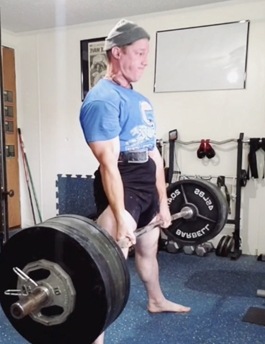
I’ve also have videos on YouTube where I show, I do a single set of hex bar deadlifts in my side yard every time I take the garbage out to the outside barrel. So I walk by this fitness contraption and I do a set. I also have a wonderful rule that’s now turned into a habit. Anytime I encounter a staircase in my daily life, I use it as an opportunity to do the fast feet drill. So I rush up the stairs, fast feet with going two feet on each step, BBB, B, BBB and up the stairs. Or sometimes I’ll just take a a, a sprint up the staircase, but I almost always <laugh>. Maybe if it’s after 10:00 PM and I’m getting tired and heading up to bed, I might not, not sprint up the staircase, but a staircase to me is associated with a quick sprint of four seconds.
Brad (32:45):
Doesn’t matter if I’m tired or don’t feel like it. I just kick into this alternate realm, this parallel universe where rushing up a staircase has become a habit. It started as an intention, right? It was like, Hey, cool, let me practice my fast feet when I go up the staircase and after the 700th time, because it was so easy and it was so bite size, I’m not standing here recommending that you do 10 sets up your home staircase every time you have to go up to the second floor of your home. Or if you’re in an office environment, I want you to do four sets of three with two minute rest, da da da. Nah. That’s for working out, that’s for training. We, we have plenty of shows talking about how to devise a great training routine, but this is to create a little tiny micro workout habit where you have the mini band in your visual field.
Brad (33:39):
You have the hexagonal deadlift bar in your side yard, or you have a staircase that you can rush up, or you can set a timer on your computer screen to go off every hour. And that is your queue to do a set of 10 or 20 squats where you just lower down into the edge of your chair and stand back up. And even if you’re super fit, when you do 20 air squats, you will start to feel the burn in your muscles that you’re actually getting a wonderful fitness response, especially when it turns into a habit. So building that habit, making it super easy to start. I also wanna strongly recommend very first thing in the morning. Experts say, this is the single best time to develop a new habit. Your brain is refreshed after sleep. You have a 100% full tank of willpower, which we know gets depleted over the course of the day.
Brad (34:33):
That’s why we make bad decisions at nighttime. That bad decision might be reaching for the pint of Ben and Jerry’s when you’re trying to adhere to a nice diet, but after midnight, then you can make really bad decisions in that example when your willpower has cracked because of all the stresses that you face during your busy day. So no better time in the morning to develop. How about a tiny little miniature habit, like a one or two minute mobility flexibility, uh, exercise routine before you get off and go and get your coffee and your newspaper and leash up the dog and take the dog out. Hopefully that’s a morning habit. And that brings me to, uh, the number two idea here, which is to stack your desired new habits with existing habits. So if you have a habit of waking up in the morning and pouring yourself a nice hot cup of coffee, you can stack that habit with a 32nd mini-band exercise and then go have your coffee.
Brad (35:33):
That’s leveraging the great existing behavior patterns that you already have. And that brings me to number three, which is to throw in a little reward and celebration in pursuit of building habits. So you can do the 32nd mini-band, and your reward is that you get to pour yourself the cup of coffee rather than just taking the cup of coffee for granted and jumping right to it and saying, maybe I’ll have time to do a five-minute workout routine this morning. That might not work. And if it’s not working after 30 days, let’s rewind and say, make the habit again, James Clear talking, world leading expert. Number one bestselling book. Make it easier if you haven’t shown a pattern of success. So let’s take that down to 30 seconds, stack it with the coffee habit, and of course the mini- band comes first, and then you get to pour the coffee.
Brad (36:25):
That’s a form of celebration and stacking all stacked together. You know, we could probably come up with, uh, five or six or seven more tips and tidbits, but I want you to really focus on these three and really zero in and realize how powerful these three tips are to build that exercise fitness habit that you’ve dreamed of. So again, number one, your exercise regimen should be under the radar so that you don’t have to suffer and you don’t have to conjure up willpower to drive down and meet your trainer for the 17th workout, the previous 16 being too tough. Fly under the radar, tone it down a little bit, take it easier. Number two, grow to love the experience of persevering through difficult challenges for a rich and meaningful life. Escape from the comfort crisis that we will otherwise be sucked into with all the modern influences.
Brad (37:22):
And then finally, build an exercise habit by doing it first thing in the morning, stacking it with other habits that you already have built in and applying a little bit of that reward incentives and celebration. I think you’re gonna have great success there. Thank you so much for watching listening. Let me know how it goes for you and some of the things that have worked for you to build great exercise fitness habits. I’d love to hear from those people that are at the high level in the, the fitness community, so much to learn from, for people that are wishing to get there. Now’s your chance. I think you can do it. And I really appreciate you sharing this episode with someone you care about. If you’re listening on podcast app, leaving a review is the biggest thing you can do to help grow the show. And if you’re on YouTube, hit like, hit, subscribe and hit the deck first thing in the morning for your morning exercise routine.
Brad (38:21):
Thank you so much for listening to The B.rad podcast. We appreciate all feedback and suggestions. Email, podcast@bradventures.com and visit brad kearns.com to download five free eBooks and learn some great long cuts to a longer life. How to optimize testosterone naturally, become a dark chocolate connoisseur and transition to a barefoot and minimalist shoe lifestyle.