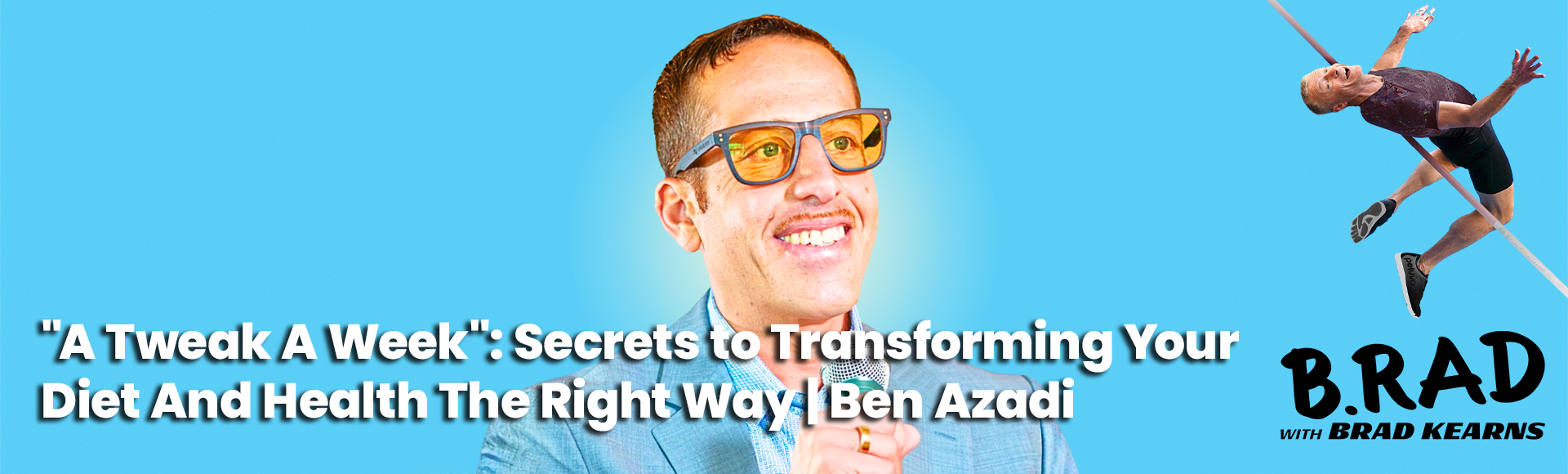
Get ready for another great show with Ben Azadi, author of the new book KetoFlex. Ben has an incredible story—after struggling with obesity and depression in his early 20s, he lost 80 pounds and completely transformed his health.
Today he’s helping people better understand metabolism, fasting, and the ketogenic diet by simplifying complex science and turning it into practical, actionable habits that don’t feel overwhelming.
We talk about why eating too close to bedtime can interfere with your body’s biggest fat-burning window of the day, why Ben believes in making just one “tweak a week” instead of overhauling your life overnight, and why he says, “You don’t lose weight to get healthy—you get healthy to lose weight.”
We also discuss metabolic flexibility, the role of hyperinsulinemia and seed oils in today’s obesity epidemic, why keto isn’t meant to be a forever diet, and the simple mindset shifts that make lasting change possible—including Ben’s memorable reminder: “If you treat your health casually, you’ll end up a casualty.” Ben also shares the productivity habits that have helped him write multiple bestselling books while staying focused on his mission of helping others reclaim their health.
Ben Azadi is a bestselling author, keynote speaker, and functional diagnostic nutritionist known as “The Health Detective.” After struggling with obesity and depression in his early 20s, he transformed his health by losing 80 pounds and reducing his body fat to 6%—an experience that inspired his mission to help others improve their metabolic health. Today, Ben is the founder of Keto Kamp, where he educates people on intermittent fasting, the ketogenic diet, and metabolic flexibility. He is also the host of the award-winning Metabolic Freedom podcast, which was named Keto Podcast of the Year at the 2022 Metabolic Health Summit.
TIMESTAMPS:
Ben Azadi explains in this podcast some complex scientific insights about sleep, about metabolic health, about how the body’s supposed to burn fat while we sleep, about what’s going on during the day and how to manage this global obesity epidemic. [01:05]
Ben’s story of being a very unhealthy depressed young man involves an 80-pound weight loss he experienced. This started his journey toward better health. He will explain the basics of the ketogenic diet. [04:55]
If you treat your health casually, you’ll end up a casualty. If you are 23 years old or 63 years old, your body will respond when you change the signals you’re giving it. [10:10]
What does it take to get motivated and inspired to take on the responsibility of managing your own health? [16:31]
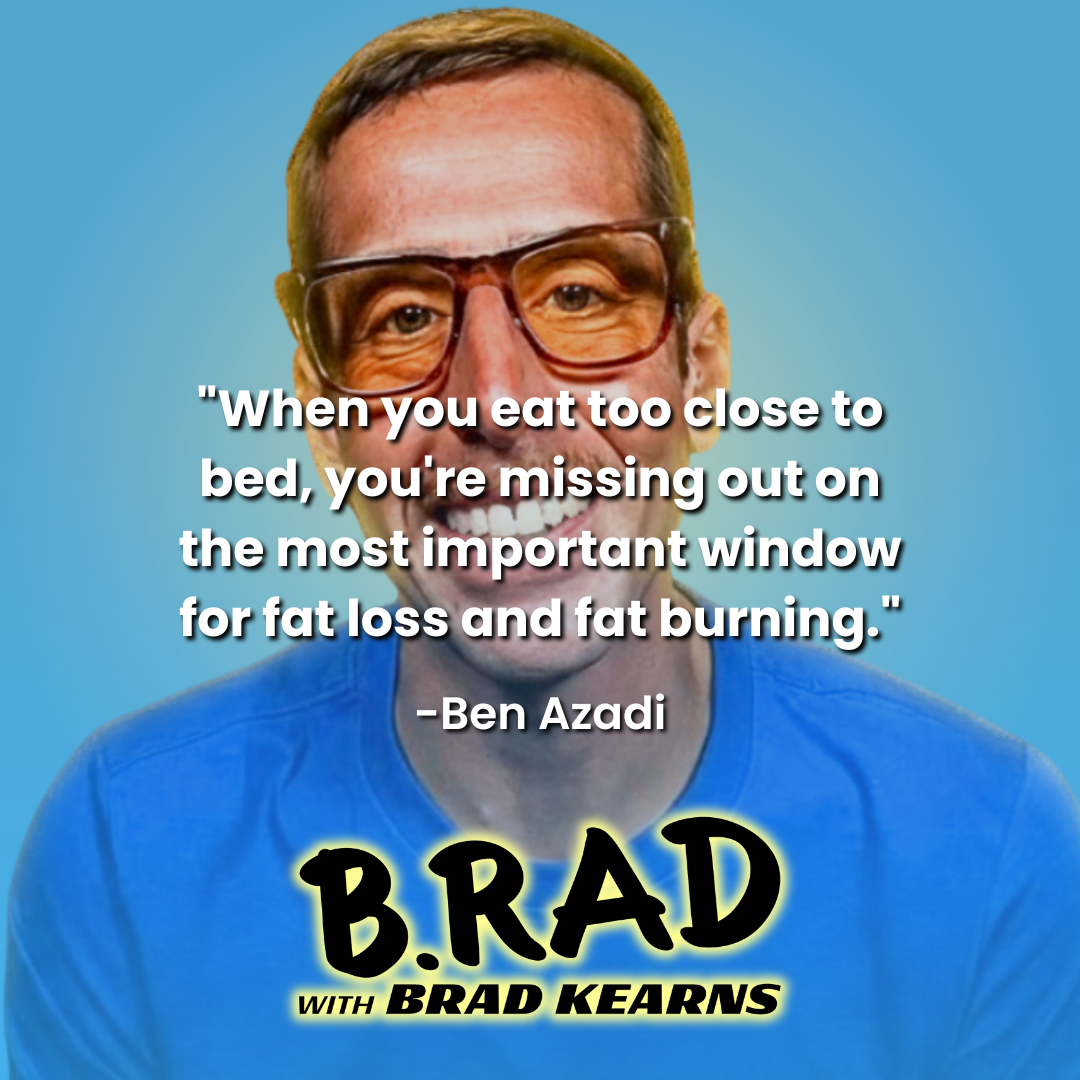
When you eat too close to bedtime, you’re missing out on the most important window within a 24-hour period for fat loss and fat burning. [18:14]
If you eat the same meal in the morning and evening with exactly the same calories and micronutrients, the insulin response is different. [22:44]
When you are most insulin sensitive in the morning, is that a good time to fast? [28:40]
If you put rules and guidelines into your life, that is a really nice method of succeeding. [32:34]
Start with whole foods, start with good sleep, start with movement and then build from there. [37:33]
Keto Flex is a spin on metabolic flexibility. It’s do keto but don’t do it forever. [38:22]
When you’re in ketosis, it signals to your body that you’re going through kind of like a famine. It’s a stressor to the body. [43:13]
How did Ben lose 80 pounds in nine months? You don’t lose weight to get healthy, you get healthy to lose weight. [48:54]
Are seed oils promoting hyperinsulinemia or are there other things at play here that’s interfering with our ability to burn stored body fat? [52:33]
The definition of whole food is that it is a single ingredient food. [58:11]
What kind of application does the consumption of exogenous ketones have? [58:42]
Ben explains his KetoFlex plan here. [01:01:04]
Ben shares some of his secrets of managing his busy life, writing books, teaching, podcasting and keeping that 80 pounds off. [01:06:16]
LINKS:
- Brad Kearns.com
- Brad Nutrition.com
- Brad’s Shopping Page
- BornToWalkBook.com˜
- B.rad Podcast – All Episodes
- Peluva Five-Toe Minimalist Shoes
- Keto Flex
- Metabolic Freedom
- Burn
- ketoflex.com
 LISTEN: We appreciate all feedback, and questions for Q&A shows, emailed to podcast@bradventures.com. If you have a moment, please share an episode you like with a quick text message, or leave a review on your podcast app. Thank you!
Check out each of these companies because they are absolutely awesome or they wouldn’t occupy this revered space. Seriously, I won’t promote anything that I don’t absolutely love and use in daily life:
- B.rad Nutrition: Premium quality, all-natural supplements for peak performance, recovery, and longevity; including the world’s highest quality whey protein! Get 20% OFF your first order with code BRAD20!
- Peluva: Comfortable, functional, stylish five-toe minimalist shoe to reawaken optimal foot function. Use code BRADPODCAST for 15% off!
- Jaspr Air Scrubber: Ultra high-performance air purifier – blows other air filters away! Save $200 on your unit with code BRAD.
- Get Stride: Advanced DNA, methylation profile, microbiome & blood at-home testing. Hit your stride the right way, with cutting-edge technology and customized programming. Save 10% with the code BRAD.
- Online educational courses: Numerous great offerings for an immersive home-study educational experience
- Primal Fitness Expert Certification: The most comprehensive online course on all aspects of traditional fitness programming and a total immersion fitness lifestyle. Save 25% on tuition with code BRAD!
I have a newly organized shopping experience at BradKearns.com/Shop. Visit here and you can navigate to my B.rad Nutrition products (for direct order or Amazon order), my library of online multimedia educational courses, great discounts from my affiliate favorites, and my recommended health&fitness products on Amazon.
#bradpodcast
TRANSCRIPT:
Brad (00:00:01):
Welcome to the B.rad podcast, where we explore ways to pursue peak performance with passion throughout life. I’m Brad Kearns, New York Times bestselling author, world number one ranked masters age 60 high jumper and former number three world ranked professional triathlete. You’ll learn how to stay fit, strong, and powerful as you age, transform your diet to lose body fat and increase energy. Sort through hype and misinformation to make simple sustainable lifestyle changes and broaden your perspective beyond a fit body to experience healthy relationships, nonstop personal growth, and ultimately a happy, healthy, long life. Let’s explore beyond shortcuts, hacks, and crushing the competition to laugh. Have fun, appreciate the journey, and not take ourselves too seriously. It’s time to be wrapped. It’s time to B.rad!
Ben (00:00:51):
When you eat too close to bed, you’re missing out on the most important window within a 24-hour period for fat loss and fat burning. It’s not when you’re working out. It’s not when you’re depriving yourself of calories. It’s when you’re allowing your body to get into… Hey,
Brad (00:01:05):
Get ready for another great show with Ben Azadi, author of a new book called Keto Flex. And yes, indeed, we talked about his previous book, Metabolic Freedom back in 2025. So this guy is cranking out books. I’m so impressed with what he’s doing. And during this show, he really explained some complex scientific insights about sleep, about metabolic health, about how the body’s supposed to burn fat while we sleep, about what’s going on during the day and how to manage this global obesity epidemic driven by hyperinsulinemia
Brad (00:01:42):
That’s the chronic overproduction of insulin. And maybe you’ve heard about some of this stuff, but today’s a great show because Ben really simplifies some of these concepts and brings it right into actionable insights about how to change your life, starting with cleaning up your diet and improving your overall habits without getting overwhelmed. That’s why I titled the show A Tweak a Week. I love that quip from him and it really says a lot about how to get this done the right way. And boy, does he have some credibility as he’s gonna share with you how when he was a young guy in his 20s, he was 80 pounds overweight. He was feeling terrible, depressed, really in a bad spot. And he turned the corner. He’s gonna talk about some of those secrets of how he turned the corner and started a very simple, straightforward approach to nourishing his body properly, getting the exercise and the training dialed in, realizing that he overdid it and recalibrating.
Brad (00:02:47):
So a great life story theme underneath a lot of practical insights. I love how we end the show where he talks about some of his secrets to peak performance and being able to get so much accomplished and keep writing these great books. So we’re gonna learn about KetoFlex. Some of the other books he’s written include Metabolic Freedom from 2025, The Intermittent Fasting Cheat Sheet, The Power of Sleep. He’s got a great community built called Keto Kamp, with a K, which specializes in educating people about intermittent fasting, the ketogenic diet, and achieving metabolic flexibility. I have seen this guy speak when I was down at Hack Your Health Show in Tampa, Florida last year. Both of us are returning in 2026 to the wonderful conference, Hack Your Health, but he’s got a great presence with people. His booth was rocking with people, getting autographs of his book.
Brad (00:03:44):
And I think you’re gonna really warm to his message and his personality. So it’s a great privilege to bring Ben Azadi back on the show to talk about KetoFlex and much more.
Brad (00:03:56):
Ben Azoty, we joined together for this wonderful interview this time over the airwaves, but it was great to meet you last year in your home state of Florida. We were hanging out at Hack Your Health. I was so impressed when I walk around the corner of this busy trade show and I’m like, “Well, what are these people in line for? ” You know, mostly people are just wandering around. And what do you know? It’s in line to meet the man, the prolific author, Ben, holding chord. So everyone was getting autographs for your wonderful book, Metabolic Freedom. And then when you reached out to me recently, I’m like, “Wait, didn’t we just talk about your new book? And now you have another new book.” So Keto Flex coming to a bookshelf near you by the time we air this episode and congratulations on busting out yet another book with the highest level of sophistication of how to use diet to heal your ills.
Brad (00:04:55):
And I know we talked a bit last time about your background, but for a fresh start, I’m, I’m so impressed at the journey you’ve traveled on, including your personal experience and dropping, what was it, like 80 pounds or something. So maybe start off with a little background. We’ll talk about the book. And then as I said, just before we hit record, for people who aren’t deeply familiar with the ketogenic diet and the benefits of fasting and things like that, we’ll start with a little bit of basic insight so that the, so any viewer who’s listening and tuning in from a, you know, a basic starting point can get on board and understand the power of healing that you and others that are banging the drum are, are on the forefront of. How about that?
Ben (00:05:39):
Sounds amazing, Brad. Thanks for having me back. It was great getting to meet you. First at JJ’s house, JJ Virgin’s house. She had a dinner for all the speakers and it was cool to finally get to meet you and hang out with you and the event Hacker Health was awesome. Of course, Mark was there, your sidekick, and I appreciate you bringing me back. And you know, this is an important topic and we’ll definitely get into the weeds of it, but for those who don’t know, I’m somebody who was very, very unhealthy for most of my life. You, you referenced the 80 pounds of fat loss and that, that is a true story. For 20 plus years, I was carrying around all this extra weight. I felt like my body was broken. I felt like my metabolism was broken and I couldn’t find the answers to why I felt so awful like in my early 20s dealing with back pain, knee pain, just overall inflammation.
Ben (00:06:26):
And then it got worse. It led to brain fog, of course, leaky gut where I couldn’t even, even digest food properly. And then I started having mood swings where the mood swings led to thoughts of depression, feelings of depression, I should say. And then feelings of depression led to thouhts of suicide. And it was, I was in a really bad state to the point where I was so desperate, so I made an appointment with my doctor like most people hopefully do. Unfortunately, it was an allopathic doctor who looked at my labs, listened to what I had to share about my symptoms. And, you know, he diagnosed me with erectile dysfunction at 23 years old, along with my A1C climbing up close to the pre-diabetic range and then high blood pressure. And never once did my doctor ask me the question, you know, “What are you eating?
Ben (00:07:13):
Like, are you exercising? Let’s talk about your lifestyle. How’s your sleep? How’s your stress? You know, the things that you have written about in incredible books.” I never got asked that question. The, the question that he was thinking was, “Which medications can I prescribe for this 23-year-old young man?” And he recommended a few. But a part of me just felt like, “I’m 23. I go on these meds. Do I have to stay on these meds for the rest of my life?” And he said, “Maybe, maybe not. ” He didn’t really give me a concrete answer, but I didn’t wanna go on these meds at such a young age. And I was desperate. And look, I would’ve taken my life if it wasn’t for my mother. I kept thinking about my mom. I kept thinking about the devastation that she would have to deal with if I took my life.
Ben (00:07:54):
And I loved my mom. I love my mom. I, to this day, she’s a hero to me, and I didn’t wanna do that to her. So it’s the only thing, that’s the only threat I was hanging on. And I knew I had to figure things out. So, uh, where do I start? I don’t know. There was no ChatGPT. There was no, you know, your amazing books that you wrote. There was no YouTube University. It was 2007. But there was Men’s Health Magazine and there was bodybuilding, uh,.com. And there was these different resources that I was looking at. And part of me looked, looked at the resources, but then a part of me though, okay. When I’m going grocery shopping, just intuitively, like, what looks na – what, what looks natural to me? I’m looking at avocados. I’m looking at potatoes. I’m looking at ground beef.
Ben (00:08:37):
I’m looking at eggs. I’m looking at the ingredients list and I see that there is really no ingredient list for these items because you get what you see. These are whole foods. But when I start looking at the other foods that I’ve been eating for most of my life, the potato chips, processed packaged foods, there’s a long list of ingredients and ingredients I couldn’t pronounce. So it made sense to me. I’m gonna stick with the foods that look real that I think were designed to eat and it was a pretty simple start for me. And then I started moving my body. I started gaining some momentum. I was really exciting. The weight started to come off. I started getting, getting really excited about the fat loss and it turned into an, an obsession where in nine months I lost 80 pounds. Uh, I was at 34% body fat at the start of this which was classified as obese.
Ben (00:09:21):
And at the end of my transformation, I went all the way down to single digits, which is an area you’re familiar with. I was at 6% body fat at my lowest. And, um, you know, I completely transformed my physical apearance, but more important than that, I transformed my mental health. And it’s cool to have a physical six-pack, but what if you could achieve a mental six-pack? And I was able to do that. The suicidal thoughts and the feelings and depression started to go away. And that was about 18 years ago, Brad. I became really fascinated with metabolism and fitness. And along the way, I was a personal trainer for several years. I ran a CrossFit gym here in Miami from 2013 to thou – 2018. And then I went full online in 2018 with YouTube and podcasts and writing books. I’m just so fascinating on the topic on this topic here.
Ben (00:10:10):
And I think it’s important for the audience to understand if you’re, you’re new to my work. I’m somebody who could understand the person who’s watching and listening right now who felt the way that I felt. I felt like my body was betraying me. And although I was young when I went through that transformation, I truly believe whether you are 23 years old like I was during my, the beginning of my transformation, or you’re listening right now and you’re 63 years old, the body will respond when you change the signals you’re giving it. In other words, when you remove the interference, your innate intelligence, this incredible inner physician will work to heal your body. It’s within every single cell. So my goal is to teach that to the masses and we’re gonna get into how to do that with keto, keto flexing and some of the concepts I talk about in the new book.
Brad (00:10:58):
Well, so far what you’ve said is highly controversial, Ben. Choose healthy foods <laugh>. Turn things around. You know, go for the avocados and the eggs. And it’s such a beautiful story. Um, I think sometimes, uh, coming from a family of, of medical professionals, my father, physician, sister, uncle, cousins, sisters-in-law, uh, you know, the, the medical community is, like, doing the best they can. But when you come to the office and present as a fat inflamed, u- unhealthy person, I’m gonna ask you what your diet was like before you went to the avocados and eggs. They, like, they’re compelled to do the best they can with their training, which is to treat the disease state that you’re in. So I sometimes brush back when I hear people saying that, uh, doctors don’t know what they’re doing and that they blame it on the doctors.
Brad (00:11:57):
And so I think what happened with you is, like, you, you became enlightened that there was this path that you could take where the doctor says, “Yeah, maybe you’ll stay on this stuff forever, maybe not. ” And then you kinda took matters into your own hands, which I think is one of your gifts that you explain really well to people is, like it’s all about, you know, our own responsibility, uh, personal experimentation in the case of how keto’s gonna work for you and how it’s gona look and how your fasting schedule and your exercise and all that. But I think that’s tthe best takeaway is, like, look, um, don’t, don’t become a victim of the pressures of society and the, the marketing messaging. It’s time to bust loose. And what’s most amazing is, like, 23, man. You’re in Miami.
Brad (00:12:44):
You should be in your prime. You’re out clubbing until 3:00 and then waking up and doing your manual labor job. “No, no, no. What’s going on here? “So that sense you had in your, in your mind was probably like the suppression of the natural, youthful spirit where we should be in our peak energy years.
Ben (00:13:02):
So true, Brad. Exactly. At prime of my life, right? You know, that, that’s the time when people start careers, start a family, and I didn’t wanna do any of that. I just felt awful. And to your point, it, it’s really, uh, there’s no blame on the doctor at all. It’s the system and it’s designed to diagnose disease and they do a fantastic job in, in many ways. But the, the goal is to take that responsibility. It’s a keyword that you brought up. And I learned that word from Dr. Wayne Dyer, the way that he explained responsibility. He, he used to say that responsibility is your ability to respond to life. That is your responsibility. And if your ability to respond to life is the victim, like I was, I’m blaming everyone and everything, my slow metabolism, my bad genetics, then my results are poor.
Ben (00:13:41):
But when I took ownership and responsibility and I changed that signal, I got a different result, right? And it starts there because I really believe if you, if you treat your health casually, you will end up a casualty and it’ll happen a lot sooner than you want. But when you take responsibility, whether you were 23 or 63 watching or listening, that is the starting point to great change. And that’s where everything changed for me back in 2007.
Brad (00:14:02):
Soundbite alert. Did, did you make that up, man? That is absolutely genius. I’m gonna maybe title the show that. If you treat your health casually, you’ll end up a casualty.
Ben (00:14:12):
I did. Yeah. I came up with that.
Brad (00:14:14):
Can we put that behind you on the wall there in the studio? That’d
Ben (00:14:17):
Be cool, huh? In, in neon lights, some Miami, Miami Vice Vibes.
Brad (00:14:21):
Yeah, there you go. Pink and green trim. So in 23 years, how the heck did you get your body into that disastrous state? I mean, what were you fueling with and what was the lifestyle factors that went off the rails for you?
Ben (00:14:37):
Well, my mom worked at Kentucky Fried Chicken when I was a kid. <laugh> Freed
Brad (00:14:42):
Chicken. And she eat, and she
Ben (00:14:44):
Is incredible. She worked at two different Kentucky Fried Chickens. She worked full-time pretty much. She was gone working every single day and she did the best she could do to make ends meet, right? So she would bring me home Kentucky Fried Chicken. I would eat the Kentucky Fried Chicken. I ate a lot of fast food, not just the fried chicken, but McDonald’s, Burger King. I would buy a lot of those, like, frozen foods, the chicken nuggets, the, the dinosaur nuggets, the things I would get at Costco. I would use the microwave a lot, ramen noodles. I mean, a lot of… The majority of my diet, with the exception of when my mom cooked, she would make healthy, you know, Persian meals. But she was always working, so that was just the exception to the rule here. For the most part, I was eating processed junk food.
Ben (00:15:24):
And it caught up with me, and it caught up with me pretty fast, like, in my, in my 20s. I remember even as a teenager, not only was I eating processed junk food, I was also addicted to drugs as a kid. I was, I was smoking weed. I was doing other recreational drugs. I was really abusing my body so badly. So it’s no, you know, question to why I felt that way in my early 20s. And if I didn’t make a change back then, you know, who knows if I would be alive today here? I’m, I’m 41 going on 42 in a few months. Like, I don’t know. If I didn’t make those changes, take responsibility. Who knows if I would still be here because that path I was going down was a, a really bad path. And I’m glad I changed it. I’m glad I went through the depression, the suicidal thoughts.
Ben (00:16:06):
I’m glad I went through all the problems that I dealt with because all of that was serving the greater future. It was all on the way, not in the way for me. And now I’m able to resonate with other people and be empathetic for people that are also obese, who have high blood pressure, who have prediabetes, who have erectile dysfunction like I did. And if I could do it, you know, you could do it too. And I don’t care if you’re 63 or 23, you remove the interference, your body will heal.
Brad (00:16:31):
Yeah, well said. And I think listeners will know from introduction that you have these community groups and you’re all about support and not just dispensing the information, but you know, bringing it together with the programming. And so I wonder, like, you mentioned the doctor visit and the suggestion for prescriptions as kind of a turning point. And maybe you could elaborate on this trigger that or this switch that flipped and also what you’ve seen in other people. Like, what does it take? We all get a lot of emails and, and notes from people saying, “My significant other, my family member, I’m trying to motivate and inspire them. What do I do? ” You know? And it’s a difficult situation when you’re looking at other people and then when you’re also in a rut yourself. So, like, what’s the magic formula if you, if you can have some sprinkling of insight here?
Ben (00:17:27):
Yeah, it’s a great question. Very important question because you’re right in many ways with your, your question, Brad. I would say the first step is to get some momentum. Not a matter of making all these changes all at once. I believe in the philosophy that I wrote about actually in metabolic freedom and also keto flex, which is a tweak a week. Like, what’s one habit, healthy habit that you could replace an old habit with this week and be consistent with it for seven days, an easy swap, and then build from there? I’ll give you an example of what that can be. For many people, they’re eating too close to bedtime. And that, that was me as well. I would have breakfast, snack, lunch, snack, snack, snack, dinner, and then I would have dessert and then something right before bed. And we’ll talk about more about why that is a problem with glucose and insulin when we get into the weeds of it.
Ben (00:18:15):
But here’s the point. When you eat too close to bed, you’re, you’re missing out on the most important window within a 24-hour period for fat loss and fat burning. It’s not when you’re working out, although that’s great. It’s not when you’re depriving yourself of calories and that doesn’t work as well. It’s when you’re allowing your body to get into deep restorative fat-burning sleep, or there’s a pulse of growth hormone and your body’s breaking down fat for fuel and you’re hopefully getting into ketosis overnight. That happens when insulin is low and when you, which is a hormone that your body uses to store energy. When insulin is high, you’re not burning fat, you’re storing fat. And when you spike insulin at night, you shut off growth hormone release or you delay it or prevent it from, you know, pulsing enough. And you wreck your deep fat-burning sleep.
Ben (00:18:59):
So this brings me to that first tweak. Like maybe instead of… If you go to bed at 11:00 PM and you’re usually eating like at 9 or 10 PM, your first step to master and get momentum is no food at least three hours before bed. You’re gonna close the kitchen, you’re gona do that for the next seven days. You win that week and then you build the next habit. So that, that for me is the secret sauce. It’s, it’s building momentum by doing one two week a week. What I have found is that when you make all these changes all at once because you’re so motivated and inspired and I love that you’re motivated and inspired, usually that doesn’t last because it becomes too hard. You’re relying on willpower, deprivation. You’re trying to build all this discipline. When it’s really hard to do, that happens over time.
Ben (00:19:43):
So I would say find a bad behavior you have right now, switch it for a good behavior, do that for a week, and then stack a second one the second week, a third one the third week and go from there. That’s where I believe you could get some serious momentum.
Brad (00:19:58):
So the state of chronically high insulin, of course, as many experts agree, is the, the characterization of the global obesity epidemic. And so the, going to bed with a appropriate insulin level because you haven’t eaten in a while then allows, just explain a little more what’s going on in the body when you get that highly desirable release of growth hormone overnight and how that’s associated with fat burning while we’re sleeping.
Ben (00:20:33):
Yeah, especially the first half of your sleep. That’s mostly going to be that deep delta sleep. And all sleep stages are, are important. That one is going to be valuable for, for fat loss, because that’s when you’re supposed to get that growth hormone pulse. And it’s usually within the first three or four hours after you’ve fallen asleep. But you only get that growth hormone pulse and then the breaking down of fat and then maybe ketones getting produced if insulin is low. By eating too close to bed, you’ll raise blood sugar from that meal. Insulin is produced from your pancreas to clear that blood glucose. And then insulin is high or increased for several hours during that fat-burning window and then you miss that whole window. And then you wake up and you’re hungry and then you have blood sugar spikes and blood sugar crashes and it’s just this vicious rollercoaster.
Ben (00:21:22):
So that first half important. And if you have protein at the base of your last meal, it’ll help prevent you from feeling hungry and, and having to feel like you need a snack before bed, right? So focusing on protein at your last meal of the day, protein, some fat, maybe lower carbohydrates, it should help hold you over so you don’t feel like you have to snack right before bed. And the little tip that I give people is, you know, brush your teeth after your last meal of the day because most people don’t wanna have to brush their teeth again. So for a lot of people, it’ll prevent them from snacking before bed because they’ve already brushed their teeth and they don’t wanna have to do it again.
Brad (00:21:54):
Unless something’s really, really good. Yeah, you’re not gonna brush your teeth twice. That’s kind of i- interesting. I haven’t really heard anyone describe it in the overnight pattern like that, but I think most people are familiar with this blood sugar rollercoaster story that happens during the day. If you have a sugary breakfast, you get an insulin r- release and then you get a crash and you crave a snack two hours later. Um, and so the same thing’s happening when we sleep, except it’s interfering with the restorative processes that the parasympathetic function, which goes hand in hand with fat burning rather than making stress hormones to make sugar or consuming sugar. Is that, am I getting it right as far as what’s going on at night? Even though you don’t need energy to get up and m- mow the lawn, you still wanna have the optimal metabolic state.
Ben (00:22:44):
That’s exactly right, Brad. You know, on top of that when you’re, if you compare a meal eaten at 9:00 PM versus 9:00 AM, it could be the same exact meal identical with calories, identical with the macronutrients. The insulin response is different at night versus the morning. You are more insulin resistant at nighttime versus the morning time. And study after study shows that. Dr. Sachin Panda’s work ,shows that numerous studies show it. You could, you could find it yourself. And that’s because we have this circadian clock that every organ has their own circadian clock. So you’re pancreas, which produces insulin, has its own circadian clock. So the same meal you have at 9:00 PM responds very differently than 9:00. And when you get that spike at 9:00 PM, all of a sudden, your body’s getting shallow sleep.
Ben (00:23:34):
It’s not getting deep restorative sleep. And it’s the number one cause or one of the number one, or one of the leading causes, I should say, to waking up at 2:00 or 3:00 feeling wired and tired because you get that blood sugar spike with the late meal. Insulin is produced. It clears the glucose. And then there’s a sharp crash in the glucose and then your body responds by pumping out cortisol to raise glucose. Then you wake up at 3:00 AM and you’re wired and tired and you’re wondering why I can’t go back to sleep. This is why you’re missing out on fat burning and then you’re dealing with the blood sugar crash and the cortisol spike. So this corrects that as well if you struggle and wake up at 30 AM, this should also correct that as well.
Brad (00:24:12):
So not only are you messing up your metabolic hormones that work overnight and your restorative hormones, activating the digestive system closely before beds interfering with your circadian rhythm period. In other words, your ability to fall asleep because you have to process calories. And I’ve totally noticed that. Like sometimes we’ll sit down and relax and maybe enjoy a bowl of popcorn or occasional indulgence. And I didn’t realize how late it was. And boy, when I lie down and hit the pillow at my regular time, If I’ve consumed calories too close to that bedtime, it definitely interferes with my ability to fall asleep. So we’re kind of getting a double whammy there when we consume calories too close to bed.
Ben (00:24:58):
Yeah. I noticed the same thing and I track it with my aura. And I notice what, what happens is my heart rate, my resting heart rate goes up. My heart rate variability goes down and then my deepened REM sleep are, are decreased. And that’s another good point that you bring up there. When you eat too close to bed, another thing that’s happening here, you’re using your resources for digestion as you just made that case, Brad. But you’re, you’re it increases your body temperature when you, when you’re breaking down fear. And you need a drop in your body temperature by one to two degrees to get into that deep fat-burning state where you’re pulsing growth hormone. You’re getting the opposite of that. Your body temperature’s going up. And you could track all these things with an Oura Ring or a Whoop Band or whatever your favorite device is.
Ben (00:25:41):
You’ll se that. And when you make the changes, you’ll see the changes on your device that you’re tracking. For me, I rarely eat late at night. There are exceptions, but every time I make that exception, I notice it with how I feel in the morning and I notice it with my data. So when I have dinner with friends, like if we ever have dinner, it’s gona be an early dinner, Brad. It’s gonna be like a 5:00 PM, 5:30 dinner. I do not like late dinners. I say no to a lot of dinners when I’m invited at 7:30 or 8:00 PM because I know the next day I’m just not gonna feel as good as I wanna feel.
Brad (00:26:14):
That’s interesting when you mentioned having the same meal with the same calories morning versus night. And I don’t think we appreciate, the power of that inside enough. And instead, because we’ve been brainwashed to obsess about calorie counting and calorie burning on the machine at the gym. But I’m thinking of the work of Dr. Herman Pontzer, who’s been on my podcast a couple times, his book Burn, where he asserts that we burn around the same number of calories e- every day. And what is the, what, what is the, the disposition of those calories depends on <laugh> whether you ate late at night or in the morning. You’re gonna burn them for energy. You’re going to access the, the stored fat and, and burn it rather than shut those things off when you are, are eating junk food and things like that.
Ben (00:27:08):
He’s spot on. E- e- exactly. There was a study that I posted the other day. I’m pulling it up here. It was called The Dinner Experiment. So what they did is they, they, they grabbed these participants. It was the same food, the same calories, the same people. The only thing that changed was the clock. So I’m gona just read the study here. So 20 healthy adults, keep in mind they were healthy adults, which is kinda hard to find these days as a John Hopkins 2020 study. And what they did with these two groups, uh, it was the same group of people, but those 20 adults, they were given a meal at 10:0 PM on excuse me. They were given a meal at 6:00 PM on night one and then they were given the same exact meal at 1:00 PM on night two. So the only thing that changed was that they ate six and then at 10, everything else was the same.
Ben (00:27:51):
So we hear about, but a calorie is a calorie, but not, your body never got that message because when they moved the dinner from 6:00 PM to 10:00 PM, the study showed that there was an, their blood sugar increased by 18% overnight and they burned about 10% less fat overnight and cortisol also increased overnight just by that change in the time they ate the dinner. So this goes a long way, especially when you’re doing this consistently, because this was a short study. Think about 365 nights a year. Like if for the most of those nights you could eat earlier in the day and give yourself at least a three-hour window of no food before bed, you’re gonna take advantage of that window and you’re gonna flip that fat burning switch on. For a lot of people, that fat burning switch has been turned off and this is one of the easiest ways to turn it back on.
Brad (00:28:40):
I hate to jump into an important question, but we’ll try to keep the theme going. That morning meal, when you are verifiably most insulin sensitive, we have a lot of times balancing that message with morning is a great time to fast and try to follow a compressed eating window of 12 noon to 8:00 PM. So how do you reconcile those two strong advice messaging that we’re getting in this space?
Ben (00:29:08):
I love this topic because I have looked into it a lot and it’s something that’s part of my life. I used to believe that it was better to skip breakfast, to have lunch and dinner if you’re gonna practice fasting. Skip breakfast, have lunch and dinner versus having lunch, breakfast and lunch and skip and dinner. And then I came across some really interesting research. I did some my own experiments and I had my community do experiments and I realized it’s actually much better to eat most of your calories, especially the carbohydrate-rich calories early on, earlier in the day because of that insulin sensitivity that you have. We’re designed to have that and process it better in the day. Plus, hopefully you’re walking around, you’re active, you’re able to burn off the excess glucose and work through your glycogen source throughout the day versus having it at night.
Ben (00:29:56):
Uh, there was a study from Dr. Courtney Peterson from the University of Birmingham, Alabama. And her study was fascinating because it really made me think this, think about this a different way. She had a group of, of, of participants and she, this is all controlled in a lab, so it’s hard to kind of extract that into real life, but it was controlled in the lab and they did that for a reason because they tracked autophagy via the LC3A gene. Autophagy is the cellular cleanup process that you get from exercise and fasting and different foods could activate it. It’s a really important process. So they tracked that in a lab. They also tracked their sirtuins and they also tracked their glucose and insulin. And what they found was that in one group, when they had them eat between 8:00 AM and 2:00 PM, so they had breakfast, lunch and dinner within that window.
Ben (00:30:41):
They didn’t eat anything after 2:00 PM versus when they changed it for them to have their meals between 2:00 AM and 8:000 PM, they noticed that the morning group, the group that did early time restricted feeding, they had a 10% increase in their sirtuins and a 22% activation in their autophagy plus better insulin and blood sugar response. So that showed me plus my own experiments that it is better to have breakfast as your biggest meal of the day. With that being said, Brad, me knowing that, I still personally skip breakfast almost every morning because I just feel so great fasted. It’s when I do my content, my book writing. It’s like my magic window and I just feel so great fasted. I love training in a fasted state, but then once I, you know, finish the workout, once I finish the fasting window, I do feast.
Ben (00:31:36):
And I’m having most of those calories usually earlier in the afternoon, but I’m not personally eating breakfast. Sometimes I’ll change it up, but for me, even knowing that, I don’t have breakfast. So I’m curious to what you do, Brad, what’s the schedule you tend to follow?
Brad (00:31:48):
Yeah, I appreciate you mentioning this and just being open and, and saying, saying the real deal. Giving advice and research validation and then saying that you do something different. I, I think that’s important that we just cut through the branding and the pi- pigeonholing. And as you know from talking to me personally, like, I’ve had a lot of reflections and recalibrations over the years. Mainly going back to the, the first thing you said that, that turned your life around, which was you go into the grocery store and you look at foods that are natural and minimally processed. And like, we don’t have to… If we dropped our internet signal after that statement, you would be dropping the mic and it would be a great show. So, um, everything that we’re talking about, I guess you could call it nuance.
Brad (00:32:34):
And one of the nuances that’s, before I answer your question, sorry. You know, if you put rules and guidelines into your life, that is a real nice method of succeeding. And so we need to limit this unfettered access to indulgent foods that we experience in daily life in order to transform body composition like you report. You can’t just breezily go your merry way and, you know, eat two and a half pieces of chicken instead of three. You have to make a decision like, okay, I’m not gonna consume processed foods or I’m, I’m gona make one tweak a week. But that means 52 a year, Ben. That’s a tough, you know, that’s not so simple when you put it that way, but that means, you know, awesome life transformation. But I do appreciate there’s some individuality here because we have to reach that preeminent goal of just not getting things to unravel because it’s so easy to unravel.
Brad (00:33:30):
And so someone who’s coming back on your show next week and says, “Don’t ever eat a bite of food until 12 noon and you’ll, you’ll get a six-pack like me. ” That’s great. All right, you know, congratulations. It’s working for you. And, it’s better than someone who has no regulation and no awareness of bad habits. But to answer your question, I’ve realized at my age and my athletic goals and my incredible devotion to fitness and peak performance that that represents a major stressor in my life. And so I’m trying to perform and recover and perform and recover. And that’s my mantra for the rest of my life because I feel like that’s gonna get me longevity and health span more so than dabbling in things like caloric restriction or extreme dietary restriction. So I want my stress to be expended in the gym or on the running track.
Brad (00:34:28):
And then as a consequence, because I have good metabolic health, I’m not going to concern myself with anything except for refueling with the very best foods. So I eat in a large eating window instead of a small one. But again, I think there’s a fork in the road that you’d prob – and we’re gonna get into this more when you talk about the book and all that. Like if you’re metabolically damaged right now, we have to take extreme intervention or you’re gonna end up like potential young men taking prescriptions your whole life. And whatever that takes, it might take a sledgehammer, which you might describe the ketogenic diet because it’s so different than the standard American diet and that’s great. But for me, fine-tuning and optimizing, I’m going for, you know, maximum nutrient density diet. And like Dr. Tommy Wood, I love his quip where he says, you know, he counsels his healthy, athletic, energetic clients to consume as much nutritious food as they can until they gain a pound of body fat and then you dial it back a little bit because then you realize that’s where you’re optimal.
Brad (00:35:37):
And I’ve had this discussion with Mark Sisson who says something kind of dissimilar to that where he wants to build that metabolic flexibility so well that he can optimize on, you know, the minimum effective dose of the calories. But it, it sort of means the same thing. It’s like, what is your dietary intake that allows you to maintain a healthy body composition, feel great, recover and, and all those things? And so if people are sweating these details now and stressing because Ben said he doesn’t eat breakfast, but he recommends breakfast, you know, it’s like, come on people. Get the crap out of your cupboard before you sit down and type an email to either me or Ben after the show and then we’ll talk about going from level nine to level 10, which is kind of what you’re all about in your own life and also in your writing the book and helping people, you know, go deep into this so that they can live the most healthy, energetic, and long life possible.
Ben (00:36:35):
That’s right, Brad. Yeah, it’s really a matter and I can appreciate what you shared because what you shared is important for the audience to get. Everybody has different goals. Everybody has a different, um, starting point. And your, your goal right now at this stage of your life, as you said, is performance and recovery, performance and recovery, and that’s really important to you. So you’re gona align your behaviors with that. For the majority of people, uh, in the US, about 93% of the people, according to the studies, they have some form of some metabolic dysfunction going on. So their behavior changes will be different than what you’re doing here, right? And they might benefit from, like you said, a sledgehammer, like a ketogenic diet. But the point is to to major in the majors, right? We hear about this, this concept of, concept of so many people focusing on such small things, the minors and they’re, they’re majoring in those minors, like all the supplements and the biohacks, the red light, the cold plunge, and I love all those stuff, those things.
Ben (00:37:33):
I take supplements. I have a red light right here. I have a cold plunge. I have a sauna. They’re all great. It’s not where you start. Those are things you ad in if you want, if it fits your budget. You start with the majors, the foundations, what you just said, Brad, eating whole food, fixing your sleep, moving your body. These are things that don’t require a huge budget, but it, it’s the foundation that you’re building your health on. Like, you master that first. Then you can start thinking about, okay, is it better to skip breakfast or have dinner or do a longer fast? But you gotta first build a foundation and then go from there. And for most people, that’s gonna be their starting point. If that, that’s you, like, you feel like you have no idea where to start, what to do, you hear about all these biohacks, different diets, major in the majors.
Ben (00:38:17):
Start with the whole food, start with the sleep, start with the movement, and then, and then build from there.
Brad (00:38:22):
So let’s get to Keto fFex and maybe describe how much power and significance there is in that title because I know what you’re getting at and I think it’s a nice take on something that’s easily misunderstood.
Ben (00:38:37):
Yeah. And, you know, it’s very similar to what you’ve written about and spoken about in your podcast, Brad, and of course, what Mark Sisson has written about. He’s kind of like, Mark is kind of like the OG of this metabolic flexibility. That is the goal. Ketoflex is a spin on that metabolic flexibility. It’s, you know, do keto, do it the right way, get all the benefits of ketosis, but don’t do it forever. Flex in and out, create this flexible metabolism. There’s two types of metabolic inflexibility that I see. The first type is the majority of people, those 93% of Americans. They’re stuck burning sugar and glucose. And there’s nothing wrong with using glucose and sugar as a fuel source unless you’re metabolically challenged and you have insulin resistance and then you’re locked into that. Then that’s a problem.
Ben (00:39:26):
And for those people, they’re locked into burning sugar. So we need to teach these individuals to use a different fuel source. They have all this body fat, but they can’t access it because insulin is high. So we need to lower insulin.
Brad (00:39:39):
Like they can’t finish a marathon without 14 gels, even though they’re carrying 20 pounds of excess body fat that could take them literally 300 miles without… Yeah. Yeah. Isn’t that crazy? That’s very well said. I think, listener, if you wanna push the reverse button and listen to that last 30 seconds again, that’s a really heavy insight that we, that we need to understand is like the ability to burn different fuels. Okay, carry on.
Ben (00:40:02):
Yeah, it’s, it’s crazy. And I’m, I’m sure you see that, you know, because you’re in the space, you see all these marathon runners who are like relying on exogenous carbohydrates to, to fuel them when they have all this body fat. Um, but the average person has all this body fat. Yeah, a ton of body fat, visceral fat, the nas- nasty organ fat. And they can’t access it. What’s blocking it? The hormone insulin. Ketosis is a fantastic way to lower your insulin levels and allow your body to switch fuel sources, which is your stored fat. That’s why it’s there. It’s stored energy and we want access to it. The only way to get access to it is to lower insulin. How do you lower insulin? Yo manipulate your carbohydrates by lowering your carbs and increasing protein and fat. Ketosis is a very aggressive way to do it.
Ben (00:40:46):
You don’t have to do it that way. You could just do low carbohydrate or you could, you know, work on protein and consuming protein and building muscle. There’s different ways to do it, but the goal is to lower insulin. So the way that I teach it in KetoFlex, Brad, is to, you know, gradually lower your carbohydrate intake. Most people are consuming over 200 grams a day. So I want you to… I’m gonna teach you to gradually start decreasing that while at the same time you’re increasing certain healthy fats, so certain proteins, and you’re not snacking in between meals. You’re just having your three meals a day. Just by doing this after a few days, after a week, you’re gonna start to lower glucose and insulin and start to make that shift into fat-burning mode. The only way that your body produces ketones is when you’re breaking down stored fat.
Ben (00:41:31):
You know, ketones are just a byproduct of breaking down stored fat. Your body lowers insulin, then your metabolism starts sense that insulin’s low. Let’s start using storage sugar for fuel, which is these, these glycogen stores in your liver and muscle cells. But eventually that gets tapped out or gets very low. So your metabolism thinks, “What can I do next? What, where can I get energy? Oh, we have all this body fat. The love handles, the visceral fat.” So it starts breaking that down for fuel. That is sent to your liver, which I’m holding up here, a model of
Brad (00:42:03):
The liver. Oh, that liver. Wow. <laugh> Nice looking liver, man.
Ben (00:42:07):
It’s a nice liver, huh? It starts producing ketone bodies. And one of those ketone bodies is beta-hydroxybutyrate, which fuels the brain, fuels your muscles, fuels your heart. And there’s so many benefits to it. But here’s the cool thing. I don’t believe in long-term continuous ketosis. I believe in the keto flexing. You do the work to build up the metabolism, teach it to burn fat instead of sugar. Then you start flexing in and out and, and that’s what I teach in ketoflex. But let me just make one more point here. I mentioned there’s two types of metabolic inflexibility. I just outlined the first one. You’re burning sugar, forgot how to burn fat. Now, the second type is not as common, but we see it in our space, which is the individuals who are doing long-term ketosis, long-term keto carnivore diets and excessive fasting.
Ben (00:42:53):
Now they have created a metabolism that only burns fat for fuel. They stop burning sugar. And that’s another form of metabolic inflexibility to me. And both are not good. So I love the idea of metabolic flexibility going in and out of fat burning and sugar-burning states and that’s what I teach in keto flex.
Brad (00:43:13):
I can’t believe we’re, we’re, we’re even talking about this, but it’s 2026. So the, the day is here where people have a difficult time burning carbohydrates, which is super funny to reflect on, you know, how far we’ve come as a society. But what’s that like for that small sliver of the population? Like, how does that play out and how is that negative? What kind of symptoms are there and, and so forth? If you’re so hardcore – It is interesting, huh? In case you’re not following entirely, Ben’s talking about people that are so hardcore with their dietary carbohydrate restriction. They’re great at burning fat. They might be lean and mean and all that. Although in the case of a lot of females, they’re overdoing it with exercise and they’re messing up their hormones because they’re not getting enough carbs to fuel and, and recover from workout.
Brad (00:44:01):
But when you’re off that super-duper deep end, getting gold stars in every category to your detriment, what’s going on there?
Ben (00:44:12):
Well, you know, ketosis, when you’re in a state of ketosis, which by the way, keto is not a diet. Keto is a metabolic process. There’s nothing new about it. It’s just nuanced or new to some people. It’s been around for as long as humans have existed. When you’re in ketosis, it signals to your body that you’re going through kind of like a famine. It’s a stressor to the body. And that’s not necessarily a bad thing. Exercise is a stressor, fasting is a stressor. It’s really beneficial short-term because what happens is it tells your mitochondria produce more energy, produce more ATP. It lowers inflammation, it lowers insulin. You all these amazing benefits until that mild stressor becomes too much of a stress. And to your point, it happens a lot faster in women, especially women with the menstrual cycle compared to men. But over time, that stress is just too much for the body to adapt to.
Ben (00:45:03):
Then you have your body raising stress hormones to maintain homeostasis with your glucose levels, gluconeogenesis with your adrenal glands. And what happens over time is just too much for your body to deal with. It’s too much stress. And it’s, it’s, it’s like a signal to your body you’re going through long periods of time, uh, with a famine. Even if you’re eating a whole bunch of healthy fats and protein, you’re just not getting an abundance of carbs and the, the blood sugar from those carbs. And that’s not a bad thing. You know, we hear about blood sugar spikes. It’s not a bad thing to spike your blood sugar. It’s not about the spike. It’s about how your body responds to it. So by being in a long-term state of ketosis, what you’re gonna see, uh, what I’ve seen, I’ll, I’ll share this, at least what I’ve seen with, uh, 10,000 plus people that have taken through different keto protocols, you know, testosterone levels could decline because sex hormone binding globulin could go up and then that could kind of like be a sponge to lower testosterone or bioavailable testosterone levels.
Ben (00:45:59):
Other sex hormones could get wonky like progesterone and estrogen, not just in women, but also in men. And then adrenal, what’s the word? Not adrenal fatigue, but you’re stressing out your adrenal. So your heart rate variability will tend to go down because it’s too much stress for your body to deal with, which is showing that your nervous system is not adapting to the stress as well. But by introducing a, what I call a keto flex day, a high healthy carb day, you remind the body that it’s not starving. You remind the body it’s not going through a famine. You make these hormonal conversions, one of them, thyroid, you know? That’s another thing that could happen. Thyroid decline T3 availability could go down over long periods of time in ketosis or carnivore or long-term fasting. Now, this doesn’t happen to everybody. And I make it clear in the book, you know, if you’re reading the book and listening to the book, I, I say this in there.
Ben (00:46:49):
If you’re doing long-term ketosis, long-term carnivore, a lot of fasting and you feel great, you look great, your labs are phenomenal, then keep doing it. Like, don’t listen to me about flexing. Keep doing it. But if that’s not you and you know something’s not right, it’s not the same way, you don’t feel the same way you used to when you started this, then chances are you need to start flexing out and I teach you how to do that in, in keto flex.
Brad (00:47:14):
Yeah, I love that. I think that’s the highest level of sophistication here because it’s not black and white. And I’m not sure if I told you this before, but in 2017 when Mark Sisson and I were working on the Keto Reset Diet, of course, we both went all the way deep into the experimentation because it was so new and we wanted to, you know, track everything. I was getting scar tissue on my index finger from pricking my finger so many times to measure my blood ketones. But a strange thing happened over time, which was like I’d wake up in the morning and I’d throw up a number like 131 for my fasting glucose. And I’d be like, “Wait a second. I had less than 50 carbs for the entire previous day and no meal for another 16 hours before that. So like I haven’t ingested a carb to speak of besides some broccoli in 40 hours.
Brad (00:48:03):
What’s going on? ” And I had to call up some of the experts like Don D’Agostino and Dr. Cate Shanahan and say, obviously what was going on was I was engaging gluconeogenesis to make the glucose that I needed and even extra because my body was also trying to go to the track and run four times 200 on three minutes rest and break 30 seconds. And so there’s a, there’s definitely a way to overstress yourself with diet. And I think that flex element is the way to get all the benefits of trying to drop excess body fat, trying to drop visceral fat especially, making sure that you’ll succeed because these rules are pretty strict. Keto is not for fun and games. It takes a lot of devotion and restriction, but then you realize that it’s not forever and you’re gona get those results like you got.
Brad (00:48:54):
But wait a sec, man. 80 pounds in nine months. How do you even do that? Like, you know, from, from physiologic perspective, that’s like, it seems like more than possible to lose unless, I don’t know, some of that, like a tremendous amount of water retention, inflammation of the cell, and then a lot of it’s body fat as well.
Ben (00:49:19):
Yeah, it was a combination of all that. Exactly. And I was really obsessed with, you know, fitness and training back then. I had a dramatic decrease in my body fat percentage, right? 34% down to 6% in nine months. But I was, I was really, I was kind of extreme, uh, after a few months of doing it. I was e- exercising excessively and I, I didn’t do it with keto. I didn’t do it with fasting back then because I didn’t know about these tools. It wasn’t until 2013 that I started doing keto and fasting. I did it by being a little extremely excessive and there’s an important lesson here. I did some of the things right, eating whole foods instead of processed foods, moving the body, focusing on sleep, separating, you know, late night meals from sleep. But then I got really fixated on, like, caloric deficits and, you know, exercising more to burn off more calories and it, that does work in the beginning, but over time, it just, it’s a battle that you’re not gonna win because the metabolism will adapt to, to those changes.
Ben (00:50:14):
So after I went through the transformation, I didn’t feel that great, although I looked great. I was one of those, like, fit, sick people still dealing with digestive issues, autoimmune, you know, different things. Mom. But I looked a lot better. And then I started to experiment with actually what true health would feel like, right? So I got away from the calorie focus and I started focusing on hormones and inflammation and, you know, the weight started to come back when I wasn’t as excessive. And then I started focusing on the hormone piece, and the weight came off, and then it stayed off. But the most important thing is that I started to feel better. You know, regardless of how I looked on the ex – uh, outside and I looked great, I didn’t feel that great on the inside after the transformation until I started focusing on the hormonal piece.
Ben (00:50:57):
And then when I applied ketosis and fasting in 2013, that’s when my health jumped to another level where I felt even better throughout the journey. So it was excessive. It was a little extreme. I learned a lot of lessons there. I thought it was all about calories in versus calories out and I do think calories matter, but I also think they’re more of a distraction and hormones matter more than, than calories.
Brad (00:51:20):
Wow, that’s heavy. I mean, having gone through that, it’s i- important advice to apreciate. And yeah, the body has assorted ways to regulate from that chronic underfeeding. And we know that from, you know, the contestants and the biggest loser, all of them gaining the weight back over the next five years. And it was probably an important calibration for you to be able to sustain it today. Um, <laugh> what’d you say? 18 years later or whatever. I mean, that’s no joke.
Ben (00:51:51):
It’s not. And you’re right. We’ve seen that time after time with the Biggest Loser contestants. But anybody who’s done caloric restriction, they know it does work in the beginning for most people, but over time, it just stops working because you can only cut your calories so much to the point where you’re not eating anything. And that’s not, you know, realistic. So it’s not about the calories. It’s about the hormonal response from those calories. And it really comes down, and I talk about this in KetoFlex. It comes down to your premise of what, you know, your premise of how you think the body operates. I used to think, and I was told by dieticians and even my doctor that we need you to lose weight so you can get healthy, right? That’s where you focus on calories, losing weight, losing weight so you can get healthy.
Ben (00:52:33):
I realized that you don’t lose weight to get healthy, you get healthy to lose weight. And I never had a weight problem. It’s a weight symptom. The real problem is hormones and inflammation. So when you focus on that and you’re stopped just being distracted by calories, you’re going to make some progress and that progress is gonna stick long-term versus just chasing the symptom of the extra weight.
Brad (00:52:57):
I’ve been out of the loop for a while, so I’m wondering if there’s any controversy that’s leaked into your very simple and long scientifically validated message that it’s the chronic overproduction of insulin that’s driving excess fat storage and so forth. And I especially wanna know the role of seed oils in that story. Are they also promoting hyperinsulinemia or are there other things at play here that’s interfering with our ability to burn stored body fat during twenty four seven?
Ben (00:53:31):
Yeah, absolutely. You know, the seed oil conversation and, and even other parts of the puzzle here, it all comes down to this, to the cell membranes. That’s where the receptor sites for insulin are located. They’re the integral membrane proteins, the receptor sites. So if there’s too much cellular inflammation, those receptor sites get blunted. So what’s causing the cellular inflammation? What’s causing the blunting of these insulin receptor sites? Well, first of all, it’s the overproduction of insulin. You’re telling your pancreas to produce too much. It’s screaming at the cells. And what happens when you scream at your kids the first time to go clean their room? They listen. You keep screaming at them for years, they stop listening. It’s the same thing for cells, right? That has a
Brad (00:54:08):
Highly scientific explanation of hyperinsulinemia, people. That is a very literally accurate description of what’s going on when that liver that he picked up earlier in the show, if you’re listening and not watching, he put a liver on camera. That liver is working too hard and screaming at the kids too much and then the kids tune you out.
Ben (00:54:27):
That’s right. everybody who’s a parent knows that. I’m not even a parent and I know that. Okay. Good. The other piece – The puzzle. Are the bad fats, right? The rancid fats, the seed oils. When they, they make, when they make up the majority or a good percentage of those cell membranes, the cell membrane gets inflamed, it gets too rigid. Those receptor sites for insulin also become blunted. Then insulin needs to be, overproduced to do the same job, to receive the same message. So that’s part of the picture there as well, part of the equation. There’s other factors as well, of course, like stress and environmental toxins. But when we’re talking about the, the seed oil conversation, I love that, you know, Dr. Cate Shanahan, who you mentioned earlier, has been one, at the forefront of talking about seed oils for a very long time, you know, for over a couple of decades.
Ben (00:55:14):
And then we have Dr. Daniel Pompa, who’s been talking about it, and Mark Sisson, who’s been talking about it, and you, Brad, who’s been talking about it. And I started getting into this topic of seed oils back in 2015 through these individuals. And, um, it’s so cool to see it become mainstream. Now, with that being said, the fact that it’s mainstream makes it a political issue to some people. It’s also, there’s a lot of controversy behind it and it should not be a political issue. But the confusion out there is that, and I’ll say this, and I don’t know if you will agree, Brad, and I wanna hear your thoughts here. I don’t think all seed oils are bad for you. I don’t. I think there’s a set of omega-6 fats that are very healthy for your cell membranes. What I do believe is that processed seed oils are bad for you.
Ben (00:56:05):
If you could find yourself organic, cold-pressed, soybean oil, you’re not heating it, you’re using it as a salad dressing or a dip, like, it’s very healthy for you, but it’s when you process them and cook with them. And that’s the majority of where these seed oils are coming from. And it’s in such a high percentage of our diet, 80% of our food supply contain it. So that is leading, I believe, to the cell inflammation, the mitochondrial dysfunction, which then in turn is creating more of that insulin resistance.
Brad (00:56:32):
Yeah. Well said. I definitely agree. And it also makes me think of the chatter about how sugar is toxic to the body on the 30 second Instagram reel. And it’s like, wait a second. Glucose is burned in the muscle cell and the body for energy. So it is decidedly not toxic. It is how the body operates. Now, when we look at the prevalence of seed oils in the diet and what foods they’re contained in, we’re looking at heavily processed and adulterated foods. And so I think it’s a nice soundbite if you don’t wanna spend all day reading research papers like Ben Azadi to say, look, stay away from these products that are, are laden with processed carbohydrates and seed oils, even though we know that glucose is burned in the cell for energy. And after I have a hard training day and I drive across town to enjoy some gourmet handmade ice cream that contains cream and sugar, neither of those, I’m getting some good saturated fat and I’m getting some glucose to, to restock muscle glycogen that I depleted during my workout.
Brad (00:57:35):
So it’s, it’s not an objectionable dietary choice until we start leaking down that path of, you know, dysregulation. So I think it gives the, the person a good message to, you know, not sweat these tiny little particulars, but just try to do the best you can with your nutritional choices. But, you know, this, this requires an extreme approach today, not a, not an everything in moderation. I can’t stand that quip because we’re, we’re bombed with so many bad choices and bad programming.
Ben (00:58:11):
Yeah. I’m not a fan of the everything in moderation as well. And, you know, it goes back to what we said at the very beginning. When you eat whole foods, they’re not gona contain the seed oils. It’s the processed foods, the packaged foods, the junk food that will contain them. So just by switching over to whole foods and whole foods, to give you a definition of what I would explain a whole food is, it’s a single ingredient food. It’s a food that doesn’t even require an ingredient. So if you stick with that for the majority of your diet, you are going to dramatically re- reduce your seed oil consumption.
Brad (00:58:42):
So we know about the benefits of getting to that point where the liver is producing ketone bodies for the brain to burn, especially it’s an extremely clean burning fuel for the brain. That’s how this whole thing got started over 100 years ago was drug-resistant seizure patients were put on this strict diet and they started to have more oxygen delivery to the brain and all that great stuff. What about the popularity now of consuming exogenous ketones? What do you think about that and what kind of application do those have?
Ben (00:59:12):
I talk about exogenous ketones in, in Keto Flex. I talk about the different types out there and the role of it. I, you know, in general, I’m a fan of exogenous ketones. I think it’s a great addition. But back to the majoring in majors versus majoring in minors. If you’re just taking exogenous ketones but you’re not making the lifestyle changes, you know, it’s, you’re not gonna get the, the benefits you want. I much rather you get your liver producing those ketones endogenously than to just eat a whole bunch of high carbohydrate processed foods and just take a shot of exogenous ketones. It’s not gona get you the benefits you want. Now, when is it appropriate to use exogenous ketones? And you know, I talk about this in the book. If you’re doing low carb keto and you’re just having a hard time during that transition, it might make sense.
Ben (01:00:00):
To take an exogenous ketone as your body’s making that switch from burning sugar to burning fat. If you wanna use it before working out and you’re fasted, that’s what I do. I’ll take it before a couple hours of basketball when I’m doing that in a fasted state. I’ll take it before a workout or I’ll take it before a podcast or a YouTube video. Like this morning I recording YouTube and I just, I took some exogenous ketones as like a brain performance. But I do not recommend taking exogenous ketones without making the lifestyle changes to lower insulin and getting your liver to produce those ketones. So they’re good. There are good options out there, but you don’t wanna just rely on it. You wanna get your metabolism doing the work and add these into the mix whenever you see fit.
Brad (01:00:40):
Nice. Like a, like a rocket booster, a boot to your progress. Yes. Yeah. That’s right. Uh, so what is the, I mean, listeners, viewers, I appreciate you guys hanging in this long with your interests. So if someone’s, if someone’s still with us and they wanna, they, they’re convinced and they’re gonna this 45-day KetoFlex, for example, describe the process of someone saying, “Okay, Ben, I’ll try it.”
Ben (01:01:04):
So yes, it’s a 45-day plan in the book and it’s built out through four different pillars. The first pillar is called adapt. That’s the first seven days, meaning we’re getting you fat adapted in those first seven days. For some people it takes a little longer, but in general, seven days. The second pillar is called fast, where we’re implementing some, some stages of intermittent fasting, nothing too extreme, but by the time you implement fasting, you’re already fat adapted and it, you feel really good doing the fasting versus going into it as a sugar burner. Not a good idea. The third phase is ca – uh, the third pillar is called phase where it’s kind of an elimination diet where we’re phasing out a lot of these anti-nutrients. We talk about the carnivore diet, but not just eat meat and salt and that’s it, but different variations of the carnivore diet and you kind of pick and choose which one you feel comfortable with.
Ben (01:01:50):
Then it leads us to the fourth pillar, which is the flex. And the flex is different for men versus women and women who have a menstrual cycle versus postmenopausal women and those who are diabetic and insulin resistant or those who have no gallbladder. So I break it all down into these nuances and it’s very customized. So you get that in the book, you get some, the latest research on ketosis and fasting, and then you put it all together in a plan. There’s a beginner plan, there’s an advanced plan. So all that could be found in KetoFlex revised.
Brad (01:02:21):
And then tell us about the programming you have in support of the book on, on your website.
Ben (01:02:27):
Thank you, Brad. Yeah, so if you order the book over at ketoflexbook.com, we’re giving away a ton of free bonuses, a chapter two audio, the entire chapter two, which is the fasting chapter. It’s one of the favorite chapters. You get that for free. You get some PDFs, some downloads. So a bunch of free bonuses over at ketoflexbook.com. And the books are going to be available July 21st and you could pre-order it if this is coming out before or order it after the fact and still get those bonuses. It’s available on paperback. I have it right here, paperback. And also Kindle and then Audible and Spotify and I narrated the entire Audible myself. And if you like to listen to books. It’s really difficult to do that, by the way. Did you narrate yours, Brad?
Brad (01:03:10):
Oh, absolutely insist upon it. And I will, uh, I gave the thumbs up if you’re, if you’re listening, not watching, but like, the author’s gotta narrate, man. I, I don’t wanna connect with the author. I don’t wanna outsource to some, you know, some pro. And I think, um, you can add a lot of value just hearing from, you know, you reading the words about how you lost 80 pounds in nine months is a lot different than, well, I felt like a, I was falling off track at the age of 23, but then I went to the store and bought an avocado. No, no, no, no, no, no, no, no, no. I’d rather read the book and imagine Ben in my mind. I, but, but, uh, that’s great that you’re narrating the book. And I think I love consuming content that way and you can replay things that are meaningful and it really has a good impact.
Ben (01:03:56):
I thank you for that. I agree. I love when authors narrate their book. So I was gonna make the point that for the audiobook, I, um, you know, I reached out my, to my publisher because for Metabolic Freedom, my previous book, which I love, it’s available as well. I also narrated it. But it was pretty much me like just reading the whole book. I, I didn’t, I felt like I didn’t really… I could have brought a lot more personality and ad-libbed and my publisher didn’t want me to do that. They’re like, “Just read it as is. ” I’m like, “But I wanna add so much to it. ” No, just read it as is. And then for this book, KetoFlex, I’m like, “Look, I, I wanna add more to this. ” So they gave me the reins to do that. They said, “Do whatever you want whatever you see fit.” So there’s a lot more information in the audiobook that’s not in the actual book.
Ben (01:04:37):
I’m adding, you know, organic thoughts here and there. I’m answering, like, questions that I’m thinking of that the the listener might have at the end of each chapter. So there’s, like, coaching sessions there. Anyway, so if you like to listen to books, you might wanna get it on Audible or Spotify to get those extra bonus sort of coaching sessions in, and I had a lot of fun doing it.
Brad (01:04:53):
Oh my gosh, that’s so funny you mentioned that, because when I get in the studio, I have a tendency to, like, wanna ad lib and, and just go, go and tell little anecdotes. And, like, you know, in the professional McGraw Hill environment when we, when the, they did our books, the guy’s looking at me through the window going, like, raising his arms going, “Where’s this? ” Because he’s checking every word of the script. Yes. And he’ll jump in and say, “Repeat that sentence if I, if I slurred my sentence or something.” And I’m going, “Yeah, you know, like, when I was in high school, I didn’t get any attention from the girls, and it was because I was too shy, he’s going, What’s going on? ” I’m like, “I’m adding value to the, to the, to the listener, so good man.
Brad (01:05:31):
Now I can’t wait to, to jump in there and, and see what, what nuggets Ben will drop in. ” Okay, now, since we’re in the mood, dude, I’m gonna, I’m gonna take a surprise turn with the show. I’m gonna put you on the spot and ask you something because I had a you know, kind of a, um, a routine encounter with you over at, at, at the party you mentioned in, in Tampa, Florida. But, I still think about, uh, your, your response and so I’m gonna set the stage and then have you elaborate a little more because you’re, you know, you’re a pretty young guy, you’re 41, you’ve accomplished so much in this career in a short time. And I, I think I said something like, “Wow, you, um, you, you, you completed another book.
Brad (01:06:17):
That’s amazing. I know how hard that is. And, how do you do it? What’s your secret?” And it was casual, you know, uh, gathering conversation at a party, you know, just we, we would just met the first time and all that. But, like, you looked me right in the eye and you said something like, “I just get it done, man, because that’s how I am. I’m locked in or I’m, I’m, I’m, I’m, you know, I, I got my, I got my game tight.” <laugh> And I was like, “Right on. That is really powerful to hear these days because it’s so easy to get distracted and overwhelmed with, uh, information overload and all the things that we suffer from. So I wonder if we can kind of conclude here with you sharing some of your personal peak performance insights, not just from the guy who’s kept the 80 pounds off for a couple decades, but cranking out books and helping so many thousands of people with your programming.
Ben (01:07:15):
Yeah, thank you, Brad. I appreciate your remembering that, that conversation and that part of the conversation. I’m a very, I’m a very consistent, committed person. I wasn’t always this way, but I’m very consistent and committed these days. And, for me, you know, what helps with my performance and getting things done, not procrastinating, what works for me is my calendar. Like, I follow whatever’s on my calendar and I put everything on the calendar. And, you know, recently, in the last several months, I implemented a new structure for my calendar. It’s been a game changer for my productivity and it was based off of the book, uh, 10X is Easier Than 2X by Dr. Benjamin Hardy and Dan Sullivan. Have you read it or heard of it, Brad?
Brad (01:07:55):
No.
Ben (01:07:56):
Okay. It’s a great book. And, in that book, there’s a chapter on high performers. And they essentially studied high performers, athletes, musicians, actors and actresses. And one of the common themes that these high performers had was that they would segment their schedule, their calendar into three different segments. They would have, they would have days where they would perform. They would have days where they would do research and these are called buffer days. They would take their meetings. And then they would have days where they would psychologically detach from work completely. So there’s three different types of days. So on a performance day, they’re not taking meetings. They’re not doing any kind of research. They’re only performing. So for me, that would mean only recording YouTube content, only going on amazing podcasts like your podcast. Like no email, no nothing. So my performance days are Monday, Wednesday, which is today.
Ben (01:08:49):
Friday, Saturday. No email, no meetings, only performance. My Tuesdays and Thursdays is where I do my research. I check my email. I have my Zoom meetings. Sundays is where I completely psychologically detach from all content, all work, nothing, no email, nothing related to work. So by doing that, it’s been such an enhancement with my productivity and performance. So I’m not saying you gotta follow that for those listening, but some variation of that. And the more, you know, that I… The way that I see it, Brad, to kinda just wrap this up, I feel like if I’m not on top of my game, people are going to get sick, people are going to die, people are gonna live unhappy lives because I chose to take a day off or I chose to distract myself with, with social media. So I look at it as a responsibility to show up for the world because the world needs it.
Ben (01:09:43):
And that really helps me stay inspired. It stays me, helps me stay in action. And I feel like I’m just getting started. So it’s, it’s fun. I enjoy it. And that schedule really helps out with my performance.
Brad (01:09:54):
That’s heavy, man. I love it. You have a deep purpose that, that, that drives you. You can totally see it. It comes out right away. Listeners, viewers, I hope you enjoyed this conversation as much as I did. It’s a privilege to talk to you, Ben. Great. best of luck with KetoFlex. And if you’re gonna order KetoFlex wherever books are sold get Metabolic Freedom too. You might as well. I mean, it’s, it’s not that hard to, to click the, uh, Amazon tells you right at the botom, like, “I recommend this one too. Oh, thanks for the recommendation.” Yeah. So Metabolic Freedom and KetoFlex will get you all set up for lifestyle transformation. This isBen Azadi. Did you give the ketoflexbook.com? And of course, you’re easy to find on, on socials and YouTube. Great YouTube content. As we could see in the background, you got your awards up there.
Brad (01:10:42):
So keep doing what you’re doing and yeah, take some vacation days once in a while, for sure. You deserve it.
Ben (01:10:48):
Thank you, Brother Brad. Thank you for the work that you’re doing. So if you’re gonna get my book, go add, you know, Born to Walk to the, to the shopping cart as well. That right. Fantastic.
Brad (01:10:57):
Load that cart.
Ben (01:10:58):
Appreciate you, man. Thanks for having me back, Brad.
Brad (01:11:01):
All right. Thank you so
Brad (01:11:03):
Much for listening to the B,rad Podcast. We appreciate all feedback and suggestions. Email podcast@bradventures.com and visit bradkearns.com to download five free eBooks and learn some great long cuts to a longer life, how to optimize testosterone naturally, become a dark chocolate connoisseur, and transition to a barefoot and minimalist shoe lifestyle.