High protein bars are all the rage! Why?
Protein is not an energy source, so there’s no rationale for needing it on the go. Get protein from your diet (meat, eggs) and the best supplement form which is grass fed whey isolate powder (BradNutrition.com).
Protein is not fuel
Consider this: You do not need a convenient protein source on the go. Protein is not really an energy source (unless you are in starvation; then you’ll convert muscle tissue into glucose). Tell me one good reason why you need a portable, inferior source of protein during your busy day? Why not just consume more steak, eggs, hamburger, yogurt, etc. at meal times?
If you’re performing physically and need onboard calories to sustain your efforts (long hikes, bike rides, etc.), nutritious carbs are what you need for working muscles (check out hnyplus.com). People also like to consume nutritious fats for long duration energy output. Even more high tech is to consume an exogenous source of ketones. I love Ketone-IQ liquid shots or packets for high-octane fuel. I’ll take Ketone-IQ before, during, and even after workouts to promote recovery.
Protein is indeed top dietary priority for health, repair, and lean muscle, but you simply need to average adequate intake over the course of your day or week—a gram per pound of bodyweight for active folks and older folks is a great expert recommendation.
If you need to supplement to meet your daily requirements (as is the case for many athletes, including me, who can have difficulty consuming enough dietary protein), consume grass fed whey protein isolate powder as a premium quality protein source.
Why protein bars are a scam
But…protein bars: hard pass! These extruded (processed with force through machinery) bars are heavily processed with “large amounts of ultra-processed ingredients, artificial sweeteners and added sugars” (Environmental Working Group) and contain cheap, inferior, heavily processed sources of protein. The DIASS score (efficiency of digestibility) of bars is lower than the top dietary sources of whole foods, like meat and eggs, and the best supplement, which is grass fed whey protein isolate.
Even modern energy bars marketed as “clean” often rely on questionable sources of fat, flavoring, and sweetening (brown rice syrup, tapioca syrup, high-fructose corn syrup, whatever). The marketing hype convincing you that you are getting good “nutrition” from an energy bar is deeply flawed and objectionable.
High-protein bars and liquid protein drinks are usually poor quality: One notable study on commercial protein bars found that collagen, along with carbohydrates and fiber, significantly reduces amino acid bioaccessibility, with protein digestibility scores dropping to 47–81%—especially in bars containing collagen or mixed protein sources. It’s not how many “grams” of protein you can swallow to score health points, it’s the quality of the protein. Eat more steak if you want to boost protein, not a candy bar.
Processed energy bars tend to use sugars and artificial sweeteners, like sucralose, which studies have shown can actually slightly destabilize protein structures, which affects their digestibility. A Cambridge review on protein digestion/absorption found that processing methods (including gelling, aggregation, enzymatic hydrolysis, or heat treatment) significantly influence digestion kinetics, since aggregated or gelled proteins may be less accessible to enzymes and thus absorbed more slowly, or incompletely. Studies have also found that other ingredients commonly found in protein bars, like soluble and viscous fibers (such as guar gum and pectin) can slow protein digestion and absorption via increased viscosity, delayed gastric emptying, and potential enzyme inhibition.
Science-based influencers pitching birthday cake—WTF!
Recently some major health influencers are promoting a new high protein bar like it’s something special and something healthy. A recent public spat between health influencer Gary Brecka and nutrition expert Dr. Layne Norton has reignited the debate. Brecka criticized the ingredients in a new, heavily marketed protein bar called David—promoted by people like Dr. Andrew Huberman and Dr. Peter Attia—as ultra-processed and questionable for health. Norton, who fired back in defense of the product, disclosed he’s an investor in the company, raising questions about bias despite the “full disclosure” disclaimer. I’m especially amused by the common refrain, “full disclosure, I’m an investor” that prefaces Layne’s and many others aggressive promotion and defense of stuff they invest in. Come on—there are no free passes just because you start your spiel with “full disclosure…”
The idea that these popular, respected, scientifically rigorous thought leaders are schlepping birthday cake bars is disappointing to say the least. Dr. Peter Attia has worked hard to promote a reputation as an independent health information resource, not even taking ads on his podcast. Dr. Andrew Huberman rose to the top of the podcast world as a “science-based” resource with the most stringent guidelines. Dr. Layne Norton has become the de facto watchdog for Internet BS with his aggressive critique of influencers playing loose with science. Generally, I love the content these guys put out, and I’m shocked that they are all gleefully promoting, and touting their investment role, in processed food.
Energy bars were made for marathon runners, not desk jockeys!
This feud shines a light on a bigger issue: the evolution of energy bars. Originally designed for elite athletes burning thousands of calories a day, today’s bars are more often a convenient crutch for desk workers and casual gym-goers. Most people don’t need them—and might be better off fasting or choosing whole food snacks instead.
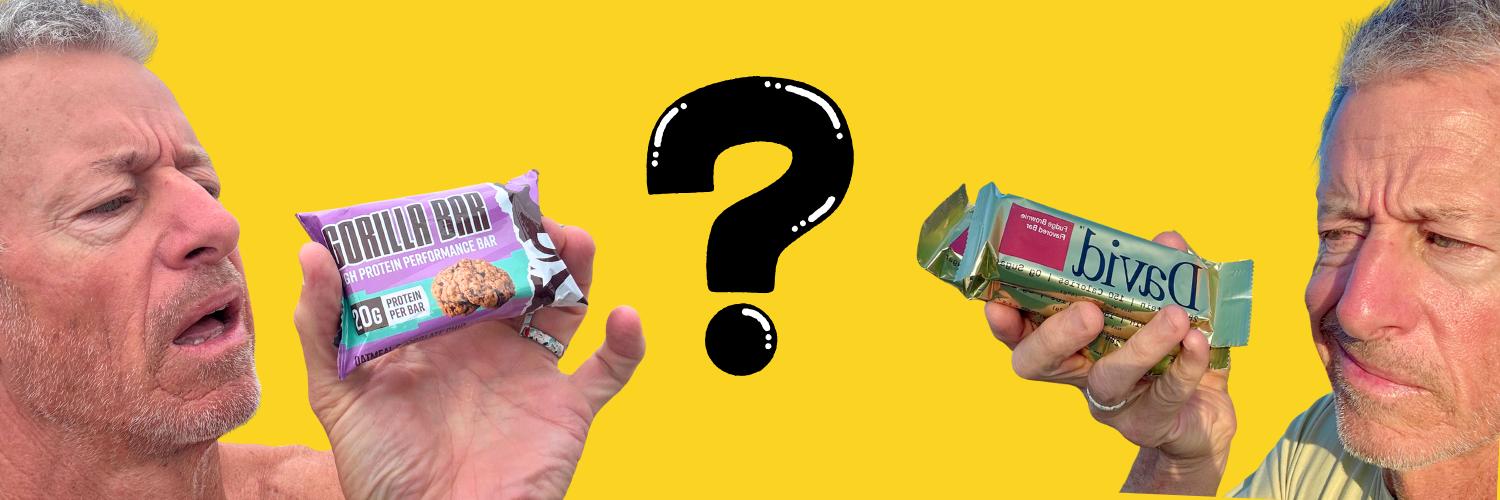
Now, my photo with the David bar came when visiting my extremely athletic, health conscious, clean-eating, longevity striving friend (named David haha), who happens to be a big fan of the bars for a snack option and a boost to daily protein intake. His life is not being harmed by enjoying a treat now and then, so let’s keep the proper perspective here. If you burn a lot of fuel with an active, athletic lifestyle, yes, you can refill your tank with occasional low octane fuel with no concerns.
Remember, PowerBar was invented in the 1980s by the late Brian Maxwell, an elite marathon runner looking for a way to prevent bonking during long efforts. Staving off the bonk while running endless five-minute miles, or pedaling the high mountains of the Tour de France, is different from reaching in your desk drawer for a snack at 3pm. Unfortunately, bar companies need to sell millions to the general population who generally don’t need the extra, nutrient-deficient calories.
Full disclosure, beware of marketing hype and profit forces
Marketing can make things confusing. Popular bars marketed as “clean”, like KIND, still contain processed oils and additives that don’t support metabolic health. Spokespeople like Dr. Attia can be very convincing when talking about the benefits of things like “protein-to-total calories ratio,” making it easy to overlook the big picture that it’s unnecessary to obtain protein from a bar.
Look, the top health influencers are generally very sharp, responsible, thoughtful, and helpful, but bullshit sneaks in there now and then and we have to be mindful. I like to operate with Mark Sisson’s voice in the background saying watch out for the whole biohacking approach in general—stick to the basics. We’ve been promoting the Primal Blueprint for nearly two decades, and there is no biohacking, nor candy bars, mentioned in any of the 10 laws.
It reminds me of back in the 1990s when the US Olympic Team had Snickers as a sponsor and touted a study where athletes were able to exercise longer on Snickers than on PowerBar. People snickered at the result (some theorized it was the extra fat in Snickers that helped), but really, today’s cutting edge high protein bars belong in the same category as candy bars. There are a few brands that are actually nutritious, such as the LaraBar where all flavors are made with fruit and nuts only.
Wholesome snack ideas:
- Hard-boiled eggs or high-protein cheeses like parmesan and cottage cheese
- High quality bean-to-bar dark chocolate: This is definitely my favorite snack. Of course it’s not temperature stable like a heavily processed bar, but it’s vastly more nourishing and less objectionable. Strive for 75% cacao or higher and bean-to-bar designation. Just like processed energy bars calling themselves healthy, there are lots of objectionable “dark chocolate” bars. Visit BradKearns.com and download my free guidebook, “A Connoisseur’s Comprehensive Guide To Dark Chocolate”
- LaraBar: This company has been around for 20+ years, with all bars consisting of fruit and nut ingredients only. There are a few other brands out there making really clean bars. Read labels! Get protein elsewhere!
- Macadamia nuts: 84 percent monounsaturated fats, macadamia nuts reign supreme as the best nutritional profile among nuts.
- Grass-fed beef jerky: I generally hate the slimy texture of most offerings, and long for the homemade stuff my mom put in my lunchbag when I was a kid (she simply cut up slices of raw beef and cooked them in the oven.) I recently found a brand at Costco called. ItsJerky that tasted legit.
- A smoothie made with high-quality protein powder (my favorite is B.rad whey + creatine Superfuel and B.rad whey protein isolate)
Smarter snacking (or not snacking at all) is a better path to metabolic flexibility. Instead of reaching for a bar to boost protein consumption, try:
- Fasting: When you are too busy for a proper sit-down meal, you are also too stressed to digest successfully. Fasting helps build metabolic flexibility, and a greater appreciation for food at meals
- Eating more protein at meals: Former podcast guest Dr. Tommy Wood counsels active, athletic types to “consume as much nutritious food as possible, until you gain a pound of fat–then dial it back.” If you are a protein bar fan, let’s talk about having six eggs for breakfast instead of three, or two hamburgers for dinner instead of one.
Please enjoy my lengthy show on the protein energy bar scam. As far as eating healthy, nutritious foods with an emphasis on protein, download my free B.rad Nutrition Guide PDF.
Full disclosure, I’m an “investor” in B.rad Nutrition and we have the most pure and potent grass fed whey protein isolate on the planet, sourced directly from small family farms in Wisconsin from generational family cheesemakers (whey is a by-product of cheese manufacturing). It’s not always easy to get enough dietary protein from meals, so I’m pleased to recommend the very best option for supplemental protein. For fuel on the go for performance or a busy day, I’m gonna go with my Ketone-IQ shots, HNY+ (‘honey plus’) healthy energy gels, or my beloved high cacao bean-to-bar dark chocolate.
The bottom line? If you’re not training like a pro athlete, you probably don’t need to stock your life with energy bars. Whole food snacks, or simply waiting until your next nutritious meal, will almost always be the better choice.